Iraqi Foreign Minister Warns Iraq Will Not Allow Its Territory to Become Battleground for International Conflicts
Iraqi Foreign Minister Fuad Hussein warned that Iraq will not allow its territory to become a battlefield for international conflicts, calling for dialogue and cautioning against regional escalation.
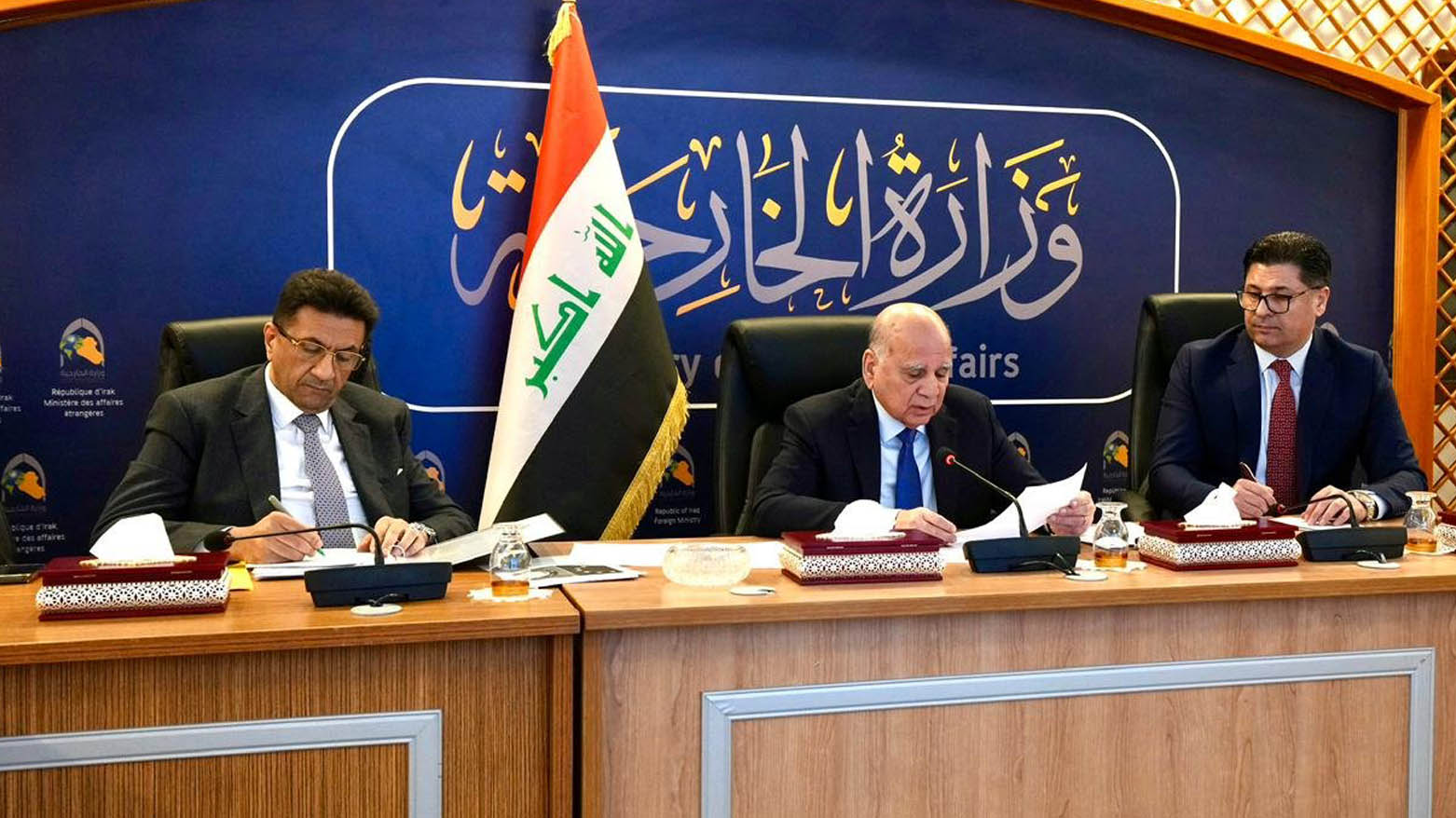
ERBIL (Kurdistan24) - Fuad Hussein, Foreign Minister of Iraq, said Baghdad will not allow its territory to become a battleground for international conflicts, warning of the dangers of further escalation in the region.
Speaking on Sunday, during an emergency meeting of the Arab League held via video conference, Hussein led the Iraqi delegation as ministers discussed the rapidly escalating regional tensions.
In his speech, Hussein strongly condemned the attacks targeting various parts of Iraq and warned that the objective behind these hostile actions is to drag the country into the ongoing regional war.
“Iraq has not been part of these conflicts and will not enter this circle,” Hussein said, stressing that Baghdad will not allow its territory to be used as a platform for attacks against neighboring countries.
He reiterated that Iraq’s policy is based on rejecting war and supporting peaceful solutions to disputes through negotiations and diplomatic channels.
Regarding tensions between Iran and the United States, Hussein said Iraq has consistently supported dialogue between the two countries.
He also criticized the military operations carried out against Iran, warning that expanding the war would pose a direct threat to the security of all countries in the region and prolong the conflict.
The Iraqi foreign minister reaffirmed Baghdad’s solidarity with Arab states and rejected any violations of their sovereignty.
Hussein said Iraq’s authorities—including the executive, legislative, and judicial branches—are closely monitoring developments and are taking steps to prevent the country from being drawn into external conflicts while continuing to protect diplomatic missions.
He warned that instability in the strategic Strait of Hormuz could trigger major global energy crises, increase armed chaos across the region, and lead to large waves of displacement and migration.
Hussein concluded by urging all sides to allow wisdom and dialogue to prevail over military escalation and to immediately halt ongoing military operations.
Since the war between the United States and Israel against Iran began on Feb. 28, Tehran has repeatedly targeted U.S. military bases across the region with drones and missiles.
The conflict started when U.S. and Israeli forces launched airstrikes inside Iran, reportedly killing several senior figures. Iran later responded by launching missiles toward Israel and striking U.S. bases in the region.
Meanwhile, Mohammad Kazem Al‑Sadeq, Iran’s ambassador to Iraq, said Iran’s internal situation remains stable and that Iranian forces have strengthened security along the border with the Kurdistan Region.
He said Iranian troops are closely monitoring the border areas and confirmed that no major problems have occurred along the frontier between Iran and the Kurdistan Region.
The ambassador also stated that Iran did not initiate the war but is defending itself, adding that Iranian leadership remains strong and prepared for a prolonged conflict.