Trump Says He Is ‘Not Happy’ With Iran’s New Supreme Leader as U.S.–Israel War Continues
In a separate interview with The Times of Israel, Trump discussed the broader conduct of the war and said that a decision on when to end the conflict would be made jointly with Israeli Prime Minister Benjamin Netanyahu.
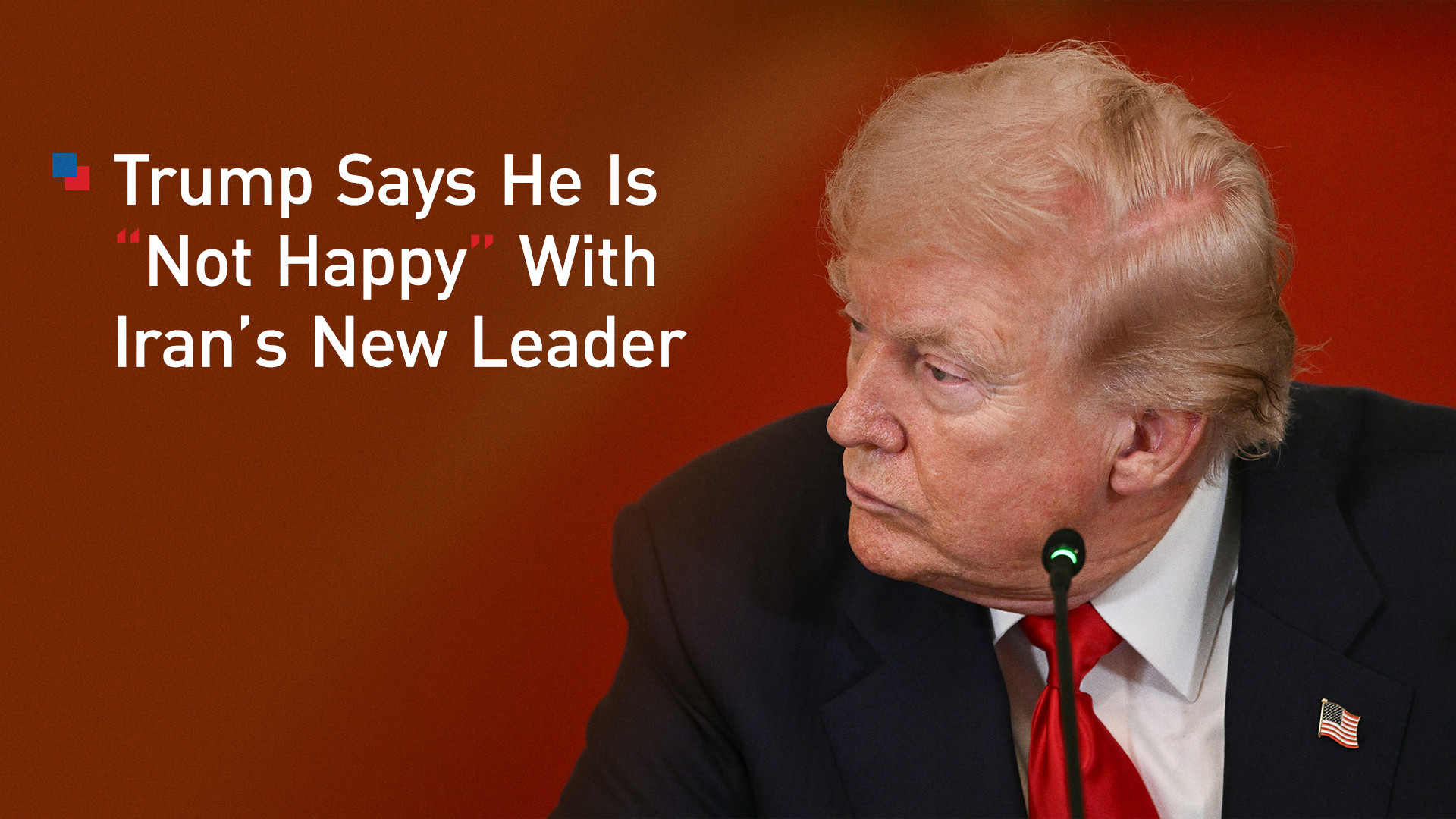
ERBIL (Kurdistan24) - U.S. President Donald Trump said he is “not happy” with the selection of Mojtaba Khamenei as Iran’s new supreme leader, according to remarks reported by Fox News, as the war between Iran and a joint U.S.–Israeli military coalition entered its second week and fighting continued across the region.
The comments came shortly after Iranian state media announced that the country’s Assembly of Experts had chosen Mojtaba Khamenei, the son of the late Ayatollah Ali Khamenei, to assume the leadership of the Islamic Republic. Ayatollah Ali Khamenei was killed during the initial wave of U.S.–Israeli strikes on Tehran that triggered the conflict on Feb. 28.
Speaking in remarks relayed during a broadcast on the Fox News program “One Nation,” host Brian Kilmeade said he had spoken directly with Trump regarding the appointment. Kilmeade reported that Trump responded to the selection by saying, “I am not happy.”
The Fox News segment described the situation in Iran as entering a second week of escalating hostilities, with explosions reported over Tehran while U.S. and Israeli forces continued what the broadcaster described as a “relentless barrage of strikes” against Iranian targets.
During the same segment, Trump was asked by reporters what he wanted from Iran as the war continued. He responded by reiterating his demand for what he described as unconditional capitulation.
“I said unconditioned. I said unconditioned. It's where they cry uncle, or when they can't fight any longer, but we've wiped out their leadership numerous times already,” Trump said. “So what we're doing is a great thing, not only for our country, and not only for Israel, not only for the Middle East, but for the world. When this ends, we're going to have a much safer world.”
Fox News also reported that a seventh U.S. service member had died from injuries sustained during the first day of the attacks. According to the broadcast, Iran’s foreign minister rejected calls for a ceasefire as Gulf states became increasingly affected by the conflict.
The selection of Mojtaba Khamenei as Iran’s new supreme leader followed the death of his father in the early days of the conflict. The country’s clerical body responsible for choosing the supreme leader, the Assembly of Experts, announced the decision shortly after midnight, according to reports cited by international media.
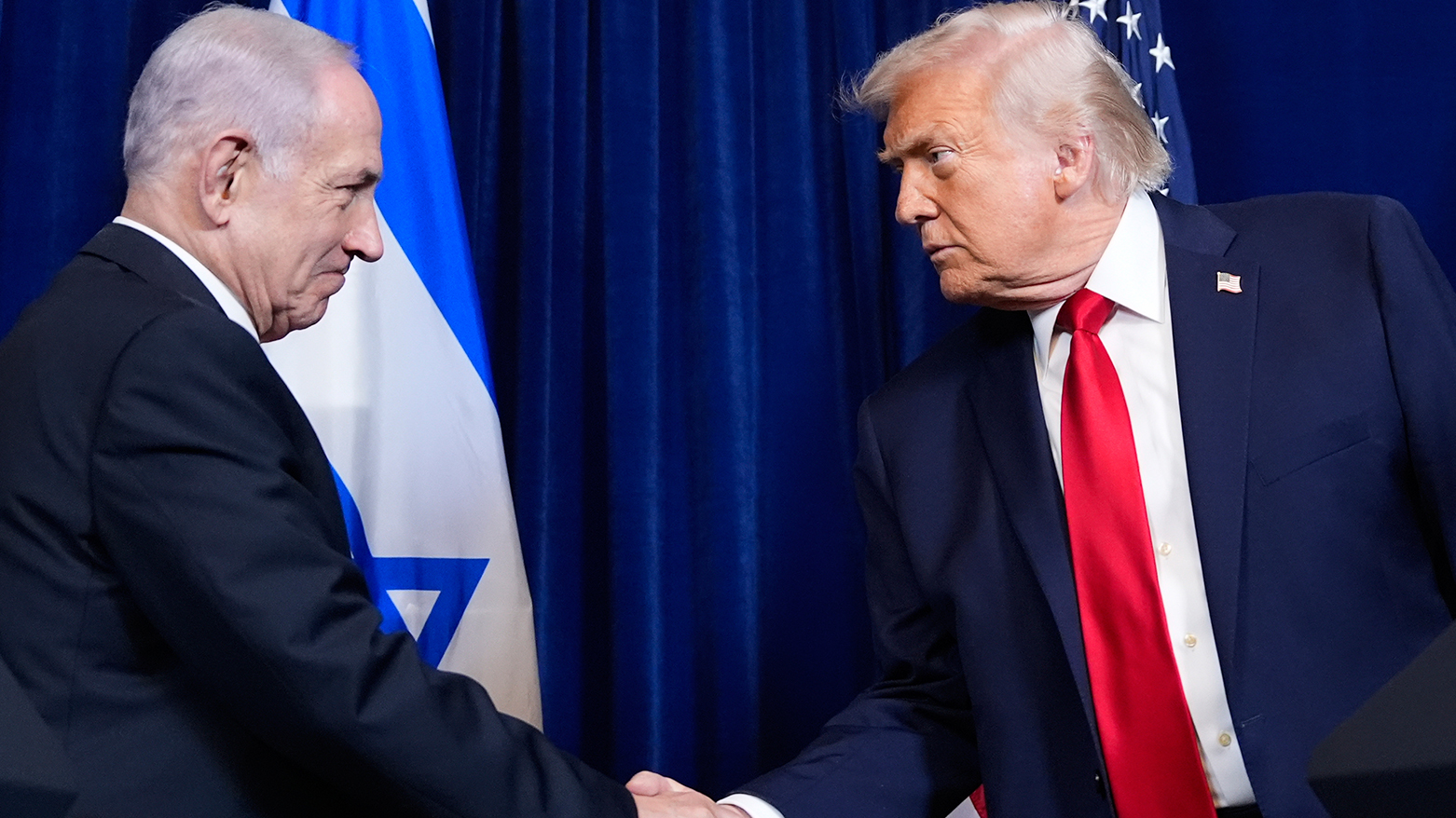
In a separate interview with The Times of Israel, Trump discussed the broader conduct of the war and said that a decision on when to end the conflict would be made jointly with Israeli Prime Minister Benjamin Netanyahu.
“I think it’s mutual… a little bit. We’ve been talking. I’ll make a decision at the right time, but everything’s going to be taken into account,” Trump told the publication during a phone interview.
Trump indicated that while Netanyahu would have input regarding the timeline of the war, the final decision would rest with the U.S. president. The remarks came as Washington has sought to avoid committing publicly to a fixed timetable for the conflict.
Asked whether Israel could continue military operations against Iran even if the United States halted its own strikes, Trump declined to consider the scenario in detail before adding, “I don’t think it’s going to be necessary.”
White House press secretary Karoline Leavitt said on Friday that Washington expected the war to last approximately four to six weeks.
Trump’s interview with The Times of Israel took place shortly after Iranian state media confirmed Mojtaba Khamenei’s appointment as the country’s new supreme leader. In response to questions about the development, Trump declined to elaborate extensively.
“We’ll see what happens,” he said.
Hours earlier, Trump told ABC News that Iran’s new leader would not remain in power long without approval from Washington, stating that the next leader “won’t last long” if he does not have support from the White House.
The U.S. president also used the interview to describe his cooperation with Netanyahu during the conflict, asserting that the two leaders had coordinated closely in military operations against Iran.
“Iran was going to destroy Israel and everything else around it… We’ve worked together. We’ve destroyed a country that wanted to destroy Israel,” Trump said.
The president repeated similar remarks later in the conversation, stating that Israel’s survival depended in part on the partnership between himself and Netanyahu.
“Bibi’s done a great job. He’s been a wartime prime minister. We’ve worked together. We’ve destroyed a country that wanted to destroy Israel. Would have destroyed Israel if I wasn’t around,” Trump said, referring to Netanyahu by his nickname. “And [if] Bibi wasn’t around, Israel would not exist today.”
Trump also commented on internal Israeli political matters, including the ongoing legal proceedings against Netanyahu on charges of bribery, fraud, and breach of trust. The U.S. president reiterated his call for Israeli President Isaac Herzog to grant Netanyahu a pardon.
“Bibi Netanyahu should be given that pardon immediately. I think [Herzog is] doing a terrible thing by not giving it. We want Bibi to be focused on the war, not on a ridiculous pardon,” Trump said.
Herzog’s office responded previously by stating that the president respects Trump’s contribution to Israel’s security but emphasized that Israel remains a sovereign state governed by the rule of law. Officials said that the matter of a pardon is being handled according to legal procedures by the Justice Ministry, which will provide a legal opinion before any decision is made.
Trump’s relationship with Netanyahu had previously experienced tensions following the 2020 U.S. presidential election, when Netanyahu congratulated former U.S. President Joe Biden on his electoral victory. In a 2021 interview with Israeli journalist Barak Ravid, Trump criticized Netanyahu for making that call and suggested the Israeli leader had not pursued peace with the Palestinians.
However, Trump indicated in the new interview that relations between the two leaders had improved.
“We’ve done a great job together, like what we’ve done with Iran,” he said.
The U.S. president also addressed the broader strategic implications of the war, asserting that the conflict has significantly weakened Iran.
“Iran was going to destroy Israel and everything else around it… and now look what we have — we have them being destroyed,” Trump said.
He added that the military campaign could influence armed groups in the region that receive support from Tehran. Asked whether the war might lead to disarmament by the Palestinian militant group Hamas, Trump suggested that Iran’s weakening position could have broader consequences.
“Many people will disarm because of [the war against Iran],” he said. “Because right now, Iran is in a position that it’s never known before, and it’s only going to get worse for them.”
Mojtaba Khamenei’s appointment marks the third leadership transition in the history of the Islamic Republic since the 1979 revolution. The Assembly of Experts, which consists of 88 members elected every eight years, is responsible for selecting Iran’s supreme leader.
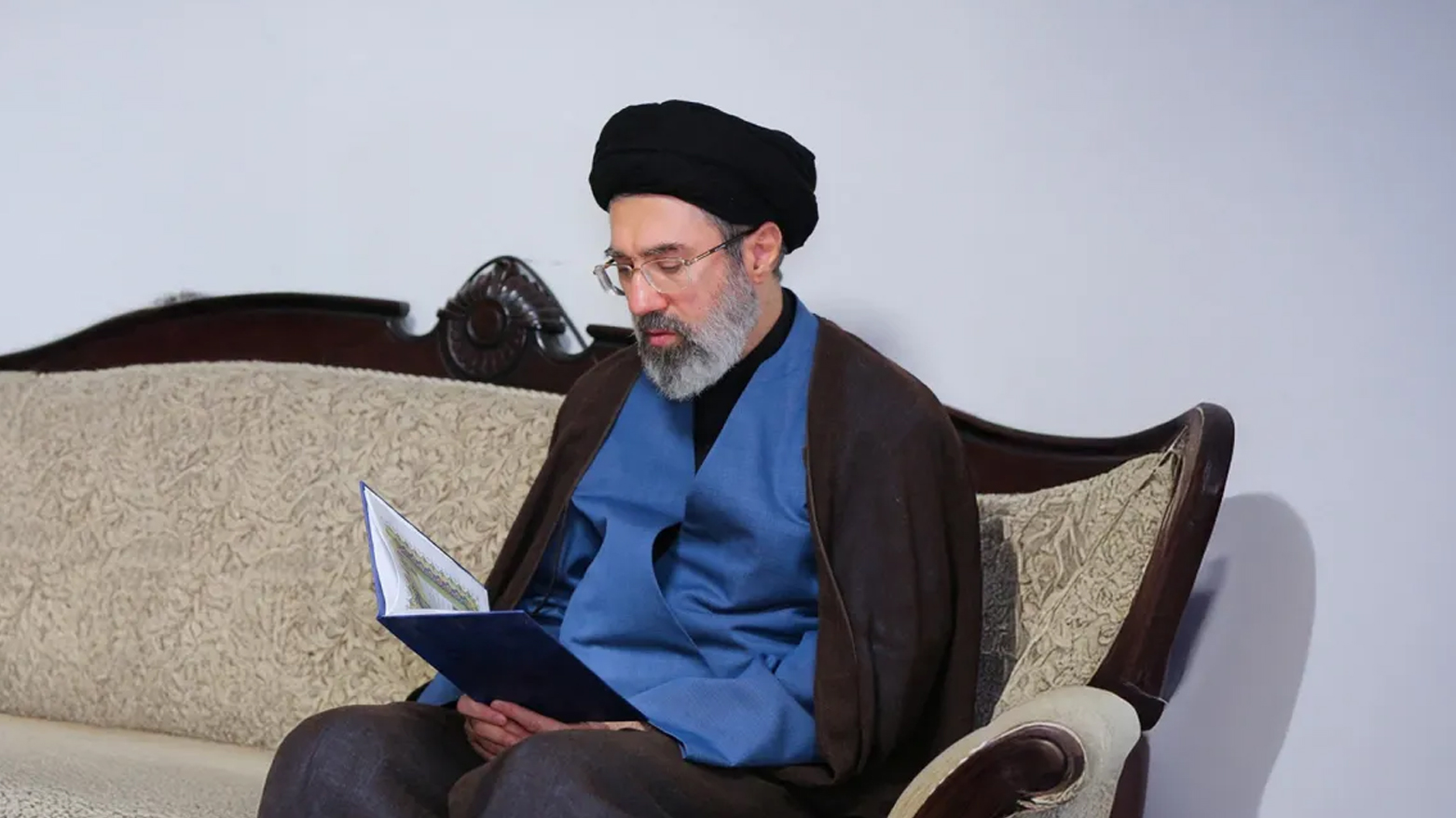
Born on Sept. 8, 1969, in Mashhad, Mojtaba Khamenei studied theology in the religious center of Qom and previously held the clerical rank of Hujjat al-Islam before being presented as an ayatollah upon his appointment.
Although he held no formal government position during his father’s rule, he was widely believed to wield influence behind the scenes within Iran’s political and security establishment. The United States imposed sanctions on him in 2019 during Trump’s first term, stating that he represented his father in matters related to state authority despite not holding elected office.
The Islamic Revolutionary Guard Corps, the Iranian armed forces, the judiciary, and Iranian President Masoud Pezeshkian pledged allegiance to the new leader shortly after the announcement of his appointment.
Opponents have accused Mojtaba Khamenei of playing a role in the crackdown on protests that erupted following the re-election of former Iranian president Mahmoud Ahmadinejad in 2009, which led to widespread demonstrations across the country.
According to reports cited by Bloomberg based on anonymous sources and intelligence assessments, Mojtaba Khamenei accumulated significant personal wealth through investments linked to oil revenues and property holdings abroad, including real estate in Europe and Dubai.
His wife, Zahra Haddad-Adel, was reported by Iranian authorities to have died during the same U.S.–Israeli strikes that killed the former supreme leader.
Israel has issued warnings directed at Iran’s new leadership following the succession announcement, stating that it would continue to pursue individuals involved in the appointment of a new supreme leader.
The leadership transition comes as the conflict between Iran and the United States and Israel continues into its second week, with military operations ongoing and diplomatic efforts toward a ceasefire yet to produce an agreement.
Trump said he will determine the appropriate time to end the war while consulting with Israel’s leadership.
The U.S. president reiterated that he would make the final decision when he considers conditions to be appropriate.