Iran Signals Readiness to Defend Territory Against Potential U.S. Ground Forces
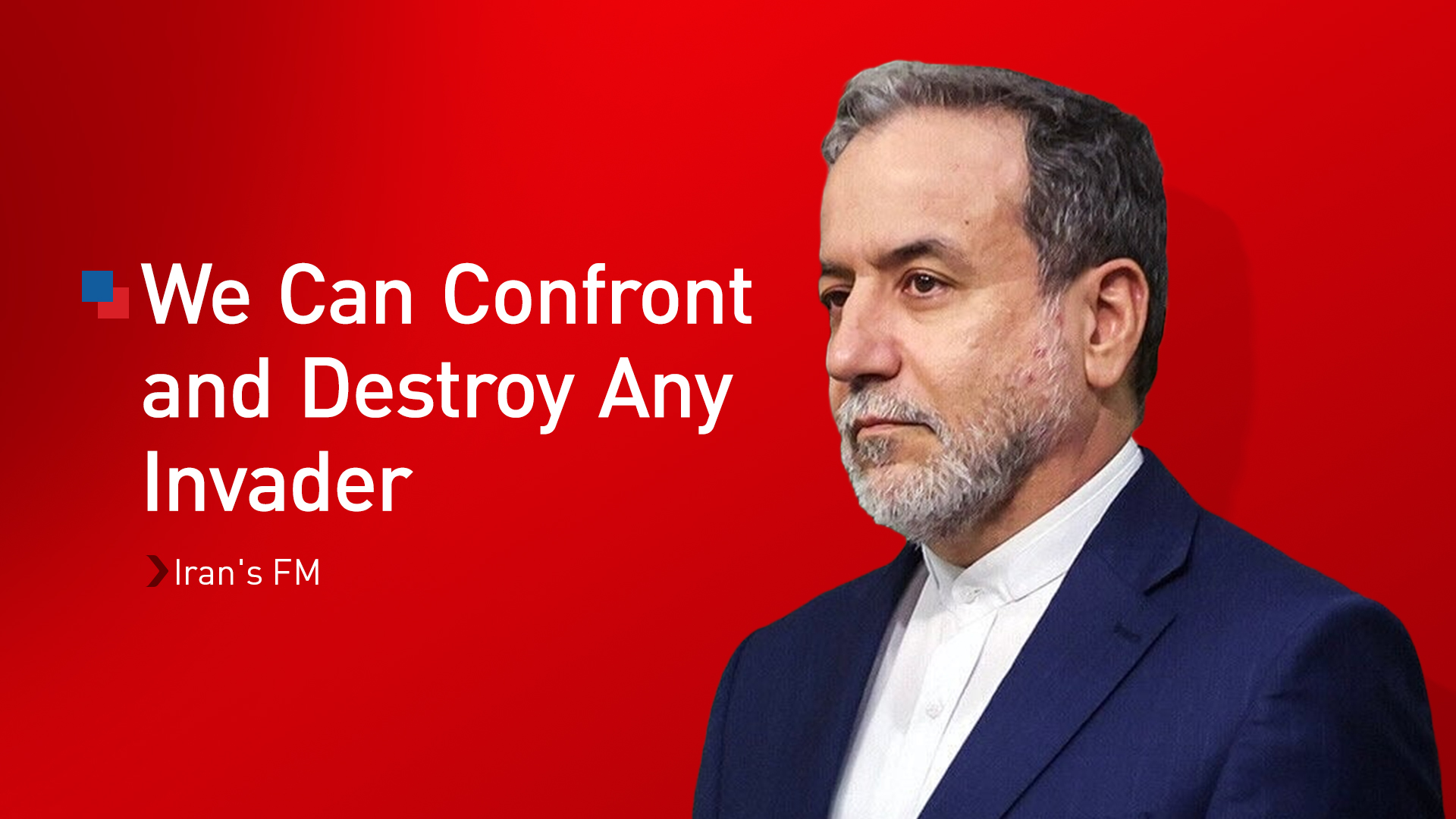
Iran’s FM warned the U.S. that Iran was ready to repel any ground invasion, saying “We have very brave soldiers who are waiting for any enemy who enters into our soil, to fight with them, and to kill them and destroy them,” if U.S. forces were deployed.
ERBIL (Kurdistan24) - Iran’s foreign minister, Abbas Araghchi, rejected calls for a ceasefire in the ongoing Middle East conflict, stating that Tehran intends “to continue fighting for the sake of our people,” in an interview on NBC News’ “Meet the Press” on Sunday. Araghchi’s comments came amid escalating hostilities involving Iranian, U.S., and Israeli forces and reports of increased intelligence cooperation between Iran and Russia.
Araghchi criticized the United States and Israel for targeting civilians and infrastructure, saying, “They are killing our people, they are killing girl students, you know, they are attacking hospitals.” He further stated that the previous ceasefire, which ended last year’s 12-day conflict, had already been violated by the U.S. and Israel. “And now you want to ask for a ceasefire again? This doesn’t work like this,” he said.
The Iranian minister emphasized the country’s continued military engagement, adding, “There needs to be a permanent end to the war. Unless we get to that, I think we need to continue fighting for the sake of our people and our security.”
Araghchi addressed reports of Russian support for Iran, acknowledging a longstanding partnership between the two countries but declining to provide specifics. “Cooperation between Iran and Russia is not something new, it’s not a secret,” he said. “They are helping us in many different directions. I don’t have any detailed information.” On Friday, four sources told NBC News that Russia had provided intelligence to Iran regarding U.S. military positions in the Middle East, including information that could assist in locating American warships.
United Nations Ambassador Mike Waltz, also speaking on “Meet the Press,” discussed the reported intelligence sharing, noting a longstanding relationship between Iran and Russia. He said he had “no doubt President Trump will deal with it accordingly” and added, “If they are providing anything, it certainly hasn’t been very effective, because the U.S. military is decimating Iran’s air force, air defenses, navy, ground forces, command and control. So whatever they’re providing, if they’re providing anything, hasn’t shown to help them very much.”
On regional hostilities, Araghchi said that Iran’s recent strikes against Gulf nations, which have caused casualties in Kuwait, the United Arab Emirates, and Oman, were not intended to target neighboring states directly. “We are attacking American bases, American installations, American assets, which are unfortunately located in the soils of our neighbors,” he said. He referenced an apology by Iranian President Masoud Pezeshkian to the affected populations, stating that Pezeshkian had expressed regret for “the inconveniences they have faced because of this aggression by the United States and retaliation by us.”
Araghchi also addressed the potential deployment of U.S. ground forces to Iran, asserting that the country’s military was prepared to defend its territory. “We have very brave soldiers who are waiting for any enemy who enters into our soil, to fight with them and to kill them and destroy them,” he said.
In response to claims by President Donald Trump that Iran was developing missiles capable of reaching the United States, Araghchi dismissed the assertion as “misinformation.” He noted that while Iran possesses missile production capabilities, it has intentionally limited its range to below 2,000 kilometers. “We don’t want to be felt as a threat by anybody else in the world,” he said.
Araghchi refrained from providing details on Iran’s succession plans following the death of Ayatollah Ali Khamenei in recent strikes. Iranian state media reported that the country’s Assembly of Experts has chosen a new supreme leader, though Araghchi said, “Nobody knows. There are lots of rumors around. But you know, we have to wait for the Assembly of Experts to convene.”
Regarding U.S. involvement in the selection of Iran’s next leader, he stated that Tehran would “allow nobody to interfere in our domestic affairs. This is up to the Iranian people to elect their new leader. They have already elected the Assembly of Experts, and the Assembly of Experts will do the job.”
Araghchi’s remarks followed a statement by President Trump on Truth Social asserting that the United States would not negotiate with Iran “except [through] UNCONDITIONAL SURRENDER.” Waltz, when asked to clarify the comment, declined to offer specifics, saying, “I would leave that to the president as commander in chief to determine what that ultimately looks like.” He added, “We’re ahead of schedule, and what he ultimately wants is pretty much common sense. As he said, we have to have an Iranian government that no longer threatens the American people, threatens our allies and threatens the world, and holds the world’s energy supplies hostage through both its missiles and its navy.”
The interview comes amid an intensifying Middle East conflict, characterized by repeated U.S. and Israeli strikes on Iranian positions, Iranian retaliatory actions in the Gulf, and ongoing concerns over foreign intelligence sharing. Araghchi’s statements reaffirm Tehran’s refusal to accept a ceasefire and its commitment to continued military engagement while framing recent regional strikes as targeting U.S. assets rather than neighboring countries.
Iran’s relations with Russia were highlighted as a longstanding partnership, although Araghchi did not disclose operational details. U.S. officials, including Waltz, indicated that any Russian assistance has so far had limited observable impact on Iranian military operations.
The discussion of Iran’s missile capabilities and the constraints voluntarily imposed on their range reflects Tehran’s stated intent to maintain a defensive posture without projecting strategic threats to distant nations. Meanwhile, succession uncertainties following the death of the country’s supreme leader remain unresolved, with the Assembly of Experts responsible for selecting the next leadership.
Throughout the interviews, both Iranian and U.S. officials emphasized their positions on sovereignty, military engagement, and the ongoing conflict, offering perspectives that underline the continuing regional tensions and the absence of a negotiated ceasefire.
Araghchi’s statements indicate that Iran will maintain its operational posture in the conflict until broader conditions regarding security and the cessation of hostilities are met.