Putin Pledges “Unwavering Support” to Iran’s New Supreme Leader Mojtaba Khamenei
Russian President Vladimir Putin pledged “unwavering support” to Iran’s new Supreme Leader Mojtaba Khamenei, saying, “Russia has been and will remain a reliable partner” amid ongoing armed aggression.
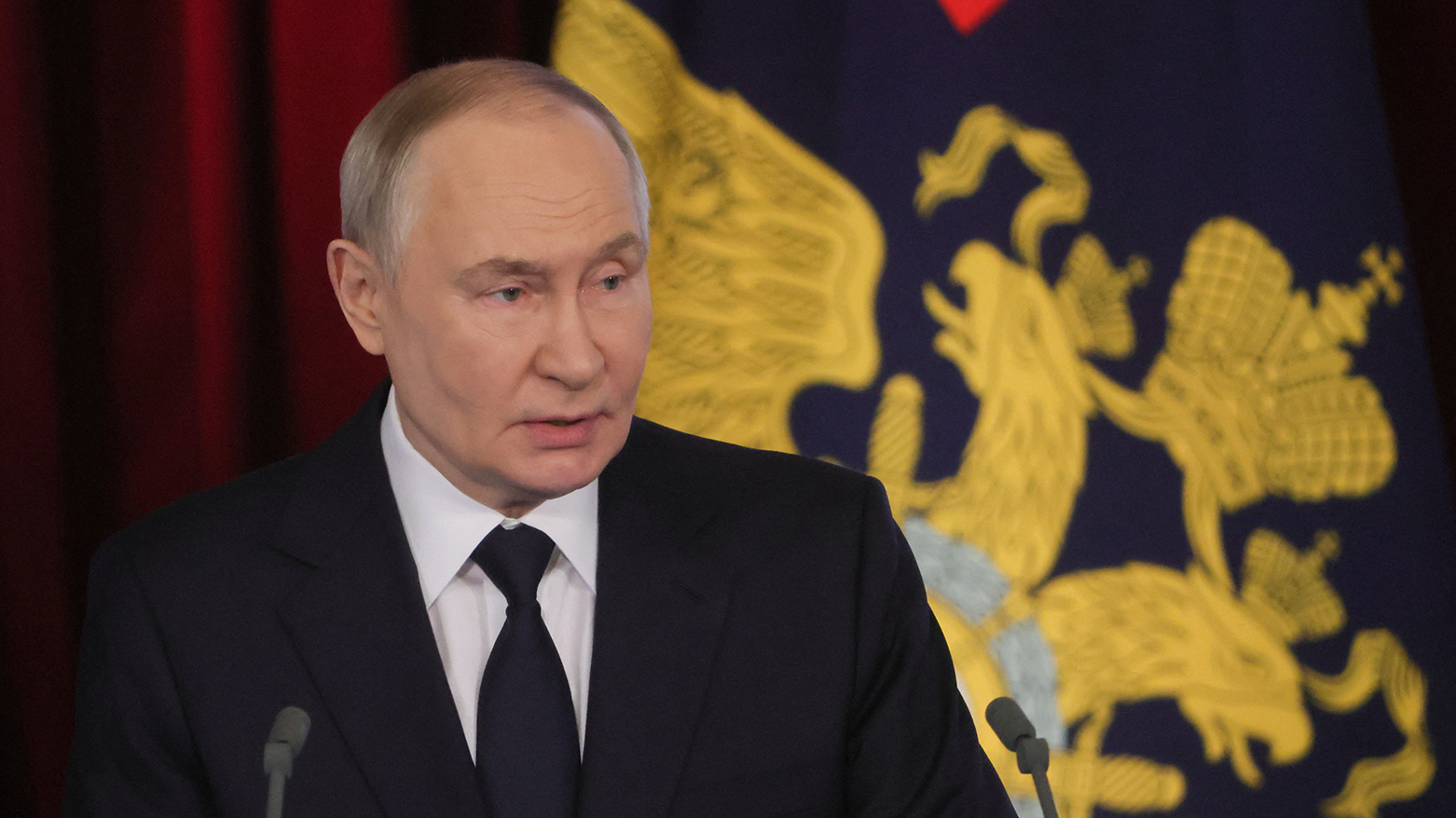
ERBIL (Kurdistan24) - Russian President Vladimir Putin pledged “unwavering support” on Monday to Iran’s newly appointed supreme leader, Ayatollah Mojtaba Khamenei, following his father Ali Khamenei’s death in U.S.-Israeli airstrikes, AFP reported. Putin said in a message to Mojtaba Khamenei that “Russia has been and will remain a reliable partner” and emphasized solidarity with Tehran as it confronts “armed aggression.”
Mojtaba Khamenei, 56, was named Iran’s third supreme leader by the Assembly of Experts shortly after midnight on Monday (2030 GMT Sunday), receiving immediate endorsements from President Masoud Pezeshkian, the armed forces, and the judiciary, according to AFP and reporting from Paris. He succeeds his father, who was killed in the first wave of U.S.-Israeli strikes on Tehran on February 28, which triggered broader hostilities in the region.
Born on September 8, 1969, in Mashhad, Mojtaba Khamenei is the only one of the late leader’s six children to hold a public position. Prior to his appointment, he had no official post but was believed to exert influence behind the scenes, particularly through close ties to the Islamic Revolutionary Guard Corps, which quickly pledged allegiance to him, AFP reported.
Mojtaba Khamenei’s rise represents continuity of the hardline policies of his father. A veteran of the Iran-Iraq war in the 1980s, he holds the black turban of the seyyeds, indicating descent from the Prophet Mohammed, and had attained the clerical rank of Hujjat al-Islam before being elevated to ayatollah upon his appointment. The United States imposed sanctions on him in 2019, citing his work alongside his father to advance regional ambitions and domestic security objectives, AFP noted.
In addition to his military and clerical credentials, Mojtaba Khamenei has been linked to significant personal wealth. Investigations by Bloomberg, citing Western intelligence sources, estimated his assets at over $100 million, including investments in luxury British real estate, hotels in Europe, and property in Dubai, often held through shell companies in tax havens.
The appointment has drawn international attention and immediate warnings from Israel. Israeli authorities stated that “the hand of the State of Israel will continue to follow any successor and anyone who seeks to appoint a successor,” highlighting the heightened regional tensions following the February strikes that killed Ali Khamenei and other senior Iranian officials, AFP reported.
Mojtaba Khamenei’s wife, Zahra Haddad-Adel, was among those killed in the airstrikes, Iranian authorities confirmed. Despite the personal loss, the new leader has received broad institutional support. The Assembly of Experts, an 88-member clerical body elected every eight years, oversaw the swift succession process, marking only the second leadership transition since the Islamic Republic’s founding, following Ali Khamenei’s selection in 1989 after the death of Ruhollah Khomeini.
Observers note that while Mojtaba Khamenei has maintained a low public profile, his discreet presence in power circles has been evident for years. He is regarded as close to conservative factions, particularly due to his relationships with the Revolutionary Guard and other security forces. Analysts reported by AFP have described him as a figure capable of ensuring continuity of Iran’s existing political and military strategies.
Following the appointment, the new supreme leader received congratulatory messages from Iranian institutions and foreign governments. President Pezeshkian emphasized support for Mojtaba Khamenei, the armed forces pledged loyalty, and the judiciary expressed readiness to cooperate with his directives, AFP reported.
Russian support, expressed in Putin’s message, underscores Moscow’s intention to maintain its strategic alliance with Tehran amid ongoing regional hostilities. “At a time when Iran is confronting armed aggression, your tenure in this high position will undoubtedly require great courage and dedication,” Putin said, highlighting the geopolitical significance of the leadership transition, AFP reported.
The leadership change occurs against the backdrop of continuing tensions following U.S. and Israeli military actions that targeted Iranian military and infrastructure sites in late February, leaving Iran’s political and military hierarchy in flux. Mojtaba Khamenei’s appointment consolidates control within a network of established conservative actors and security forces, providing continuity amid uncertainty.
Mojtaba Khamenei’s ascension also represents the continuation of a hereditary-style succession, despite prior public statements by Ali Khamenei rejecting such a model. His selection may influence the future interactions of Iran with regional and global powers, as well as the internal balance of power among clerical and security institutions, AFP reported.
The new supreme leader now faces immediate challenges in consolidating authority and coordinating the country’s response to ongoing hostilities while maintaining internal political cohesion. Regional observers and international governments are closely monitoring developments following the leadership change, AFP noted.
Mojtaba Khamenei’s appointment secures continuity of leadership in Iran following the targeted strikes that killed his father and key officials.