Iraq’s National Security Advisor Condemns Strike on PMF Forces
Iraq’s National Security Advisor condemned a strike on PMF positions in Al-Qaim, Anbar, calling it a “violation of sovereignty” that killed at least 30 fighters, as regional tensions and attacks on energy infrastructure drive global oil prices higher.
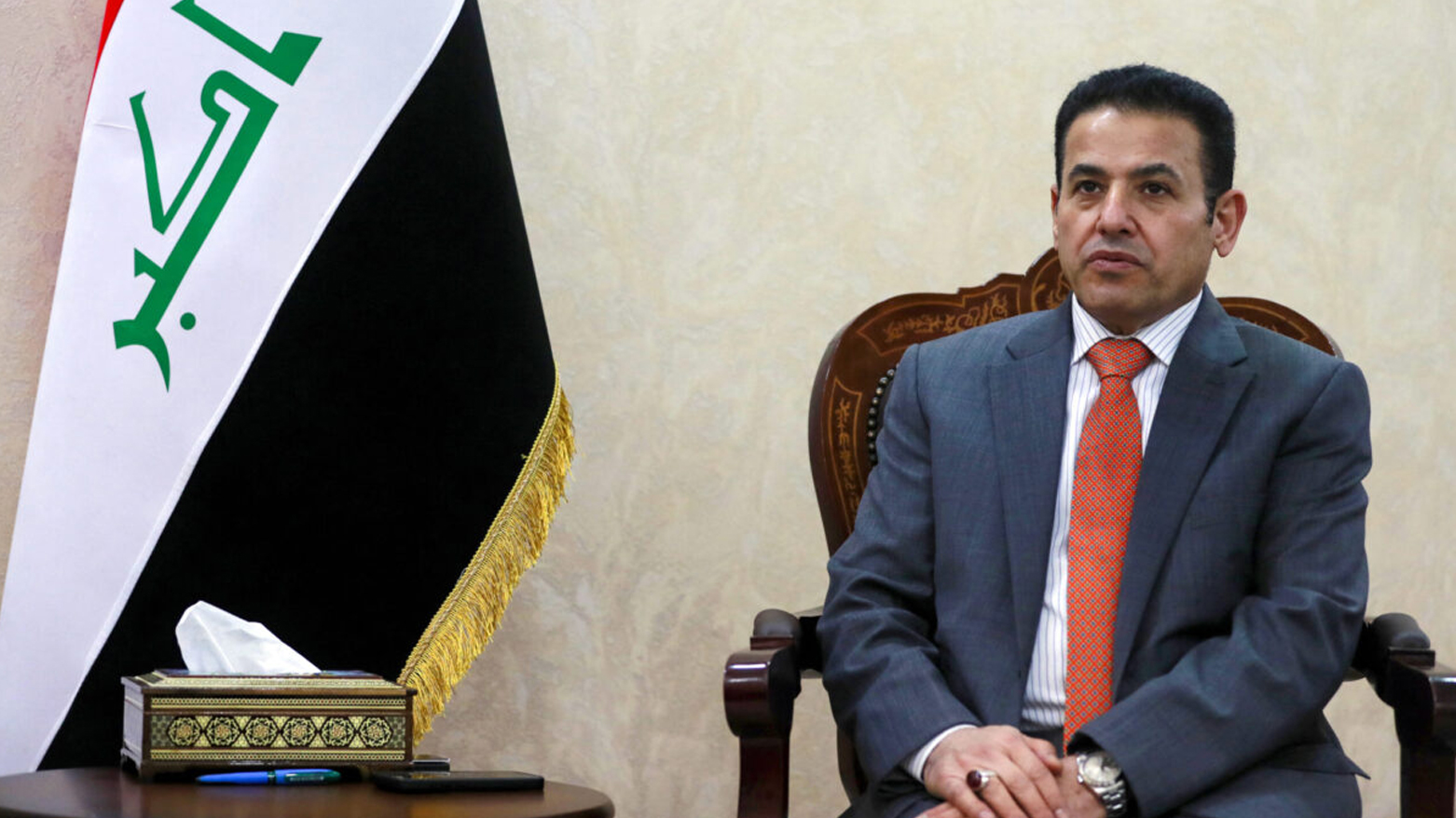
ERBIL (Kurdistan24) - Iraq’s National Security Advisor, Qasim al-Araji, on Thursday condemned a military strike targeting the Popular Mobilization Forces (PMF) in the Al-Qaim district of Anbar Province, calling the attack a violation of Iraqi sovereignty and reporting multiple casualties among fighters.
In a message posted on the social media platform X, al-Araji described the incident as a “cowardly terrorist attack carried out against the PMF in Al-Qaim.”
He noted that several PMF personnel were killed and wounded and emphasized that “the targeting is an explicit aggression and a violation of sovereignty.” Iraqi media reported that at least 30 fighters were killed and dozens more wounded in the strike.
Al-Qaim is located in western Iraq, bordering Syria, and is considered a strategic area for arms transfers and movement of armed groups in the region.
Separately, the Asa'ib Ahl al-Haq movement condemned a related strike on the PMF 19th Brigade headquarters in Akashat, another town near the Syrian border.
In a statement issued Thursday, the group described the attack as “treacherous” and attributed it to U.S. and Israeli forces, asserting that multiple PMF members were killed or injured.
Asa'ib Ahl al-Haq said the site functions as an official military installation tasked with border protection, and labeled the attack a “dangerous violation of Iraqi sovereignty and an insult to the blood of Iraqis.”
The movement urged the Iraqi government to assert full control over national airspace and territory and stressed that no foreign military operations should occur over Iraqi land “under any name or excuse.”
Asa'ib Ahl al-Haq further warned that continued attacks could draw Iraq into a “new war” rejected by the Iraqi people and national forces, and stated that the deaths of PMF members would serve as a unifying factor for defending national dignity.
The Iraqi Ministry of Oil issued a separate statement highlighting broader regional security risks affecting global energy markets.
The ministry expressed concern over recent attacks on oil tankers near Basra Province, including an incident on Wednesday in which two tankers were targeted near the port of Umm Qasr. One passenger reportedly died in the attack, while 20 others were rescued, according to a security source cited by the ministry.
The ministry emphasized that such incidents in key maritime corridors pose significant risks to global economic stability and that shipping security must remain insulated from political disputes. Officials called on all parties to exercise restraint and to keep waterways and energy infrastructure outside conflict zones.
The regional tensions coincided with attacks on energy facilities across the Gulf. Iran reportedly struck fuel storage sites in Bahrain, while Saudi authorities intercepted drones heading to the Shaybah oil field.
In Oman, drones hit fuel tanks at Salalah port, forcing temporary suspension of operations.
These developments have contributed to a surge in global oil prices, with Brent crude rising to $101.59 per barrel and West Texas Intermediate approaching $96 per barrel, despite the International Energy Agency’s announcement of a record release of 400 million barrels from strategic reserves.
Analysts noted that the release has not offset ongoing supply disruptions, particularly as the Strait of Hormuz remains effectively closed amid heightened regional tensions.
The ministry highlighted that the cumulative effect of these security incidents threatens regional stability and could impact livelihoods worldwide. The statement underlined the importance of protecting maritime shipping and energy infrastructure to safeguard energy markets and economic interests both regionally and globally.
Asa'ib Ahl al-Haq’s statement emphasized that the Akashat headquarters serves a defensive role along Iraq’s western border and asserted that the attack undermined the country’s ability to protect its territory.
The movement called for immediate governmental measures to prevent further foreign incursions and to reinforce national control over airspace and land.
The developments also prompted responses from economic actors in affected regions. In Asia and Oceania, countries have initiated contingency measures to mitigate potential fuel shortages.
Air New Zealand announced the reduction of 1,100 flights over the next two months, while Australian authorities adjusted fuel quality standards to release additional domestic supply.
Financial markets reflected the disruptions, with equities in Tokyo, Hong Kong, Shanghai, Sydney, Seoul, Mumbai, Wellington, Singapore, Taipei, Manila, and Jakarta recording declines on Thursday. Currency markets showed a mixed response, with the euro and pound weakening against the dollar, while the dollar-yen rate remained largely stable.
Analysts indicated that ongoing disruptions in energy shipping corridors could exert inflationary pressure and influence domestic energy policies. Despite releases from strategic reserves, the persistence of attacks and security incidents may prolong volatility in global oil markets and affect economic stability in multiple regions.
Reports indicate that Iran has signaled readiness for a prolonged conflict targeting energy and economic centers associated with U.S. and Israeli interests. The Revolutionary Guards warned that economic hubs, banks, and technology offices across the Gulf and Israel could be targeted, contributing to elevated regional security risks.
Thursday’s incidents underscore the intersection of national defense and energy security amid escalating hostilities in Iraq and the wider Gulf region. Asa'ib Ahl al-Haq’s statement and the Ministry of Oil’s warnings collectively highlight the immediate and broader consequences of attacks on PMF facilities and regional infrastructure.