Middle East Conflict Prompts Norwegian Efforts to Advance Arctic Oil and Gas Drilling Debate
The debate over Arctic drilling has intensified as the Middle East conflict and the disruption of shipping through the Strait of Hormuz have renewed concerns about global energy supply stability.
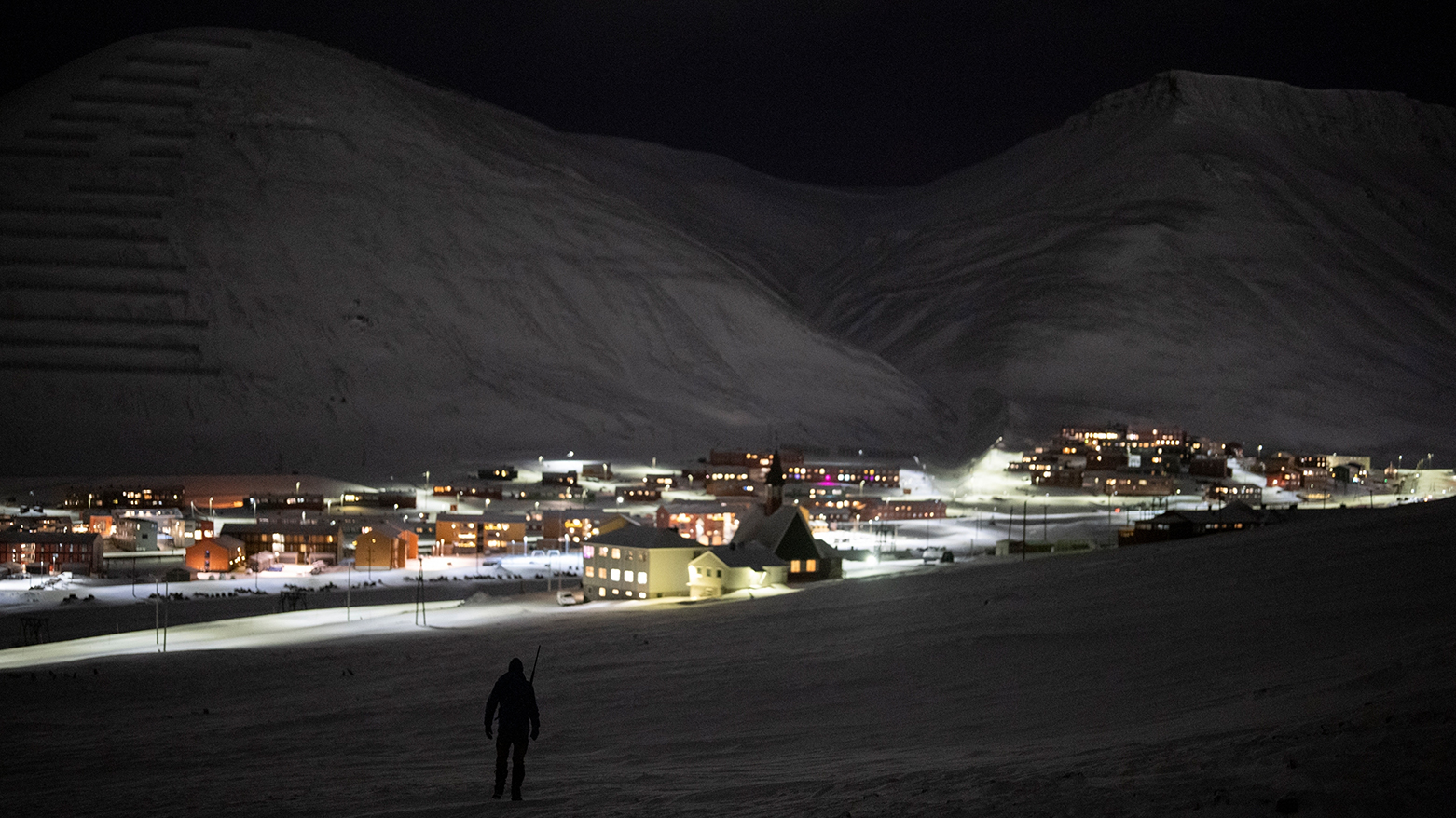
ERBIL (Kurdistan24) - The ongoing Middle East conflict and disruptions to global energy routes have prompted renewed efforts by Norway to persuade the European Union to allow oil and gas exploration in the Arctic, as European officials review the bloc’s long-standing policy supporting a moratorium on hydrocarbon drilling in the region, according to Agence France-Presse (AFP).
Norwegian officials and industry representatives have intensified lobbying efforts in Brussels as the European Commission reviews its Arctic strategy, which since 2021 has committed the European Union to working toward an international ban on oil and gas drilling in Arctic waters, AFP reported.
The push comes as the Middle East war and the disruption of shipping through the Strait of Hormuz — a key global transit route for oil and gas — have raised concerns about energy security and supply stability for European markets.
According to AFP, Iran’s blocking of the Strait of Hormuz has highlighted vulnerabilities in global energy supply chains and has led Norwegian political leaders and business groups to argue that Europe should reconsider restrictions on Arctic energy development.
Norway is already Europe’s largest single supplier of natural gas following Russia’s invasion of Ukraine, a development that significantly reduced Russian gas deliveries to the European market, AFP reported.
Against that backdrop, Norwegian officials have sought to emphasize the reliability of their country as an energy supplier and to promote the potential benefits of expanding exploration in northern waters.
Norwegian Energy Minister Terje Aasland said Norway provides European partners with information about its energy sector as policymakers consider future supply strategies.
“Norway generally makes a point of sharing its knowledge about the country with Brussels so that EU member states have the best possible basis for making their decisions,” Aasland told AFP.
He said the war in the Middle East does not alter Norway’s long-standing position on energy development in northern regions.
“The fact that there is a war in the Middle East today has nothing to do with Norway’s position on oil activities in the North,” Aasland said in remarks reported by AFP.
At the same time, he noted that energy produced from Norway’s northern fields contributes to stabilizing supply and prices in European markets.
Stressing that the European Union and the United Kingdom purchase all oil and gas produced from Norwegian fields in the Barents Sea, Aasland said prices “would have been much higher” without those resources, according to AFP.
The European Commission is currently revising its Arctic strategy, and public consultations on the policy review are scheduled to close in the coming days, AFP reported.
The revision comes as policymakers across Europe assess the implications of energy disruptions linked to the war in the Middle East.
According to AFP, Norwegian policymakers and industry representatives have been actively lobbying European officials during this process, seeking to persuade them that Arctic exploration could contribute to a stable energy supply for Europe.
Anne Karin Saether, project manager at the Norwegian Climate Foundation, said energy companies and political actors are using the current geopolitical situation to increase pressure on European policymakers.
“They’re taking advantage of the situation to apply pressure,” Saether told AFP.
Some environmental groups and policy analysts say the geopolitical situation may influence discussions within the European Union about energy security and supply diversification.
Truls Gulowsen, head of the Norwegian Society for the Conservation of Nature, said the broader geopolitical context could affect how European policymakers approach the issue.
“Against the backdrop of Ukraine and Iran, it may now be even easier to scare European policymakers,” Gulowsen told AFP.
Norway’s energy sector has played a central role in supplying gas to European countries in recent years. According to AFP, Norway currently provides nearly one-third of Europe’s gas needs following the reduction of Russian energy exports to the continent.
Despite that role, exploration and production activity in the Arctic remains limited.
The country currently has two gas fields operating above the Arctic Circle — Snohvit and Aasta Hansteen — but Norwegian authorities have encouraged further exploration in northern waters, AFP reported.
In January, Norway proposed opening 70 additional areas for exploration, with more than half of them located in the Arctic waters of the Barents Sea.
According to the Norwegian Offshore Directorate, the country’s undiscovered oil and gas resources are estimated at 3.48 billion cubic meters of oil equivalent, with approximately 60 percent believed to be located in the Barents Sea.
Norwegian officials say the region’s energy potential could contribute to long-term supply security for European markets.
At the same time, environmental organizations and some policy experts have raised concerns about expanding hydrocarbon exploration in the Arctic.
Karoline Andaur, head of WWF Norway, said that even if the European Union eventually modifies its policy on Arctic drilling, it would take many years before new exploration projects begin producing oil or gas.
“Even if the EU abandons its proposed moratorium, it will in any case take several decades before new oil and gas activities in the Arctic begin production,” Andaur told AFP.
The European Commission has indicated that its current position on the Arctic drilling moratorium remains unchanged while the strategy review continues.
According to AFP, the commission has stated that for now its policy supporting a moratorium on Arctic hydrocarbon extraction remains in place.
Nevertheless, some analysts have suggested that policy adjustments could emerge as European institutions balance climate objectives with energy security considerations.
Norwegian consultancy Rystad Energy has suggested that the Barents Sea could potentially be excluded from the European Union’s definition of the Arctic, according to AFP.
The consultancy pointed out that parts of the Barents Sea remain ice-free due to the influence of the Gulf Stream, a factor that some analysts argue could support energy development.
However, environmental advocates have raised objections to proposals that would facilitate expanded drilling in the region.
Saether warned that expanding oil and gas infrastructure in the Barents Sea could introduce additional environmental and security risks.
According to AFP, a report by the Norwegian Climate Foundation titled “The Barents Sea at Stake” highlighted potential security vulnerabilities associated with infrastructure in the region.
Because the Barents Sea is located near Russia, the report suggested that energy infrastructure there could become a potential target for sabotage during geopolitical tensions.
“This makes us particularly vulnerable, because Russia, with some pretty simple sabotage against gas pipelines up there, could strike not only Norway but Europe as well,” Saether told AFP.
“We would become a more tempting target,” she said.
Labor groups in Norway have also expressed support for expanded exploration activity in northern regions.
The Norwegian Confederation of Trade Unions has called for additional energy development in the Arctic, emphasizing its potential economic and social impact.
Nora Hansen, a representative of the union in Brussels, said that exploration projects could contribute to employment and help sustain communities in northern Norway.
She emphasized “the importance of jobs and of keeping people in the northern regions,” according to AFP, adding that maintaining population levels in those areas could serve as a security measure given Norway’s proximity to Russia.
The ongoing debate comes as European governments assess the long-term implications of energy disruptions stemming from the Middle East conflict and other geopolitical tensions.
According to AFP, the war in the Middle East and the resulting disruption to shipping through the Strait of Hormuz have intensified discussions about the resilience of global energy supply chains.
European policymakers are expected to continue reviewing the issue as the European Commission prepares to publish a revised Arctic strategy later this year.
Norway’s efforts to encourage greater exploration in Arctic waters are taking place as the European Union weighs its existing commitment to an international moratorium on hydrocarbon drilling in the region.
The discussions reflect the broader challenge faced by European governments as they seek to balance energy security considerations with environmental commitments.