Israel Prepares Expanded Ground Operations in Lebanon to Target Hezbollah
Israel is deploying additional forces and preparing for an expanded ground campaign to control southern Lebanese territory and dismantle Hezbollah’s military infrastructure, while Lebanon’s government remains engaged in diplomatic efforts to negotiate a ceasefire, Axios reported.
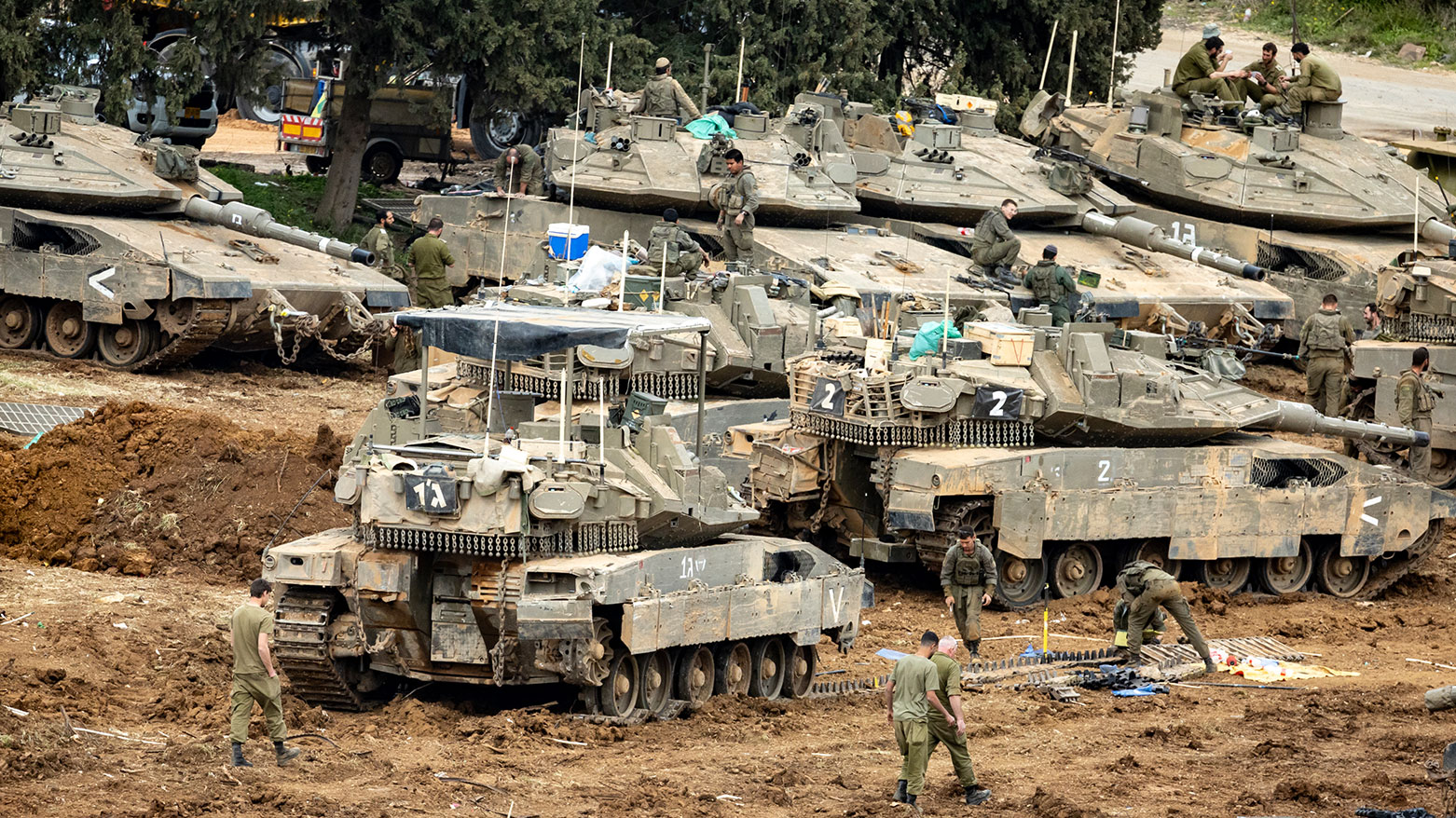
ERBIL (Kurdistan24) - Israel is preparing to expand its ground operations in Lebanon, aiming to seize territory south of the Litani River and dismantle Hezbollah’s military infrastructure, Israeli and U.S. officials told Axios. The planned operation comes amid the ongoing conflict between Israel and Iran-aligned forces, which has seen a surge in rocket attacks and cross-border hostilities.
A senior Israeli official told Axios that the military intends to replicate tactics used in Gaza, targeting buildings and facilities Israel says are used by Hezbollah to store weapons and launch attacks. “We are going to do what we did in Gaza,” the official said, according to the report. The official added that the objective is to take control of territory, push Hezbollah forces northward from the border, and dismantle military positions and weapons depots in southern Lebanese villages.
The Israeli Defense Forces (IDF) have maintained three armored and infantry divisions along the Lebanese border since the onset of the Iran war, with limited incursions conducted over the past two weeks. On Friday, the IDF announced the deployment of additional reinforcements and the mobilization of reserves to prepare for the expanded ground operation, officials said.
Hezbollah leader Naim Qassem responded to the planned Israeli offensive by criticizing Lebanon’s diplomatic efforts to protect civilian sovereignty and reaffirming the group’s stance on armed resistance. “When the enemy threatens a ground invasion, we tell him: this is not a threat, but one of the traps you will fall into,” Qassem said, according to Axios. He added that any advance by Israeli ground forces would allow Hezbollah fighters to achieve gains through close confrontation with the IDF.
In anticipation of the operation, the IDF issued evacuation orders for villages and towns across southern Lebanon and areas north of the Litani River, including Hezbollah’s stronghold in Beirut’s southern suburbs. Reports indicate that approximately 800,000 Lebanese civilians have been displaced since the start of hostilities, and at least 773 people have been killed, many of them civilians.
U.S. officials said the Trump administration has urged Israel to avoid bombing Beirut’s international airport or other state infrastructure. Israeli authorities agreed to spare the airport but have not committed to protecting other government facilities. On Friday, the IDF targeted a bridge in southern Lebanon it claimed was being used by Hezbollah to transport forces and weapons. An Israeli official said Washington would be consulted on further operations on a case-by-case basis and asserted that Israel has “full U.S. backing for this operation.” A U.S. official emphasized that the Israeli military must act to halt Hezbollah shelling.
The escalation follows a large-scale coordinated attack by Hezbollah and Iran, which involved the launch of more than 200 missiles by Hezbollah and additional strikes by Iranian forces. Israeli officials told Axios that the assault prompted a shift in Israel’s military calculus, with Prime Minister Benjamin Netanyahu moving from containment to preparing for a broader offensive.
Netanyahu has assigned former minister Ron Dermer to manage the Lebanon file during the conflict, officials said. Dermer is responsible for coordinating with the Trump administration and potentially negotiating with the Lebanese government if direct talks take place. On the U.S. side, adviser Massad Boulos, also the U.S. envoy for Africa, has been facilitating communication between Israeli, Lebanese, and Arab officials to enable direct discussions, Axios reported.
Lebanon’s government has indicated its readiness to engage in immediate talks with Israel on the terms of a ceasefire, without preconditions. U.S. officials said they hope to use any such negotiations to establish the framework for a broader agreement that would formally end the state of war between Israel and Lebanon, which has persisted since 1948.
The expansion of Israeli ground operations in Lebanon represents a significant escalation in the ongoing regional conflict. Officials noted that the operation is intended to dismantle Hezbollah’s capabilities, secure Israeli borders, and prevent further missile attacks from southern Lebanon.
Israeli and U.S. authorities emphasized that while military objectives are being prioritized, efforts are underway to mitigate harm to civilian infrastructure and to coordinate with the Lebanese government when possible.
The IDF’s expanded ground mobilization, combined with planned offensive operations against Hezbollah positions, marks the most significant Israeli incursion into Lebanon since 2006, according to officials.