Larijani Denounces Alleged “9/11-Style” Plot, Confirms Defensive Operations
Writing on his official X account, Larijani warned that “I’ve heard that the remaining members of Epstein’s network have devised a conspiracy to create an incident similar to 9/11 and blame Iran for it.”
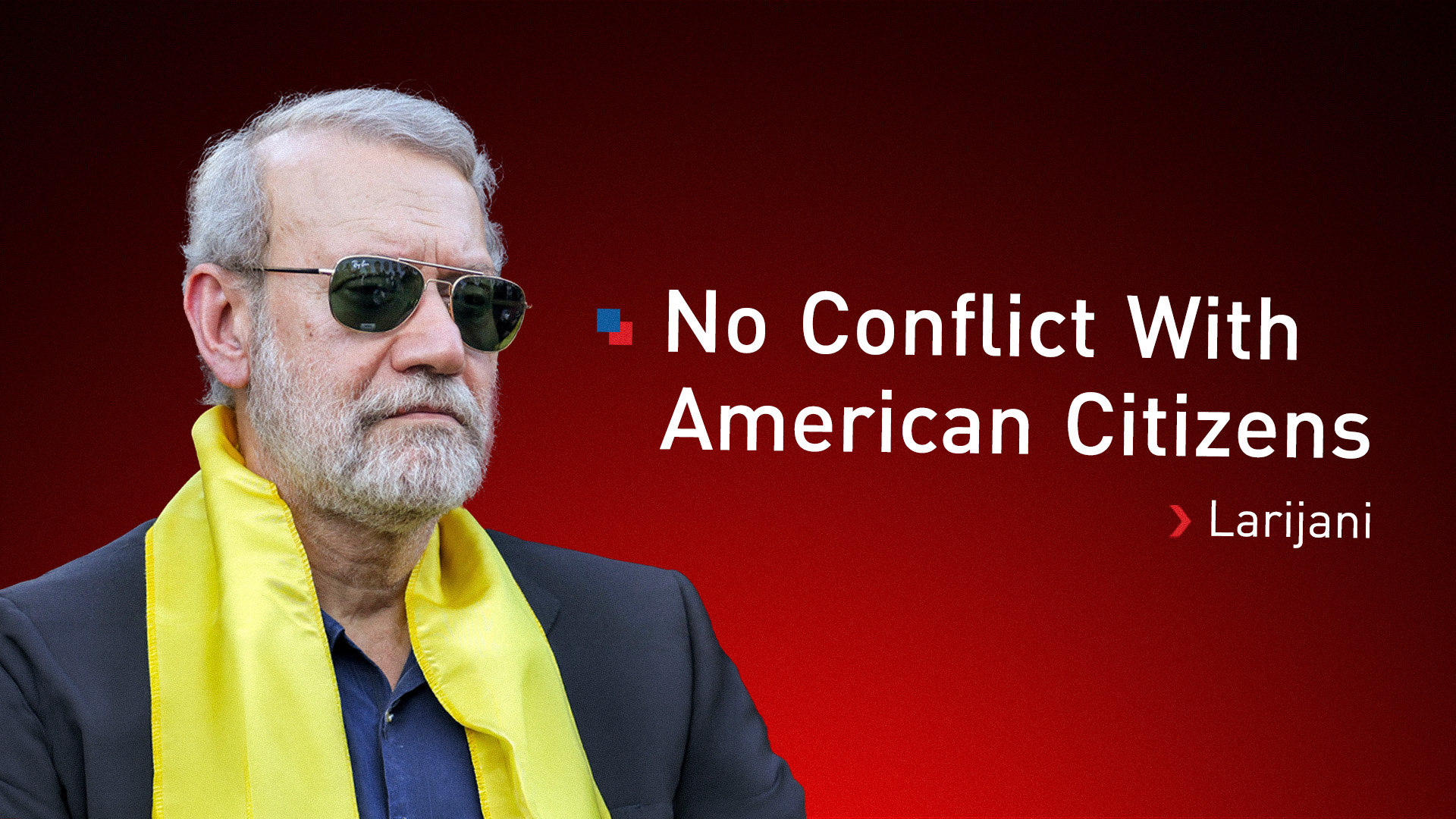
ERBIL (Kurdistan24) - Iran has no war with the American people, Secretary of Iran's Supreme National Security Council Ali Larijani said on Sunday, responding to U.S. plans for a so-called "false flag" operation.
Writing on his official X account, Larijani warned that “I’ve heard that the remaining members of Epstein’s network have devised a conspiracy to create an incident similar to 9/11 and blame Iran for it.”
He added, “Iran fundamentally opposes such terrorist schemes and has no war with the American people,” while asserting that Tehran is defending itself against an “aggression launched by the United States and Israel.”
“Iran stands tall in doing so in order to teach the aggressors a lesson,” Larijani wrote, as quoted by the IRGC-linked Tasnim News Agency.
I’ve heard that the remaining members of Epstein’s network have devised a conspiracy to create an incident similar to 9/11 and blame Iran for it. Iran fundamentally opposes such terrorist schemes and has no war with the American people.
— Ali Larijani | علی لاریجانی (@alilarijani_ir) March 15, 2026
The remarks came amid heightened tensions in the Gulf following a series of Iranian strikes targeting U.S. military positions and assets, which Tehran characterizes as retaliatory measures against operations launched from American bases, the report noted.
Iranian Foreign Minister Abbas Araghchi urged other countries to avoid actions that could escalate the ongoing war with the United States and Israel.
In a phone conversation with French Foreign Minister Jean-Noel Barrot, Araghchi emphasized the importance of restraint, stating that Tehran is prepared to engage in regional diplomatic efforts, including the formation of a joint investigative committee to clarify the nature of attacks in the area.
Araghchi said Iran has coordinated with neighboring states such as Qatar, Saudi Arabia, and Oman, and is considering proposals from these countries aimed at reducing tensions and facilitating resolution.
“The ongoing regional diplomacy is focused on de-escalation,” he said, affirming Iran’s willingness to examine any plan that would ensure a full cessation of hostilities.
The foreign minister also stressed that Iranian strikes have been directed specifically at U.S. bases and interests, while information on alleged U.S. and Israeli attacks on other countries using drones is under review as part of Tehran’s assessment of regional military activity.
The warnings and proposals followed U.S. President Donald Trump’s call for allied naval forces to secure the Strait of Hormuz, a key maritime passage for global energy shipments.
In a statement on his Truth Social account, Trump urged China, France, Japan, South Korea, and the United Kingdom to contribute warships to ensure safe passage, citing Iran’s capacity to disrupt shipping through drones, mines, or short-range missile attacks.
Trump asserted that U.S. forces have “destroyed 100 percent” of Iran’s military capabilities but reiterated that Tehran could still attempt to interfere with maritime traffic.
According to the U.S. president, while Washington is leading the operations, the security of the strait should involve coordinated contributions from nations dependent on its uninterrupted use.
Trump emphasized the strategic importance of the passage and described allied cooperation as essential for regional stability.
U.S. officials said the increasing threat from Iran has prompted considerations for escort missions and other operations to restore commercial navigation through the strait.
Araghchi highlighted that Iran’s approach is responsive rather than aggressive, with all strikes aimed at U.S. military positions and ongoing contacts with regional states intended to mitigate the risk of inadvertent escalation.
The joint investigative committee proposed by Iran would include neighboring countries to assess the legitimacy and targets of attacks, aiming to clarify whether incidents involve U.S. facilities or other sites.
The committee is part of Tehran’s efforts to ensure transparency and prevent misunderstandings that could further widen the conflict.
The foreign minister stressed that Tehran is actively reviewing intelligence on U.S. and Israeli operations in nearby countries, underscoring the complexity of regional hostilities.
He reiterated Iran’s readiness to cooperate with regional partners to limit the scope of the conflict while defending national interests.
The Strait of Hormuz, situated between Iran and Oman, remains a critical global energy corridor, carrying a substantial portion of international oil exports.
Disruptions in the strait carry potential economic consequences, particularly for countries reliant on Middle Eastern oil supplies.
Both sides have framed their actions in terms of responsibility and accountability, with Iran emphasizing targeted defensive operations and the United States focusing on protecting shipping and deterring further interference.
The situation in the Gulf remains fluid, with military readiness and diplomatic engagement continuing in parallel.
Tehran’s statements underline its defensive posture, while Washington continues to coordinate with allies to secure maritime routes and respond to Iranian threats.