Iran’s Supreme Leader Vows Retaliation Over Larijani Killing Amid Ongoing War
In a written message published on his official Telegram channel on the day of Larijani’s funeral in Tehran, Khamenei said the perpetrators “will have to pay” for the attack.
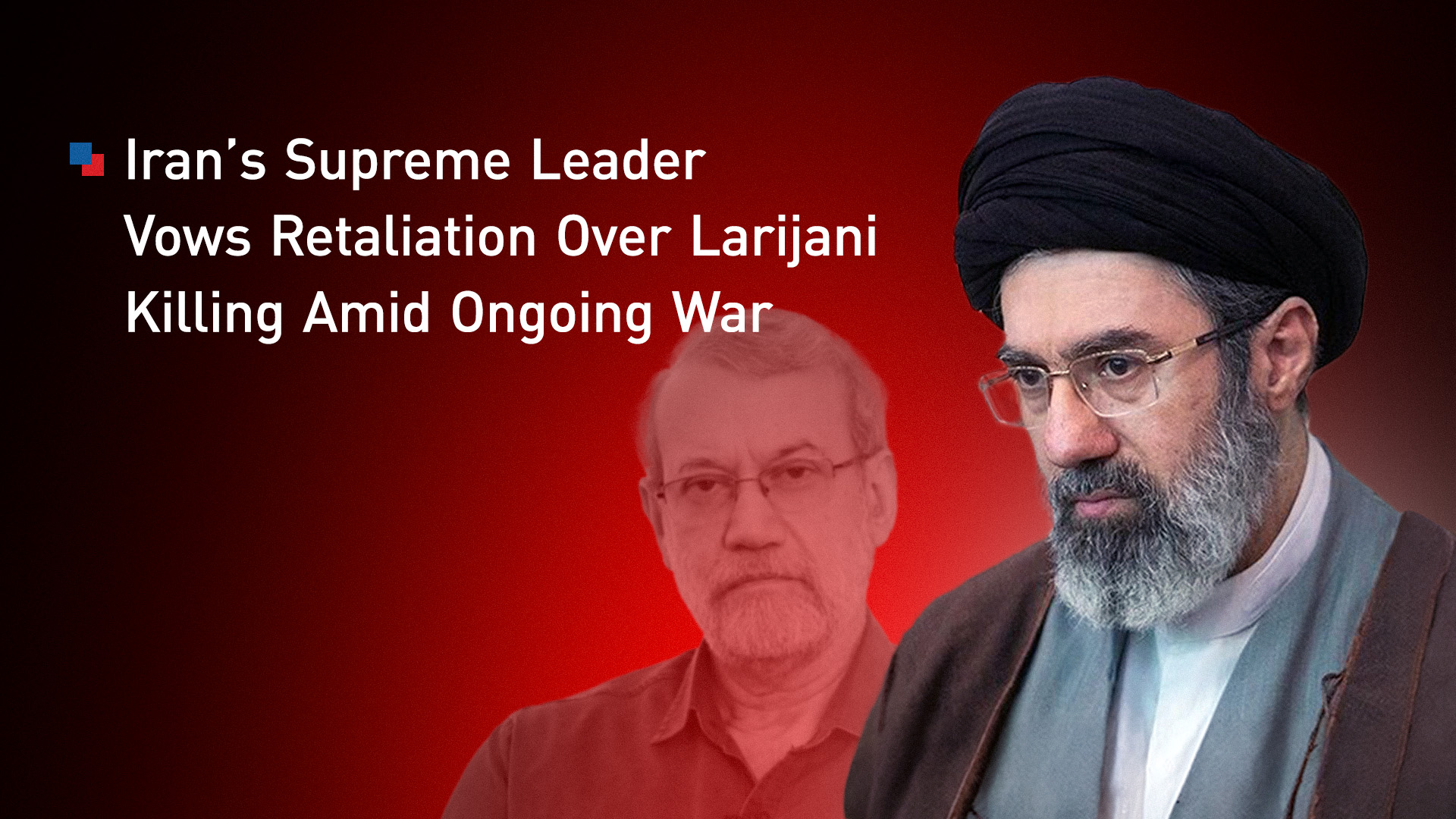
ERBIL (Kurdistan24) – Iran’s newly appointed Supreme Leader, Mojtaba Khamenei, on Wednesday vowed retaliation against those responsible for the killing of senior official Ali Larijani, who was killed in an Israeli strike, as tensions continue to escalate in the region.
In a written message published on his official Telegram channel on the day of Larijani’s funeral in Tehran, Khamenei said the perpetrators “will have to pay” for the attack.
“Without a doubt, the assassination of such a figure attests to his importance and to the hatred that the enemies of Islam harbor toward him,” he stated. “Every drop of spilled blood comes at a price, and the criminal murderers of these martyrs will soon have to pay it.”
Khamenei has not yet made a public appearance since assuming office following the death of his father, Ali Khamenei, who was killed at the outset of the ongoing conflict.
The current war—now in its third week—began on February 28, following surprise airstrikes carried out by the United States and Israel targeting Iran’s leadership and military infrastructure. The strikes were reportedly aimed at preventing Iran from developing nuclear weapons.
Since the start of the conflict, several high-ranking Iranian officials have been killed, including Larijani, Basij commander Gholamreza Soleimani, and Intelligence Minister Esmail Khatib.
Following the death of Ali Khamenei, Iran’s Assembly of Experts appointed Mojtaba Khamenei as the country’s new Supreme Leader.
The escalating conflict between Iran, the United States, and Israel continues to raise concerns over broader regional instability, as military exchanges intensify and casualties mount on all sides.