Hundreds Protest Alcohol Ban in Damascus Amid Fears of Rising Social Conservatism
Demonstrations highlight Syrians’ concerns over creeping restrictions on personal freedoms under Islamist authorities
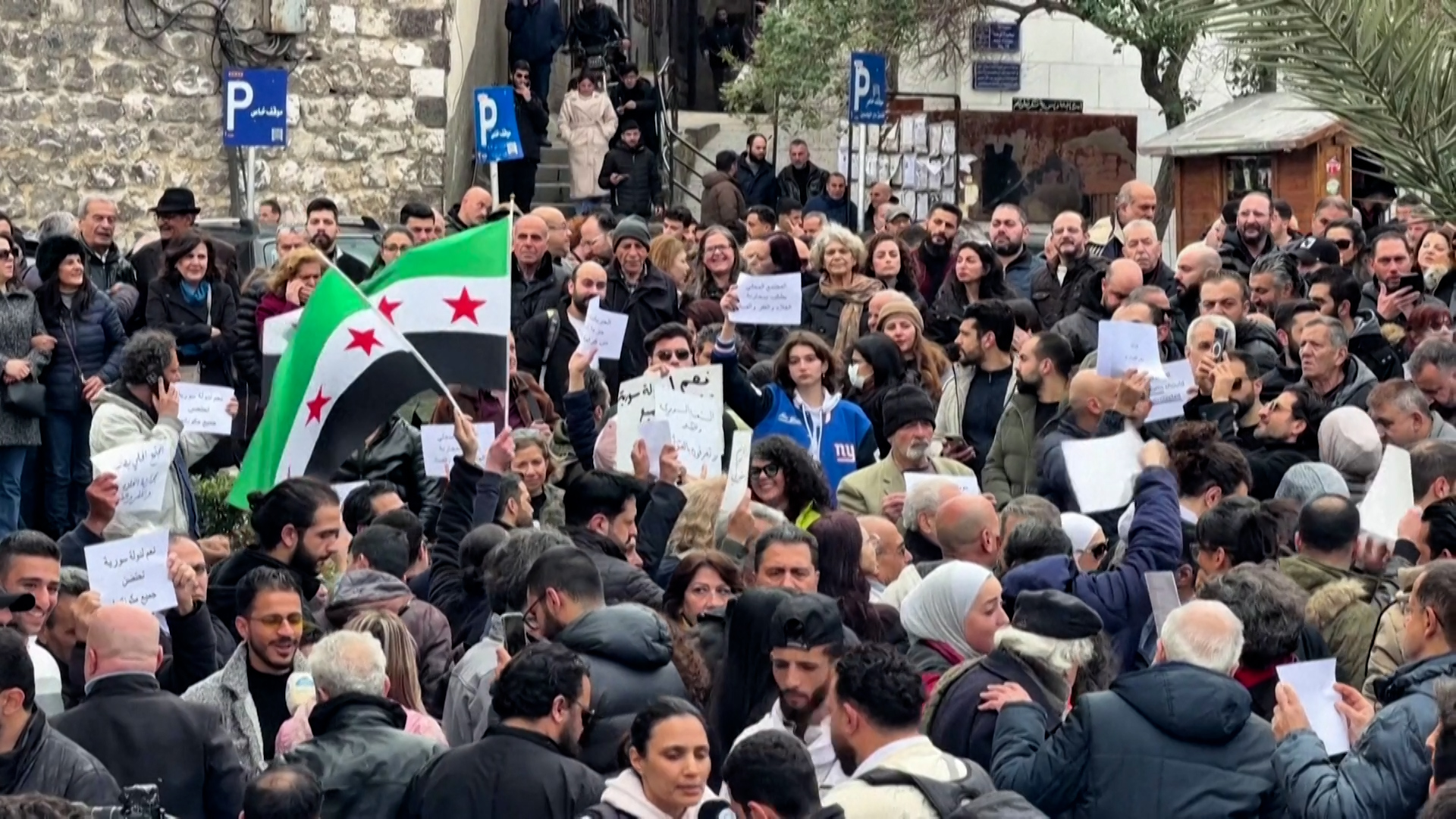
ERBIL (Kurdistan24) — Hundreds of Syrians took to the streets of central Damascus on Sunday to protest new restrictions on alcohol sales, reflecting growing concern that the country’s Islamist authorities may impose broader limits on personal freedoms.
The Syrian capital last week banned the sale of alcoholic beverages in restaurants and bars, permitting retail sales only in three predominantly Christian neighborhoods.
In the Bab Tuma district, demonstrators gathered for a silent protest organized by civil society groups, holding banners that read: “Personal freedom is a red line.”
Security forces monitored the gathering, according to AFP journalists on the scene.
“This type of decision will not stand,” said Rami Koussa, a 37-year-old television writer, expressing frustration over what many see as unnecessary restrictions.
University professor Hanan Assi added that Syrians face “thousands of forgotten issues, from poverty to the displaced, the homeless, and refugees” that should take priority over social restrictions.
The alcohol ban follows a series of measures seen as indicative of rising social conservatism since the Islamist authorities assumed control after the 2024 fall of longtime ruler Bashar al-Assad.
Recent regulations include requiring “modest” swimwear on public beaches and banning makeup for public sector workers in Latakia.
While the new government has pledged to protect minority communities, including Christians, the country has experienced several instances of sectarian violence, raising concerns that incremental restrictions could exacerbate social and religious tensions.
The demonstrations in Damascus underscore growing public unease over the direction of Syria’s governance, as citizens balance demands for personal freedoms with pressures from conservative social policies.