US May ‘Escalate to De-escalate’ Against Iran, Treasury Secretary Says
Bessent defends temporary sanctions relief on Iranian oil amid soaring energy prices
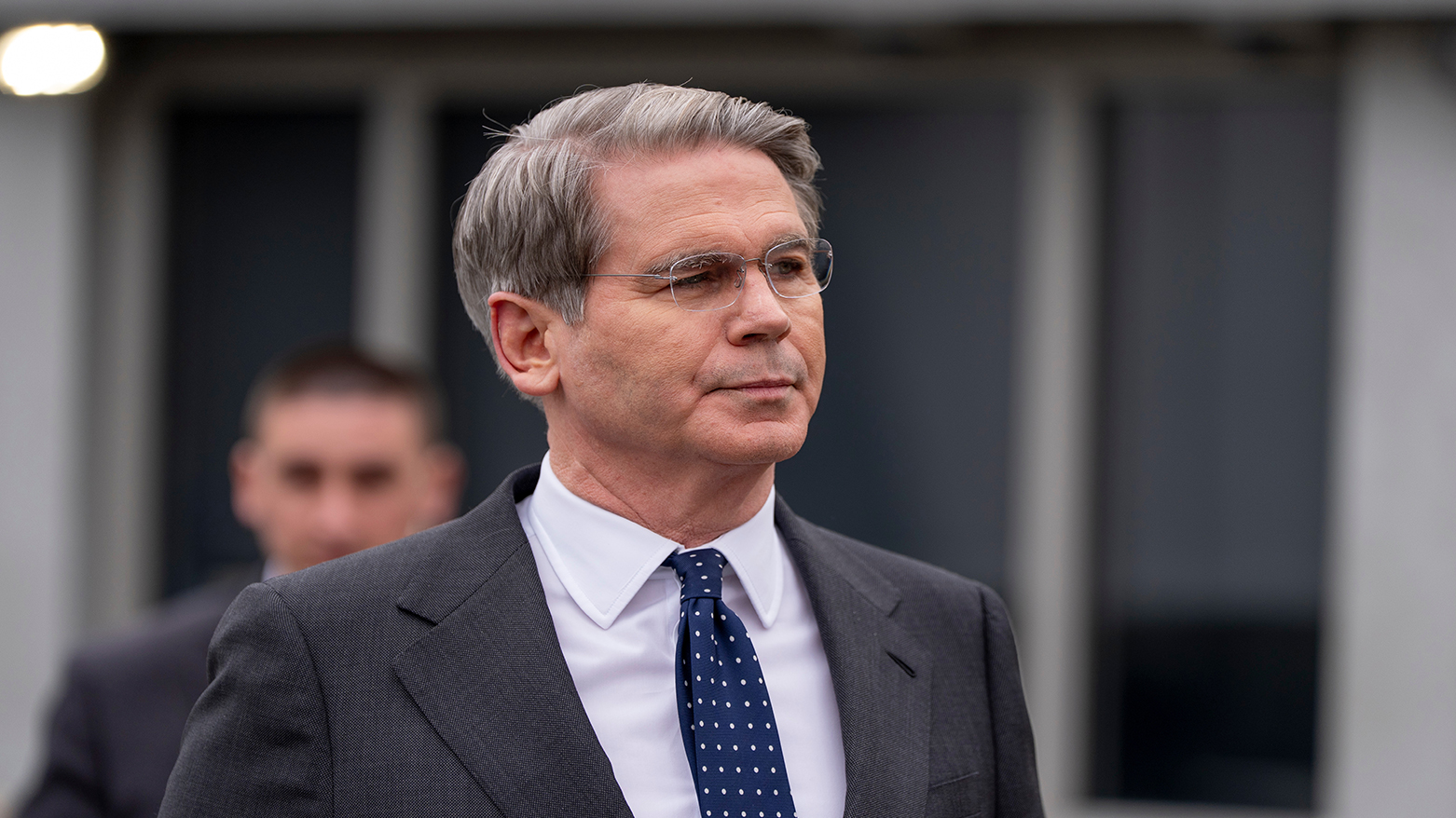
ERBIL (Kurdistan24) — The United States may need to escalate its military operations against Iran to wind down the ongoing conflict, Treasury Secretary Scott Bessent said Sunday, amid apparent contradictions in the policy direction outlined by President Donald Trump.
Asked on NBC’s Meet the Press whether Washington was winding down or escalating the war, Bessent replied: “They’re not mutually exclusive. Sometimes you have to escalate to de-escalate. This is the only language the Iranians understand.”
Trump on Saturday threatened to “obliterate” Iranian energy plants if Tehran did not fully open the strategically critical Strait of Hormuz, which carries roughly a fifth of global oil and gas supplies. This followed his Friday remark that U.S. objectives were “very close” and that he was considering “winding down” the war.
Bessent also defended a temporary lifting of U.S. sanctions on Iranian and Russian oil already loaded onto ships, an effort aimed at stabilizing energy markets amid rising crude prices that have spurred global economic concern.
Critics argue the move could indirectly fund Iran while the U.S.–Israel military campaign continues, but Bessent countered that the policy limits the price Iran can obtain for its oil.
“That Iranian oil was always going to be sold to the Chinese at a discount,” Bessent said. “So which is better? Oil prices spiking to $150 and Iran getting 70 percent, or prices below $100?”
He acknowledged that gasoline prices in the U.S. have risen sharply, creating potential political risks ahead of the midterm elections, but argued the temporary costs were justified.
“I don’t know whether it’s going to be 30 days. I don’t know whether it’s going to be 50 days. I don’t know whether it’s going to be 100 days,” Bessent said. “But to have 50 years of peace in the Middle East and know that the Iranian regime is defanged will be worth it.”
Meanwhile, Reza Pahlavi, the exiled son of Iran’s last shah, urged Trump and Israeli Prime Minister Benjamin Netanyahu to avoid targeting civilian infrastructure, arguing that it “belongs to the Iranian people and to the future of a free Iran.”
Pahlavi, who wields influence among the Iranian diaspora but holds no official position, stated on X that “Iran must be protected. The regime must be dismantled.”
The remarks underscore the complex balancing act facing the U.S. as it navigates a widening conflict with Iran: Washington is striving to degrade Tehran’s military capability while also attempting to stabilize volatile global energy markets and maintain domestic political confidence.
With the near‑closure of the Strait of Hormuz disrupting roughly 20 % of global oil flows and sending prices sharply higher, U.S. policymakers are weighing a mix of military pressure and economic maneuvers — including temporary sanctions relief on oil in transit — to manage both strategic objectives and economic fallout.
The administration’s approach reflects an effort to compel Iran to curb its aggressive posture while keeping energy costs from spiraling further, a dilemma that ties battlefield decisions to global markets and domestic political considerations.