Israel Says It Will Intensify Strikes on Iran Over Continued Missile Fire
Israel said it will intensify strikes on Iran following continued missile fire, citing the need to target additional sectors linked to military capabilities.
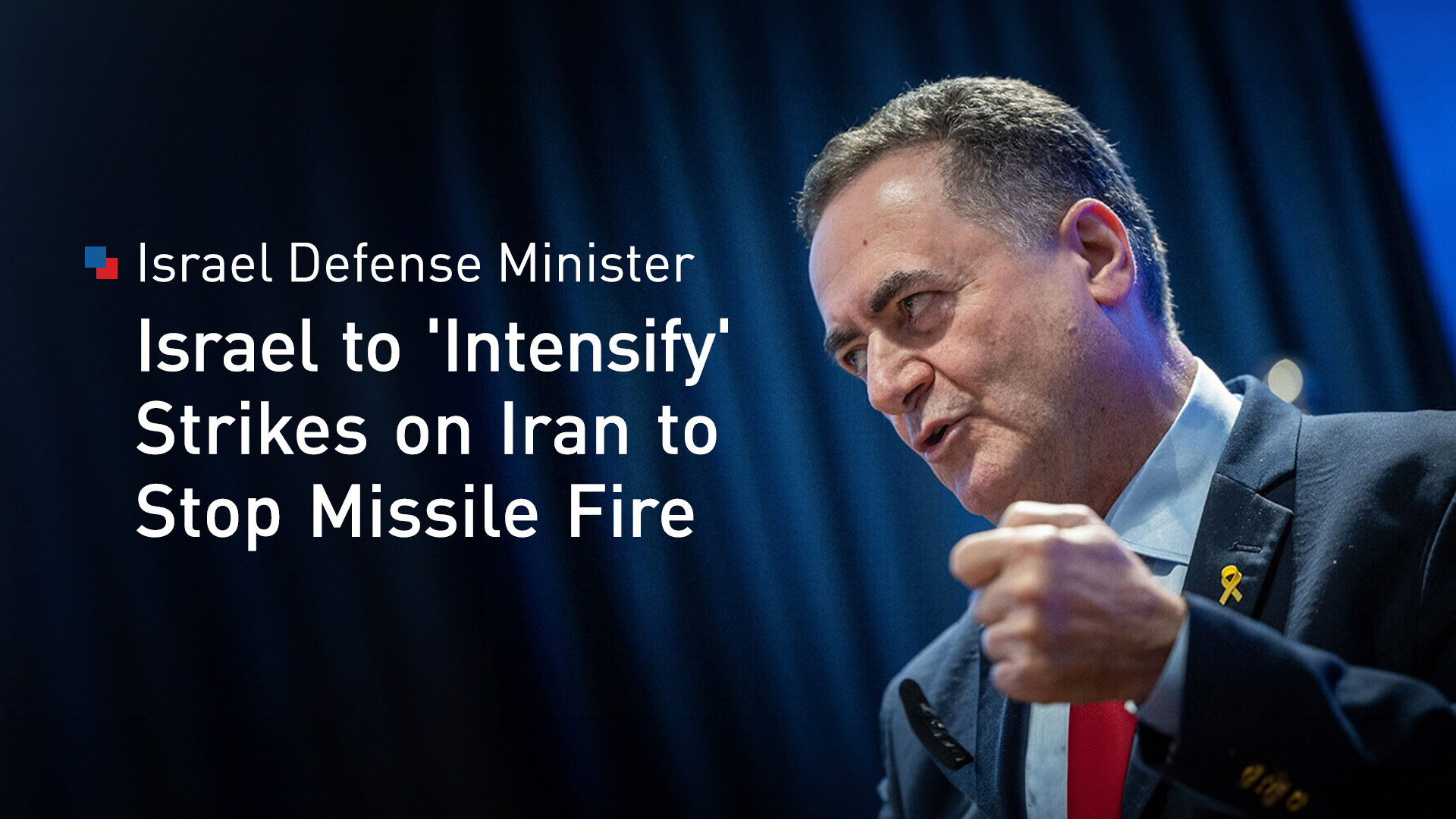
ERBIL (Kurdistan24) - Israel’s defense minister said Friday that Israeli forces will intensify and expand strikes against Iran in response to continued missile fire, warning that the Islamic Republic would face escalating consequences, according to a statement cited by AFP.
Defence Minister Israel Katz said the decision follows ongoing missile launches from Iran toward Israeli territory despite prior warnings. “Despite the warnings, the firing continues — consequently, IDF strikes in Iran will intensify and expand to other targets in sectors that help the regime develop and use military means against Israeli civilians,” Katz said in a video released by his office. He added that Iran would “pay a heavy price, an increasingly heavy one, for this war crime.”
The announcement marks a further escalation in the ongoing confrontation, with Israeli officials signaling that military operations will broaden in scope beyond previously targeted sites. According to the statement, the expanded campaign will include additional sectors linked to Iran’s military capabilities.
The remarks come amid continued exchanges of fire between Iran and Israel, including large-scale missile barrages launched by Tehran. Iranian state media reported that a recent wave of attacks constituted the 83rd round of missile strikes targeting Israeli territory, with air raid sirens activated across central areas, including Tel Aviv and Jerusalem, according to local reports cited by Kurdistan24.
Israel’s warning also coincides with reports of additional strikes inside Iran. Iranian media said an explosion in the city of Qom early Friday killed at least six people, with a local official stating that the casualties followed strikes on residential buildings in the Pardisan neighborhood. The same reports alleged that the strikes involved bunker-buster munitions and targeted multiple locations, including what was described as a suspected facility.
In parallel, Iran’s Foreign Minister Abbas Araghchi accused the United States and Israel of carrying out attacks on civilian infrastructure, including schools, medical centers, and water facilities. In remarks delivered to the United Nations Human Rights Council, Araghchi claimed the strikes had resulted in mass casualties, including the deaths of teachers and students. He described the alleged actions as “crimes against humanity,” according to his statement.
The developments follow a broader intensification of military and diplomatic activity across the region. A senior U.S. defense official said Washington is considering deploying at least 10,000 additional troops to the Middle East, a move that would significantly increase the U.S. military presence amid rising tensions with Iran. According to the official, a final decision could come within days, with the potential deployment reflecting preparations for a range of military scenarios.
At the same time, U.S. President Donald Trump has indicated that negotiations with Iran are ongoing, while signaling readiness to escalate if talks do not produce results. According to reporting cited by Kurdistan24, Washington has also paused certain strikes on Iranian energy infrastructure while diplomatic efforts continue.
The regional impact of the conflict has extended beyond direct exchanges between Iran and Israel. Kuwaiti authorities reported that Mubarak Al-Kabeer Port was targeted in a dual attack involving drones and cruise missiles early Friday, resulting in material damage but no casualties. The Ministry of Public Works said emergency procedures were activated immediately following the incident.
Officials described the attack as a hostile operation targeting key infrastructure at the port, which is located on Bubiyan Island near Kuwait’s maritime border with Iraq. The facility is considered a central component of Kuwait’s long-term development strategy and a significant logistical hub, according to the ministry.
Market reactions have also reflected the evolving situation. Oil prices declined on Friday after earlier gains, with Brent crude and U.S. West Texas Intermediate both falling amid indications of progress in diplomatic talks and a temporary pause in strikes on energy facilities. Analysts cited by Kurdistan24 noted that market volatility remains closely tied to both military developments and diplomatic signals.
Despite these parallel developments, Israeli officials have focused on the continued missile fire from Iran as the primary driver of their latest decision. Katz’s statement emphasized that ongoing attacks on Israeli civilians necessitate an expanded military response targeting additional components of Iran’s military infrastructure.
Iranian officials, for their part, have maintained that the country is acting in self-defense. A senior Iranian military source warned against any potential U.S. ground invasion, stating that Iranian forces are prepared to respond and have heightened their readiness amid what was described as a critical phase in the conflict.
The continued exchanges underscore the widening scope of hostilities, with multiple theaters experiencing spillover effects and infrastructure targets increasingly coming into focus. Officials across the region have acknowledged the growing complexity of the situation as military actions and diplomatic efforts unfold simultaneously.
Israel’s latest statement indicates that its military campaign will continue to evolve in response to developments on the ground, with a particular emphasis on addressing what it describes as ongoing threats to civilian populations.