Kurdistan24 Exclusive: Iran’s Parliamentary Spokesperson Warns of Renewed War Threat
A senior Iranian parliamentary security official warned that the Strait of Hormuz has entered a “post-war” phase and will no longer operate as it did before the fighting
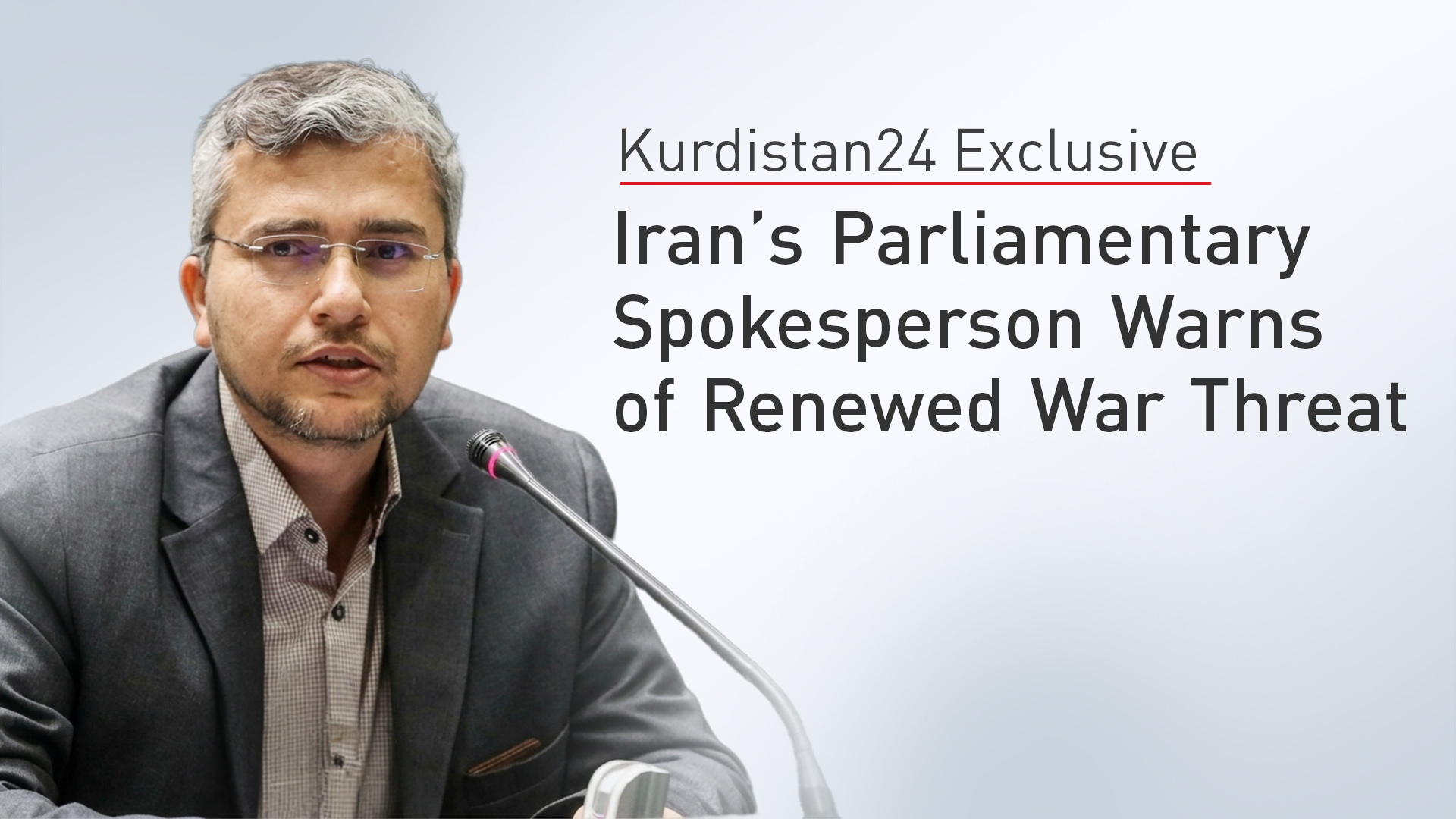
ERBIL (Kurdistan24) - Iran’s parliamentary spokesperson for national security and defense, Ebrahim Rezaei, told Kurdistan24 on Friday that Tehran has prepared for the possible resumption of war, while stressing that maritime movement through the Strait of Hormuz will never return to its pre-conflict state.
On Friday, Rezaei told Kurdistan24 in an exclusive statement that a draft law concerning “strategic measures for the security of the Strait of Hormuz” had been reviewed by the committee and is now ready to be presented during a public parliamentary session.
Rezaei said Tehran intends to manage the strait “within a legal framework.”
The Iranian official stated that the Strait of Hormuz has entered a new phase following the recent war and “will no longer return to its previous condition.”
He added that the history of the region would now be divided into a period “before and after the war.”
According to Rezaei, the waterway is currently open only to “friendly ships,” while maritime traffic must coordinate with Iran’s armed forces.
Addressing relations with the Kurdistan Region, Rezaei described ties as “friendly,” but said Tehran expects the security agreement between Iran and Iraq concerning armed groups to be fully implemented.
He also stressed that the ceasefire does not include those armed groups, warning that Iran would respond and launch preemptive strikes whenever it perceives a threat.
Rezaei further stated that Tehran is prepared for any scenario involving an expansion of the conflict.
He said Iran’s focus remains on strengthening its defense capabilities and warned that if a new confrontation breaks out, Iran’s response against its enemies would be “much stronger.”
Rise of the Iran war
On Feb. 28, 2026, Israel and the US launched a large-scale joint military operation against Iran.
The strikes targeted hundreds of military sites, missile facilities, air defense systems, and command centers across the country. The attacks resulted in the deaths of Iran’s Supreme Leader Ali Khamenei and dozens of senior Iranian military commanders and officials.
In response, Iran’s Islamic Revolutionary Guard Corps launched daily missile and drone attacks against Israel as well as US military bases in Gulf countries, the Kurdistan Region, and Iraq.
During the conflict, Iran closed the Strait of Hormuz — through which nearly 20 percent of the world’s oil supply passes — and launched attacks on ships in the area.
The move triggered a major global economic crisis and sharp increases in oil prices.
The US later imposed a naval blockade on Iranian ports in response to the closure of the strait, intercepting or turning back ships heading toward Iranian harbors.
Together, the dual blockades significantly restricted maritime movement through Hormuz and caused major economic damage.
The war lasted for 40 days before a temporary ceasefire was announced through Pakistani mediation, easing tensions and halting the fighting.
Although direct negotiations have since been held in Islamabad and officials from both countries continue exchanging messages on a daily basis, no final agreement has yet been reached.