Iranian Red Crescent Reports Widespread Damage to Civilian Infrastructure Amid Ongoing Strikes
The Iranian Red Crescent said 87,294 sites have been damaged or destroyed in Iran since the start of the attacks, including residential, commercial, medical, and educational facilities.
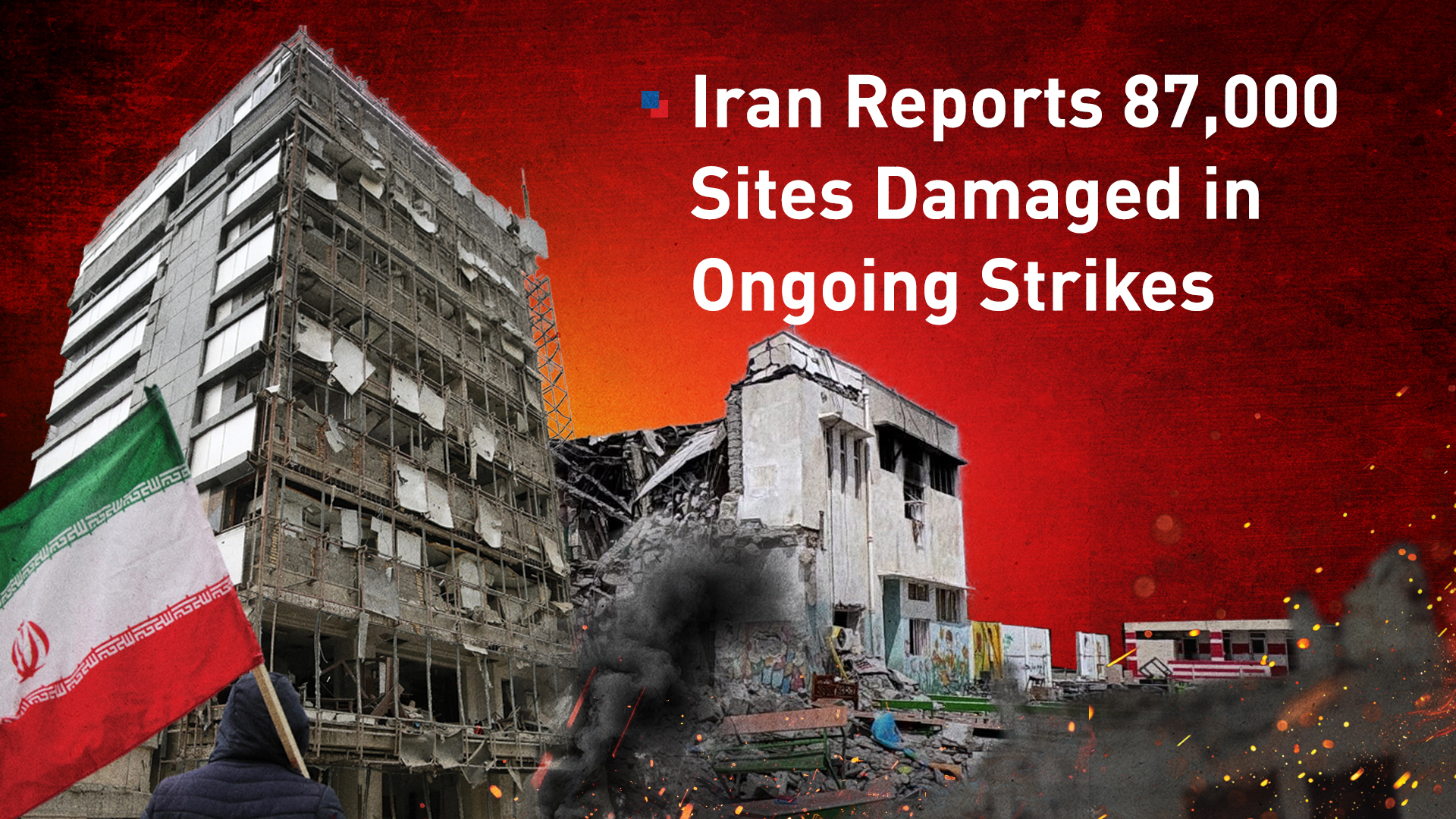
ERBIL (Kurdistan24) - The Iranian Red Crescent Society said on Friday that 87,294 sites across Iran have been severely damaged or destroyed since the start of what it described as Israeli and U.S. attacks, including residential areas, commercial properties, medical facilities, and schools, according to a statement by its president.
Pir-Hossein Koulivand, head of the Iranian Red Crescent Society, announced in a press briefing that the reported damage includes 66,261 residential units and 20,127 commercial units. He stated that the majority of affected sites are located in Tehran Province, reflecting what he described as the intensity of strikes on the capital.
Koulivand said that 289 medical, treatment, health, and rescue centers had been hit during the attacks. He added that 600 schools and 17 Red Crescent facilities were directly targeted and rendered unusable due to damage. The statement further indicated that three rescue helicopters and 48 aid vehicles had also been struck.
He characterized the targeting of medical and humanitarian infrastructure as a violation of international laws, according to the statement.
The figures provided by the Iranian Red Crescent represent one of the most detailed official assessments of infrastructure damage since the escalation of hostilities between Iran, Israel, and the United States.
The announcement comes as Israeli officials signaled an expansion of their military operations. Israel’s Defense Minister Israel Katz said on Friday that Israeli forces would intensify and broaden strikes against Iran in response to continued missile fire targeting Israeli territory.
“Despite the warnings, the firing continues — consequently, IDF strikes in Iran will intensify and expand to other targets in sectors that help the regime develop and use military means against Israeli civilians,” Katz said in a video statement released by his office. He added that Iran would “pay a heavy price, an increasingly heavy one, for this war crime.”
According to statements cited by Kurdistan24, Israeli authorities indicated that the expanded campaign would include additional sectors linked to Iran’s military capabilities, marking a further escalation in the ongoing confrontation.
The latest developments follow continued missile exchanges between Iran and Israel. Reports cited by Kurdistan24 indicated that Iranian missile attacks have reached multiple rounds, with air raid sirens activated in several Israeli cities, including Tel Aviv and Jerusalem.
Iranian officials have maintained that their actions are defensive. A senior Iranian military source, cited by local media, warned against any potential U.S. ground operation, stating that Iranian forces are prepared to respond to any incursion and have heightened readiness levels.
In parallel, Iranian authorities have raised allegations regarding the targeting of civilian infrastructure. Iran’s Foreign Minister Abbas Araghchi said in remarks delivered to the United Nations Human Rights Council that U.S. and Israeli strikes had hit schools, water facilities, medical centers, and shelters, resulting in casualties.
Araghchi described the alleged actions as “crimes against humanity” and called for accountability, according to his statement.
Additional reports from Iranian media described an explosion in the city of Qom early Friday that resulted in at least six fatalities. A local official cited by those reports said the casualties followed strikes on residential buildings in the Pardisan neighborhood.
The same reports alleged that bunker-buster munitions were used and that a suspected facility was among the targets. These claims have not been independently verified in the provided materials.
Beyond Iran, the effects of the conflict have extended to other parts of the region. Kuwaiti authorities reported that Mubarak Al-Kabeer Port was targeted in an early morning attack involving drones and cruise missiles, causing material damage but no casualties.
According to a statement by Kuwait’s Ministry of Public Works, emergency procedures were activated immediately following the incident. Officials described the strike as a hostile operation targeting key infrastructure at the port, which is located on Bubiyan Island near Kuwait’s maritime border with Iraq.
The ministry noted that the port is a central component of Kuwait’s long-term development strategy and a major logistics hub, underscoring the broader regional implications of the conflict.
At the same time, U.S. officials are considering further military measures. A senior U.S. defense official said Washington is weighing the deployment of at least 10,000 additional troops to the Middle East, according to reporting cited by Kurdistan24.
The official indicated that a final decision could be made within days and that the potential deployment reflects preparations for a range of military scenarios. The reinforcements would reportedly come from units not currently stationed in the region.
Diplomatic efforts are also ongoing. U.S. President Donald Trump has indicated that negotiations with Iran are underway, while also signaling readiness to escalate if talks do not produce results, according to statements cited in Kurdistan24 reporting.
In conjunction with these developments, the United States has paused certain strikes targeting Iranian energy infrastructure as part of what officials described as ongoing diplomatic engagement.
The evolving situation has had an impact on global energy markets. Oil prices declined on Friday following earlier gains, with Brent crude and U.S. West Texas Intermediate both registering decreases.
Market analysts cited by Kurdistan24 attributed the movement to a combination of diplomatic signals and temporary pauses in attacks on energy facilities, while noting that volatility remains tied to the progression of the conflict.
Despite these parallel developments, the scale of damage reported by the Iranian Red Crescent underscores the extent of the humanitarian and infrastructural impact within Iran.
Koulivand’s statement emphasized that a wide range of civilian and humanitarian facilities have been affected, including healthcare infrastructure and educational institutions, alongside residential and commercial properties.
The reported targeting of Red Crescent assets, including rescue centers, helicopters, and vehicles, highlights the operational challenges faced by emergency response services during the ongoing hostilities.
The figures provided by the organization have not been independently verified within the provided materials but represent the official position of the Iranian Red Crescent regarding the extent of damage.
The continued exchanges of fire, combined with expanding military operations and ongoing diplomatic efforts, indicate that multiple dimensions of the conflict are unfolding simultaneously.
Officials across the region have acknowledged the complexity of the situation, with military actions, humanitarian concerns, and diplomatic initiatives intersecting in a rapidly evolving environment.
Israel’s stated intention to intensify strikes, coupled with Iran’s reported infrastructure losses and continued missile activity, reflects the ongoing escalation between the parties.