Iran’s 10-point message on the Gulf, Strategy or Time-Play?
Tehran outlines new regional vision amid military tensions and diplomatic negotiations
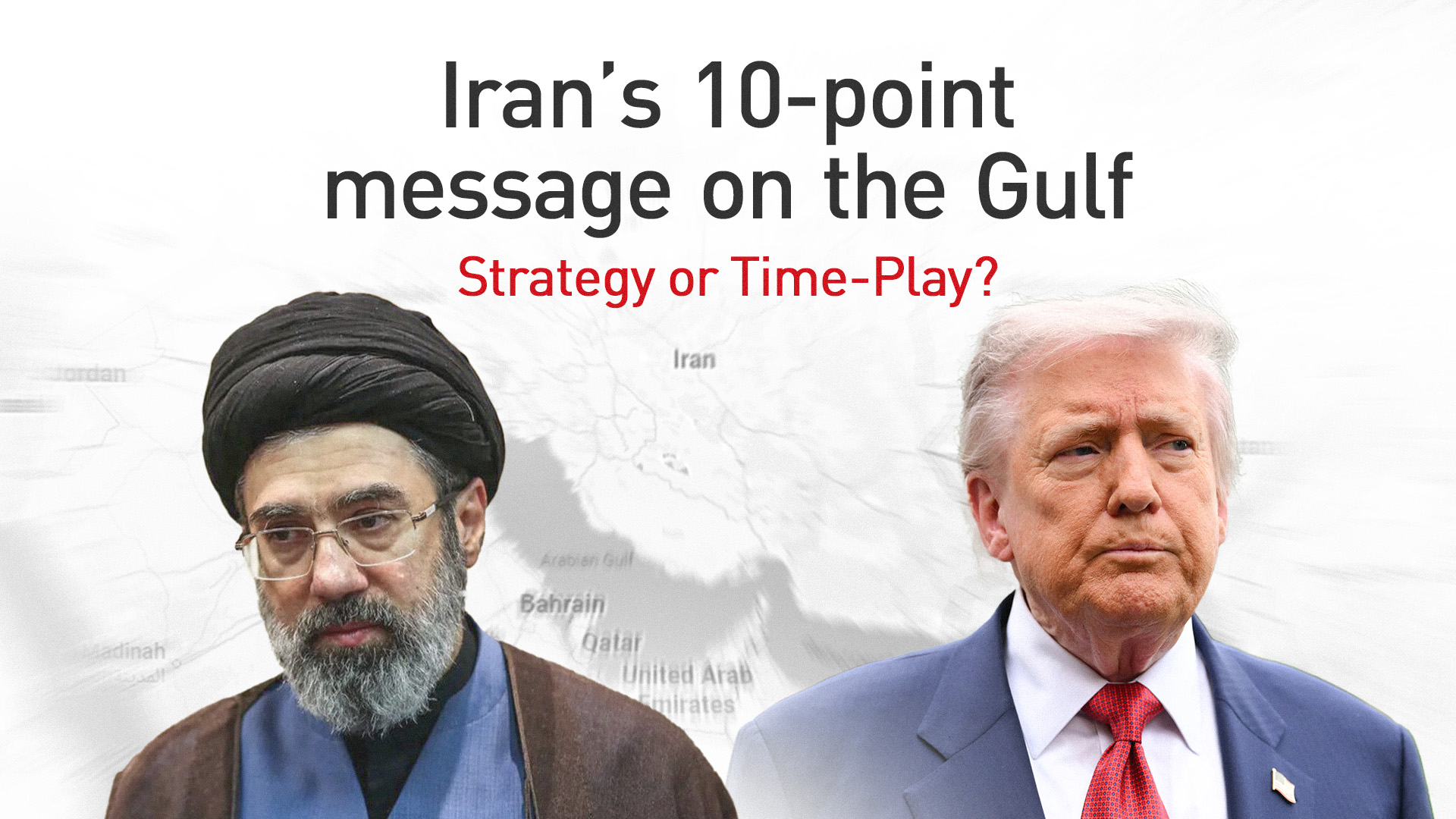
ERBIL (Kurdistan 24) - Iranian media on Monday published a new 10-point strategic message from Iran’s Supreme Leader, Mojtaba Khamenei, regarding the Gulf and the Strait of Hormuz, one of the world’s most important energy and shipping corridors.
The message focused on U.S. military presence in the Gulf, regional security, Iran’s role in Hormuz, and Tehran’s broader vision for the future of the region.
Why is this message important now?
The statement comes during one of the most dangerous periods in the Gulf in years, after months of confrontation involving Iran, the United States, Israel, and Iran-backed armed groups.
The Strait of Hormuz has become one of the central pressure points in the conflict. The U.S. Navy has increased operations in and around the waterway while also enforcing restrictions linked to the ongoing confrontation with Iran.
At the same time, indirect negotiations between Washington and Tehran continue through mediators including Qatar, Pakistan, Türkiye, Egypt, and Saudi Arabia.
Iran’s latest message appears aimed at shaping the political narrative around who should control Gulf security and how the future regional order should look after the conflict.
What exactly did Khamenei say?
According to Iranian media, Iran's Supreme Leader, Mojtaba Khamenei, argued that the presence of American military forces and bases in Gulf countries is the main reason for instability in the region.
He also claimed U.S. military bases cannot even fully protect themselves and said the future of the Gulf should be managed by regional countries rather than foreign powers.
One of the strongest lines in the statement declared that there is “no place for hostile foreigners in the Gulf,” except “the depths of its waters.”
Khamenei also linked Iran’s recent actions in the Gulf to what he described as “a new regional and international system,” while emphasizing that the Strait of Hormuz should operate under a new model based on regional control, legal principles, and economic benefit for Gulf nations.
Why is the Strait of Hormuz so important?
A significant share of global oil exports and LNG shipments passes through the narrow waterway every day, including exports from:
- Saudi Arabia
- Qatar
- Iraq
- Kuwait
- UAE
Because of that, any military escalation in Hormuz directly affects:
- Global oil prices
- Shipping insurance costs
- LNG exports
- International trade
- Energy security
Recent attacks, naval restrictions, drone operations, and military deployments in the Gulf have already caused sharp disruptions in maritime traffic and energy markets.
Is this also directed at the United States?
Much of the message appears aimed directly at Washington.
Iran is trying to frame itself as both:
- A military power capable of influencing Hormuz
- A regional actor demanding a reduced American military role in the Gulf
The message comes as tensions continue over the U.S. naval blockade, Project Freedom operations, sanctions, and ongoing nuclear negotiations.
U.S. President Donald Trump on Sunday posted on Truth Social and accused Iran of deliberately delaying negotiations.
“Iran has been playing games with the United States, and the rest of the World, for 47 years (DELAY, DELAY, DELAY!),” Trump wrote on Truth Social while criticizing Tehran’s latest response to U.S. proposals.
But Today on Truth Social, right a few hours before Khamenei’s 10 Point Announcement, Trump also described Iran’s latest response to the proposed framework agreement as “TOTALLY UNACCEPTABLE.”
What does Iran want from Hormuz?
Iran’s message suggests Tehran wants a larger regional role in managing Gulf security and the Strait of Hormuz.
Khamenei called for what Iranian media described as a “new model” for managing Hormuz based on regional cooperation, legal principles, and reduced foreign military influence.
Iran also linked the issue directly to economic interests, saying new arrangements in Hormuz could benefit both the Iranian economy and neighboring Gulf countries.
The statement reflects Tehran’s long-standing position that Gulf security should be handled primarily by regional states rather than Western military alliances.
Why is this connected to military escalation?
The message was released only one day after Iranian state TV and Tasnim News Agency reported that Khamenei met Major General Ali Abdollahi, who oversees one of Iran’s most important military operational commands.
According to Iranian reports on Tasnim on Sunday, Abdollahi briefed the supreme leader on the readiness of Iran’s army, IRGC, police, border forces, defense ministry units, and Basij forces.
Iranian media said Khamenei subsequently issued “new directives” for continuing operations against Iran’s enemies.
That timing suggests Tehran is simultaneously increasing military preparedness while continuing diplomatic negotiations.
Is this also a political message to the United States?
Much of the message appears directed at Washington and Gulf states hosting American military forces.
Iran is trying to present itself as both:
- A military power capable of influencing Hormuz
- A regional actor demanding a new Gulf security structure
The message also comes as Tehran and Washington continue indirect negotiations over:
- Ending the war
- Sanctions relief
- Maritime security
- Nuclear restrictions
- Regional de-escalation
Iranian state media, Tasnim, reported Sunday that Tehran already submitted its official response to the latest U.S. proposal through Pakistani mediators.
Bigger picture: What happens next?
The next phase depends heavily on whether indirect negotiations succeed or collapse.
Iranian media reported Sunday that Tehran officially submitted its response to the latest U.S. proposal through Pakistani mediators. (Source: Tasnim News Agency, May 10, 2026)
Meanwhile, mediators including Qatar, Pakistan, Türkiye, Egypt, and Saudi Arabia continue trying to secure a broader framework agreement focused on:
- Ending the war
- Maritime security
- Sanctions relief
- Future nuclear negotiations
- Regional de-escalation
If diplomacy succeeds:
- Restrictions around Hormuz could ease
- Shipping routes may stabilize
- Oil prices could decline
If negotiations fail:
- Military activity in the Gulf could intensify again
- Hormuz disruptions may worsen
- Wider regional confrontation risks would sharply increase
For now, Iran appears to be combining military signaling with diplomatic engagement while trying to strengthen its leverage in negotiations over the future of the Gulf and the Strait of Hormuz.