USS George H.W. Bush Carrier Strike Group to Deploy to CENTCOM Region, Sources Say
The USS George H.W. Bush Carrier Strike Group is set to deploy to the CENTCOM region, where U.S. operations against Iran are ongoing, according to sources familiar with the plans.
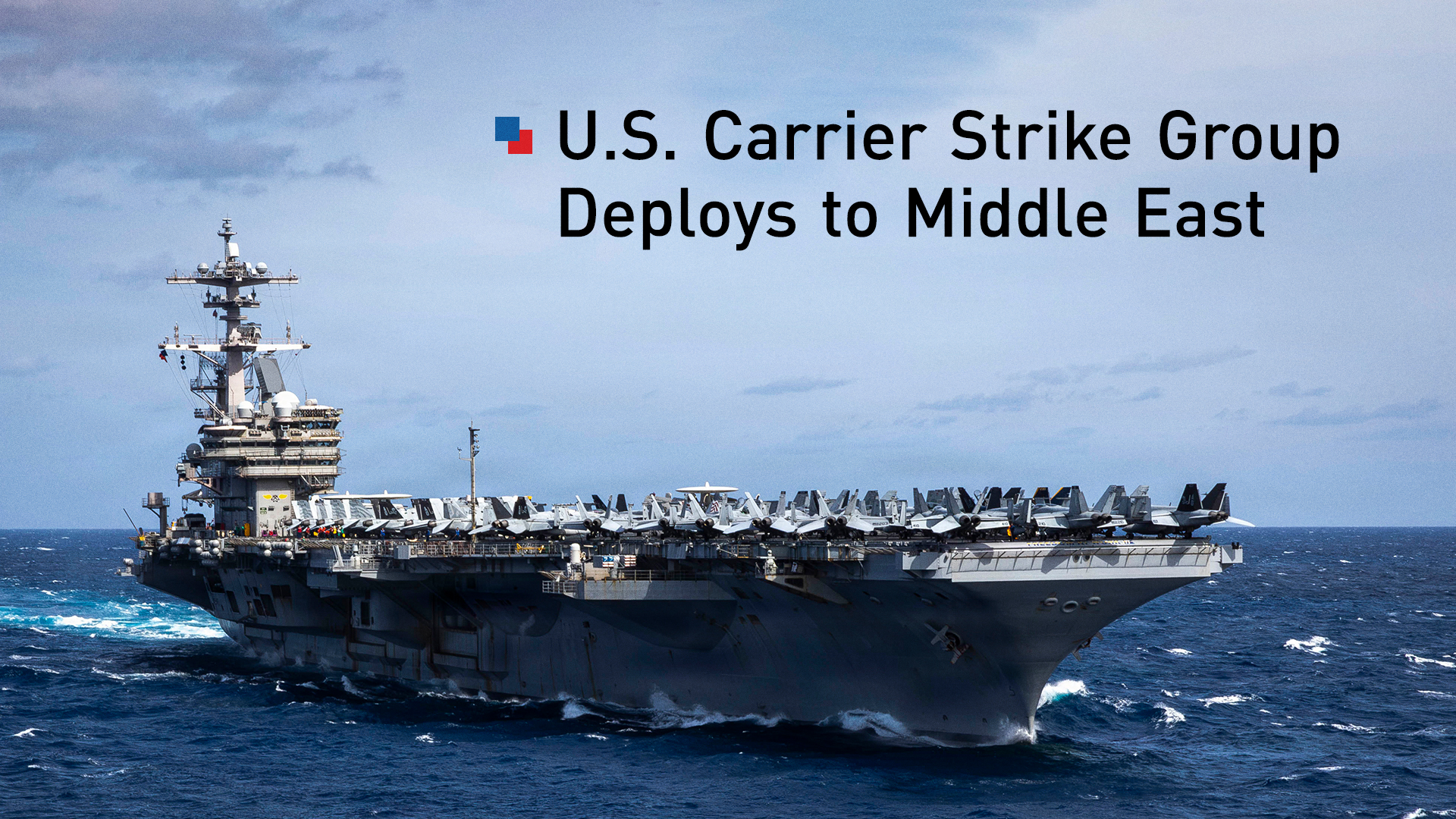
ERBIL (Kurdistan24) - The USS George H.W. Bush aircraft carrier will deploy to the U.S. Central Command’s area of responsibility, which oversees American military operations against Iran, multiple sources told CBS News, as Washington continues its ongoing campaign in the region.
The deployment of the Bush Carrier Strike Group follows the completion of training exercises earlier this month that certified it for major combat operations, according to the report. U.S. officials, speaking on condition of anonymity because they were not authorized to comment publicly, said the carrier could potentially join ongoing operations against Iran, though no formal announcement has been made regarding its direct engagement.
The reported deployment comes as U.S. military activity in the region continues under Operation Epic Fury, the campaign targeting Iranian military infrastructure and capabilities. Central Command, which directs U.S. operations across the Middle East and parts of Asia, is responsible for coordinating these efforts.
According to CBS News, elements of the Bush Carrier Strike Group have already begun moving into position. The USS Ross, a guided missile destroyer assigned to the group, departed Norfolk, Virginia, earlier this week. Additional destroyers, including the USS Donald Cook and USS Mason, also left Florida in recent days to join Operation Epic Fury, the report said.
The movement of these vessels reflects a broader adjustment in U.S. naval deployments in the region. Two carrier strike groups had been operating in the Middle East during the initial weeks of the campaign: one led by the USS Gerald R. Ford and the other by the USS Abraham Lincoln. However, the Ford recently sustained a fire aboard and has since been relocated to a naval facility in Souda Bay, Crete, for repairs, according to the report.
The Ford had been deployed since June of the previous year and had initially been directed to the Caribbean for operations related to Venezuela before being reassigned earlier this year to the Middle East. Its temporary withdrawal for repairs has coincided with the planned deployment of the Bush Carrier Strike Group, according to the same report.
U.S. officials indicated that the Bush deployment is taking place amid ongoing diplomatic contacts between Washington and Tehran. While negotiations remain in early stages, officials said the carrier’s presence could support a range of contingencies in the region. No details were provided regarding specific operational timelines or objectives.
The deployment also comes as the broader regional conflict continues to evolve. According to reporting by Agence France-Presse, Israel’s military said it had identified the launch of a missile from Yemen toward Israeli territory, marking the first such incident since the start of the war on February 28. The military said its aerial defense systems were operating to intercept the threat, according to a statement cited by AFP.
Associated Press reporting similarly confirmed that Israel detected an incoming missile from Yemen early Saturday, the first time it had faced fire from that country during the current conflict. Sirens were reported in areas including Beer Sheba, as Israeli defenses responded to the threat, the report said.
The Houthis, an Iran-aligned group that controls Yemen’s capital, Sanaa, have not publicly confirmed responsibility for the launch, according to the Associated Press. The group had largely stayed out of the conflict until now, maintaining what the report described as an uneasy ceasefire with Saudi Arabia in recent years.
Elsewhere in the region, hostilities have continued between Israel and Iran. The Associated Press reported that Israel conducted strikes on Iranian nuclear-related facilities, including the Shahid Khondab Heavy Water Complex in Arak and a yellowcake production plant in Yazd province. Iranian authorities said the strikes caused no casualties and posed no contamination risk, according to the report.
Iranian officials have said they would respond to Israeli actions. Iranian Foreign Minister Abbas Araghchi stated on social media that “Iran will exact HEAVY price for Israeli crimes,” according to the Associated Press.
In parallel developments, Iranian forces launched strikes on regional targets. An attack on Prince Sultan Air Base in Saudi Arabia wounded at least 10 U.S. service members and damaged aircraft, two U.S. officials told the Associated Press on condition of anonymity due to the sensitivity of the matter.
Despite ongoing military exchanges, diplomatic efforts have continued. According to the Associated Press, Iran agreed to allow humanitarian aid and agricultural shipments through the Strait of Hormuz following a request from the United Nations. Iranian Ambassador to the United Nations in Geneva Ali Bahreini said the measure aimed to “facilitate and expedite” the movement of essential goods.
The Strait of Hormuz remains a critical maritime route, handling a significant share of global oil and fertilizer shipments. Disruptions to traffic through the waterway have contributed to economic pressures, including rising energy prices and supply chain concerns, according to the Associated Press.
The United States has continued to pursue diplomatic channels alongside its military operations. U.S. envoy Steve Witkoff delivered a proposed framework for a ceasefire through intermediaries, according to the Associated Press. The proposal included provisions related to Iran’s nuclear program and the reopening of the Strait of Hormuz, though Iranian officials have rejected the offer and presented their own terms.
Meanwhile, international diplomatic efforts have sought to facilitate dialogue. Officials from countries including Pakistan and Türkiye have attempted to organize meetings between U.S. and Iranian representatives, the Associated Press reported. The Group of Seven foreign ministers also called for an immediate halt to attacks on civilian populations and infrastructure.
On the ground, the conflict has resulted in significant casualties and damage across multiple countries. The Associated Press reported that more than 1,900 people have been killed in Iran and over 1,100 in Lebanon, while 19 people have died in Israel. Additional casualties have been reported among U.S. forces and in other parts of the region.
Infrastructure damage has also been extensive. The United Nations’ International Organization for Migration reported that tens of thousands of civilian buildings in Iran have been affected, including hospitals and residential structures, according to the Associated Press.
Against this backdrop, the planned deployment of the USS George H.W. Bush Carrier Strike Group represents a continuation of U.S. military positioning in the region. Officials cited by CBS News emphasized that the deployment aligns with existing operational requirements under Central Command and does not necessarily indicate a change in strategy.
The U.S. has maintained a naval presence in the Middle East throughout the conflict, with carrier strike groups serving as a central component of its operational posture. The addition of the Bush group follows earlier deployments and adjustments necessitated by maintenance and operational demands.
The Pentagon has not publicly detailed the full scope of future naval deployments or the specific role the Bush Carrier Strike Group may play once it arrives in the region. Officials have indicated only that the carrier is prepared for a range of missions, consistent with its certification for major combat operations.