Iranian Strike on Saudi Air Base Injures U.S. Service Members, Officials Say
The Iranian strike on the Saudi air base injured U.S. personnel and damaged military assets, officials said, marking a continued escalation in regional hostilities.
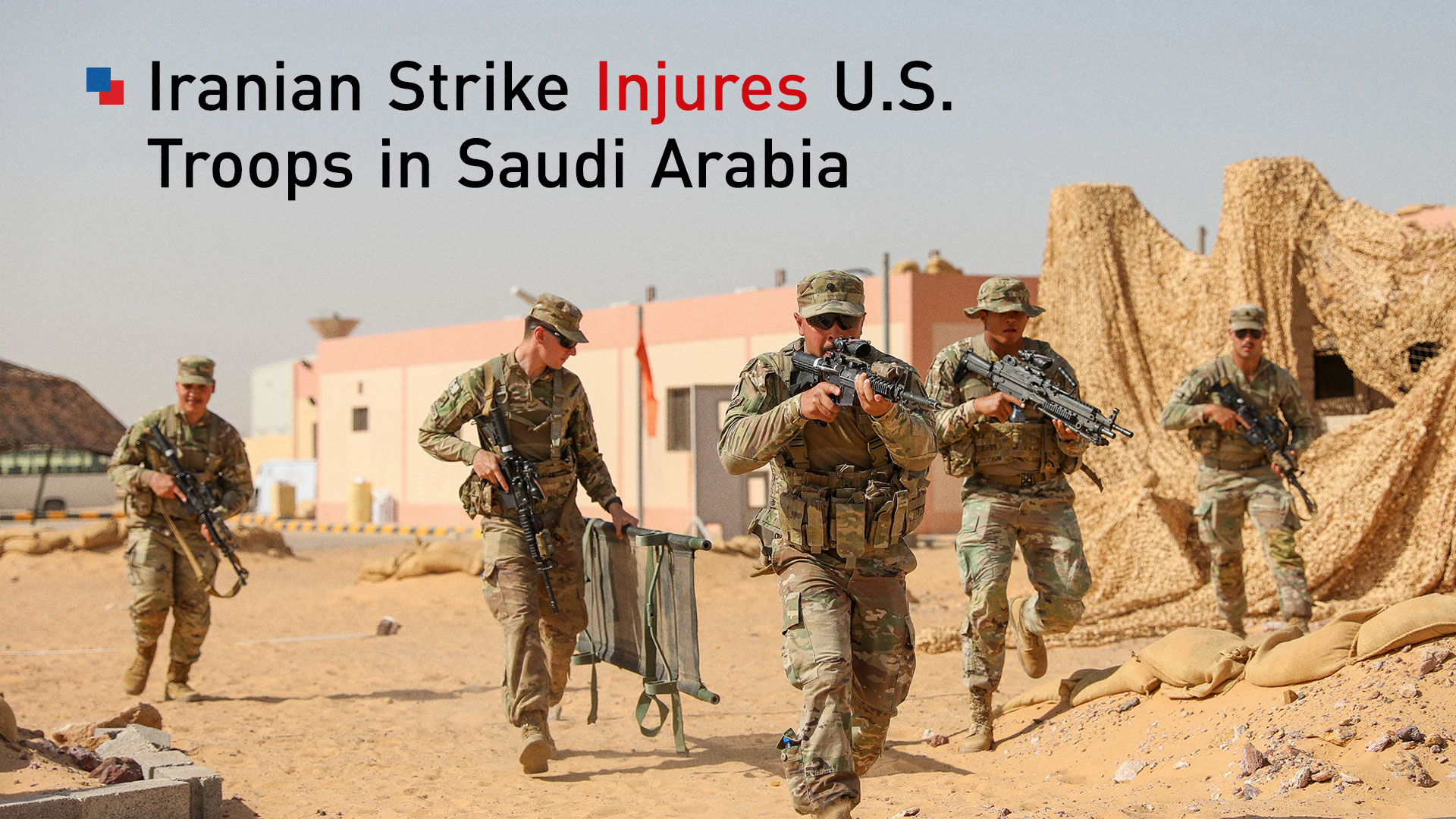
ERBIL (Kurdistan24) - Ten U.S. service members were injured in an Iranian missile and drone attack on Prince Sultan Air Base in Saudi Arabia, according to multiple U.S. officials cited by CBS News, in the latest escalation of hostilities linked to the ongoing conflict between Washington and Tehran.
The attack targeted the air base located roughly 60 miles from the Saudi capital, Riyadh, and involved a combination of missiles and unmanned aerial vehicles, sources told CBS News. Two of the injured personnel were described as very seriously wounded, while eight others sustained serious injuries under the U.S. military’s classification system.
A spokesperson for U.S. Central Command said Friday that more than 300 American service members have been wounded in action since the start of the war with Iran, with most returning to duty. The same official added that 13 U.S. service members have been killed during the conflict.
Subsequent reporting by The Wall Street Journal indicated that the number of injured Americans may have risen to 12, citing U.S. and Arab officials. According to that report, two service members suffered significant injuries while others were treated for concussions. Officials said those injured were inside a building on the base that was struck during the attack.
The Journal further reported that at least one missile hit the installation, along with several drones, and that multiple U.S. refueling aircraft sustained damage. The extent of the damage to the aircraft was not fully detailed, though officials indicated the strike affected operational assets on the ground.
Prince Sultan Air Base is operated by the Royal Saudi Air Force and is used by the U.S. Air Force’s 378th Air Expeditionary Wing. It has served as a key hub for U.S. military operations in the region.
According to CBS News, this is not the first time the base has been targeted in recent weeks. A separate attack earlier in the week also struck the facility, injuring 14 individuals, though their nationalities were not disclosed. A U.S. official described that earlier incident as less severe than the most recent strike.
The Wall Street Journal reported that the latest strike marked at least the second missile attack on the base during the current conflict, noting that five refueling aircraft had been damaged in a previous incident.
The escalation comes amid a broader pattern of Iranian retaliatory strikes across the Gulf region over the past four weeks, targeting facilities associated with U.S. and allied forces. Officials have said these attacks are part of Iran’s response to ongoing U.S. military operations.
The United States has been conducting operations under what officials describe as an ongoing campaign targeting Iranian military infrastructure. U.S. Central Command oversees these efforts, which span multiple countries across the Middle East.
According to background reporting, U.S. military activity in the region continues alongside adjustments in force posture, including naval deployments. Multiple sources told CBS News that the USS George H.W. Bush Carrier Strike Group is set to deploy to the Central Command area of responsibility following the completion of training exercises certifying it for major combat operations.
U.S. officials cited by CBS News said elements of the carrier strike group have already begun moving into position. The USS Ross, a guided missile destroyer assigned to the group, departed Norfolk, Virginia, earlier in the week, while additional destroyers, including the USS Donald Cook and USS Mason, also left Florida to join ongoing operations.
The deployment follows changes to existing U.S. naval positioning. The USS Gerald R. Ford, one of two carrier strike groups previously operating in the region, was relocated to a naval facility in Souda Bay, Crete, for repairs after sustaining a fire aboard, according to the report.
Officials said the planned arrival of the Bush Carrier Strike Group aligns with operational requirements and does not necessarily indicate a shift in strategy.
Beyond Saudi Arabia, hostilities have continued across multiple fronts. The Associated Press reported that Israel detected the launch of a missile from Yemen toward its territory, marking the first such incident since the beginning of the current conflict on February 28. Air defense systems were activated in response, and sirens were reported in several areas, including Beer Sheba.
The missile launch has not been publicly claimed by the Houthis, an Iran-aligned group controlling Yemen’s capital, Sanaa, according to the Associated Press. The group had largely remained outside the conflict until that point.
Meanwhile, Israeli forces have conducted strikes on Iranian nuclear-related facilities, including the Shahid Khondab Heavy Water Complex in Arak and a yellowcake production site in Yazd province, the Associated Press reported. Iranian authorities said the strikes caused no casualties and posed no contamination risk.
Iranian officials have reiterated that they would respond to such actions. Foreign Minister Abbas Araghchi said in a statement cited by the Associated Press that Iran would exact a “heavy price” for Israeli actions.
In parallel with military developments, diplomatic efforts have continued. The Associated Press reported that Iran agreed to allow humanitarian aid and agricultural shipments to pass through the Strait of Hormuz following a request from the United Nations. Iranian Ambassador to the United Nations in Geneva Ali Bahreini said the measure was intended to facilitate the movement of essential goods.
The Strait of Hormuz remains a critical route for global energy supplies, and disruptions have contributed to rising oil and gas prices, according to the report.
Efforts to initiate negotiations between the United States and Iran have also been ongoing. U.S. envoy Steve Witkoff delivered a proposed ceasefire framework through intermediaries, which included provisions related to Iran’s nuclear program and the reopening of the Strait of Hormuz, the Associated Press reported. Iranian officials have rejected the proposal and presented alternative terms.
International actors, including officials from Pakistan and Türkiye, have attempted to facilitate dialogue between the two sides, while Group of Seven foreign ministers have called for an immediate halt to attacks on civilian populations and infrastructure.
The broader conflict has resulted in significant casualties and damage across the region. According to the Associated Press, more than 1,900 people have been killed in Iran and over 1,100 in Lebanon, while 19 deaths have been reported in Israel. Tens of thousands of civilian structures in Iran have been damaged, including hospitals and residential buildings, according to data cited from the United Nations’ International Organization for Migration.
The latest attack on Prince Sultan Air Base underscores the continued targeting of U.S. and allied military infrastructure as the conflict persists across multiple theaters.