Houthi Missile Activity Prompts EUNAVFOR Advisory for Bab el-Mandeb Transit
EUNAVFOR ASPIDES warns shipping in the Red Sea, Bab el-Mandeb, and Gulf of Aden of renewed Houthi missile threats following Israel-Iran conflict. Risk high for Israeli- or U.S.-linked vessels; all ships advised to follow MSCIO guidance and avoid Yemeni waters.
ERBIL (Kurdistan24) - EUNAVFOR ASPIDES issued a warning to the shipping industry on Saturday, advising heightened caution for vessels transiting the Red Sea, Bab el-Mandeb Strait, and Gulf of Aden following the resumption of missile attacks by Houthi forces against Israel.
The alert, circulated from Larissa, noted that the Houthis’ recent missile launches mark the first stage of their renewed involvement in the ongoing regional conflict and cautioned that future operations could include attacks on merchant vessels within range of Houthi weapons.
The advisory states that since the ceasefire between Israel and Hamas came into effect on 9 October 2025, Houthi forces had refrained from attacking Israel, and no incidents involving commercial shipping had been recorded.
The last attack against Israel occurred on 8 October 2025, while the most recent incident affecting a merchant vessel was reported on 29 September 2025.
The communication underscores that the recent escalation is linked to broader regional hostilities, including ongoing strikes by the United States and Israel on Iranian territory since 28 February 2026.
These operations prompted responses from Iranian proxies in Iraq and Lebanon, which have undertaken military actions in coordination with Tehran, the report noted.
EUNAVFOR ASPIDES assessed that the Houthis retain substantial and intact military capabilities. The advisory categorizes the threat to merchant vessels as medium for ships with no affiliation to Israel or the United States and high for vessels connected to Israeli interests, whether through ownership, flag registration, or port calls.
The communication recommends that Israeli- or U.S.-linked vessels avoid the Red Sea and Gulf of Aden until the threat diminishes, while other ships should continue coordinating with the Maritime Security Centre – Indian Ocean (MSCIO) for guidance and support.
The alert emphasizes the need for strict adherence to risk-assessment protocols, close communication with MSCIO and the UK Maritime Trade Operations (UKMTO), and implementation of best management practices.
It further advises all vessels to avoid Yemeni territorial waters, where feasible navigate closer to the African coastline to reduce exposure to potential threats, and maintain constant situational awareness during transit. Protective measures for ships supported by Aspides have been reinforced, which may extend waiting times for vessels requesting close protection, according to the communication.
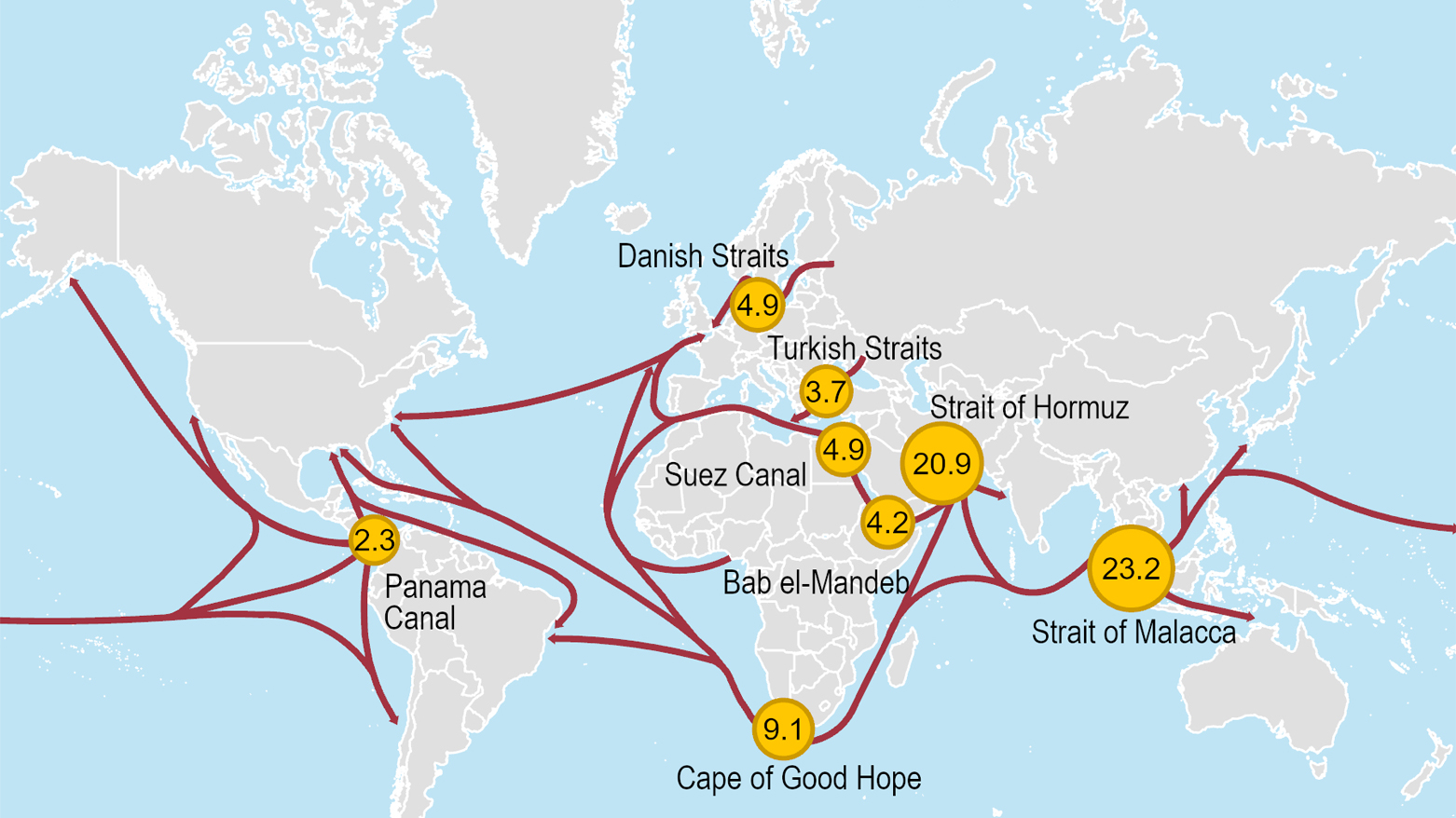
The Bab el-Mandeb Strait, a narrow waterway linking the Red Sea to the Gulf of Aden, is a critical maritime passage for global trade. Approximately 30 kilometers wide and 100 kilometers long, it separates Yemen on the Arabian Peninsula from Djibouti and Eritrea on the Horn of Africa.
Observers note that the strait serves as a key corridor for oil tankers and cargo ships traveling between the Indian Ocean and the Suez Canal, facilitating transport between Europe and Asia.
The U.S. Energy Information Administration reported that in the first half of 2023, 12 percent of global oil shipments passed through the strait, though volumes fell sharply after Houthi attacks later in 2023.
The region surrounding Bab el-Mandeb is heavily militarized.
The United States and France maintain major military bases in Djibouti, while China opened its first overseas base there in 2017. The European Union established Operation Aspides in 2024 to safeguard shipping in the Red Sea following Houthi threats targeting vessels bound for Israeli ports.
The operation provides close protection and monitoring services, reinforcing freedom of navigation, EUNAVFOR ASPIDES officials said.
The renewed Houthi missile activity is part of a wider escalation following the February 28, 2026, strikes by the United States and Israel on Iranian territory.
Iran has signaled its support to the Houthis, and state-affiliated media reported that Tehran could target commercial shipping in the Red Sea in the event of a U.S. ground operation or naval maneuvering intended to impose costs on Iran.
“The Bab el-Mandeb Strait is among the most strategic straits in the world, and Iran has both the will and the capability to pose a fully credible threat against it,” an Iranian military official was quoted as saying by Tasnim News Agency.
MSCIO continues to serve as the principal point of contact for vessels experiencing suspicious activity or incidents in the area.
EUNAVFOR ASPIDES emphasized that maintaining operational communication and reporting is essential to ensuring seafarer safety, the security of commercial shipping, and preservation of freedom of navigation. Operational updates and guidance remain available on the MSCIO official website.
The advisory closes by reiterating that merchant vessels navigating the Red Sea, Bab el-Mandeb, and Gulf of Aden should adhere strictly to official guidance, assess voyage-specific risks, and implement all recommended protective measures. The alert is effective as of 28 March 2026 and will be updated as the situation evolves.
EUNAVFOR ASPIDES is an EU military operation in the Red Sea, the Indian Ocean and the Gulf.