Iran Affirms Ambassador Active in Saudi Arabia Amid Regional Tensions
"Diplomatic relations between Iran and Saudi Arabia are maintained; our ambassador is active there, and communications and contacts continue," Baqaei noted, adding that Tehran has "explicitly expressed our concerns and considerations" to Saudi officials.
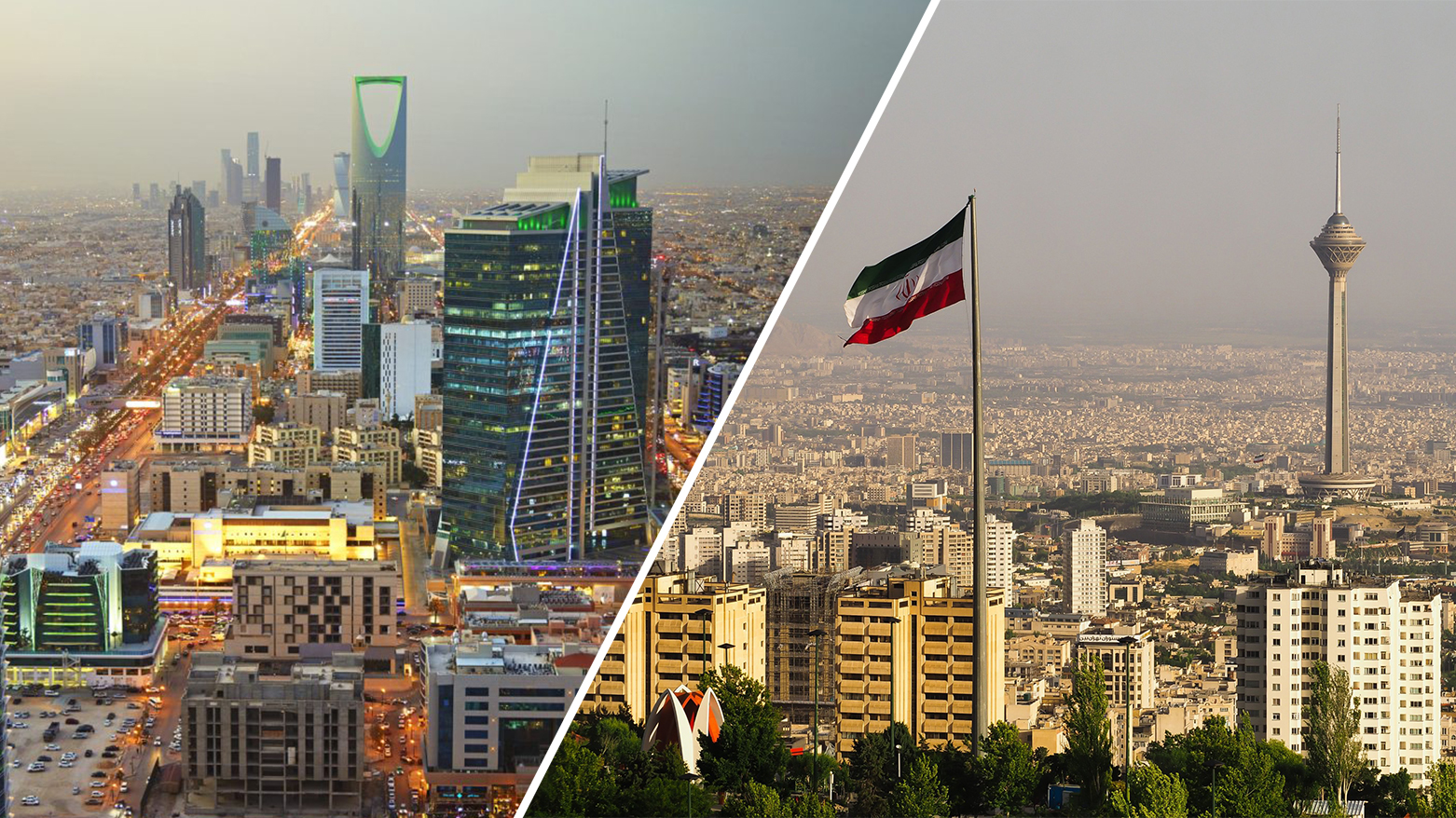
ERBIL (Kurdistan24) - The Iranian government issued a stark diplomatic warning to neighboring nations on Monday, asserting that any state allowing its territory or facilities to be utilized for military strikes against Iran will face defensive retaliatory measures. The declaration from Tehran coincides with an escalation in the ongoing regional conflict, marked by continued aerial bombardments and shifting diplomatic postures across the Middle East.
Esmaeil Baqaei, the spokesperson for the Iranian Foreign Ministry, delivered the warning during a press conference in Tehran. Addressing recent reports of foreign military operations originating from within neighboring countries, Baqaei outlined Iran's position regarding the obligations of regional states under international law.
"The commitment of Saudi Arabia and other countries in the region is very clear," Baqaei stated. "According to international law and the principle of good neighborliness, countries are not permitted to place their facilities and territory at the disposal of aggressor parties against another country in any way. Such an action both entails international responsibility for them and authorizes the attacked country to take defensive measures."
Despite the severe warning, the spokesperson confirmed that diplomatic channels remain open with Riyadh.
"Diplomatic relations between Iran and Saudi Arabia are maintained; our ambassador is active there, and communications and contacts continue," Baqaei noted, adding that Tehran has "explicitly expressed our concerns and considerations" to Saudi officials.
The Iranian Foreign Ministry specifically addressed allegations concerning the logistical support provided to United States and Israeli military forces. Baqaei referenced recent reports indicating that "American refuelers are operating out of bases in Saudi Arabia, and the same applies to other countries in the region."
He further asserted that "the United States and the Zionist regime use the facilities of regional countries to attack Iran." Under these circumstances, Baqaei stated that "international law and our inherent right to legitimate self-defense authorize us to target the origin and source of these aggressions in our own defense."
However, the spokesperson emphasized that Tehran does not seek to expand the geographic scope of the conflict.
"It is not at all desirable for the Islamic Republic of Iran to be forced to carry out its defensive operations on the territory of regional countries," Baqaei said. "Our armed forces act honorably and with foresight, and they in no way view their defensive actions as being directed against neighboring countries."
The diplomatic statements from Tehran occur against a backdrop of intensifying military actions and strategic posturing across the region, as detailed in comprehensive reporting by The Associated Press (AP).
According to the AP, U.S. President Donald Trump recently suggested that American military forces possess the capability to seize Iran’s Kharg Island, a critical oil export terminal located in the Persian Gulf.
During a Monday interview with the Financial Times, the U.S. President stated, “Maybe we take Kharg Island, maybe we don’t. We have a lot of options.” He acknowledged the logistical requirements of such an operation, noting, “It would also mean we had to be there (on Kharg Island) for a while.”
The strategic importance of the Persian Gulf remains a focal point of the conflict. The AP reported that Iran has previously threatened to mine the waterway if its sovereign territory is subjected to a ground invasion.
In recent developments related to maritime transit, the U.S. President indicated that Iran had agreed to permit 20 ships carrying oil to pass through the Strait of Hormuz. According to his statements to the Financial Times, the transit was scheduled to commence Monday morning and continue over subsequent days as a "sign of respect."
The U.S. President characterized the ongoing, nascent ceasefire negotiations as progressing well, though he expressed caution regarding Tehran's reliability.
“I would only say that we’re doing extremely well in that negotiation but you never know with Iran because we negotiate with them and then we always have to blow them up,” he told the Financial Times.
Simultaneously, military operations by the United States and Israel against Iranian targets continued on Monday.
The AP reported that the Israeli military announced early Monday morning that it was actively striking "military infrastructure" located across the Iranian capital, Tehran. In response, the Israeli military confirmed that Iran had launched missiles toward Israeli territory at dawn, triggering sirens near Israel's primary nuclear research center.
The conflict has also severely impacted neighboring countries.
In Kuwait, an Iranian strike targeted a crucial water and electrical plant, according to the AP. In Lebanon, the humanitarian and military toll continues to mount.
The AP reported that an Israeli military strike on a Lebanese army checkpoint near the coastal city of Tyre killed one soldier and wounded others. To date, at least 11 Lebanese army soldiers have been killed in Israeli strikes since the broader conflict involving Hezbollah erupted earlier this month.
The Israeli military's ground incursion into southern Lebanon has also resulted in casualties among its own forces.
The AP reported that the Israeli military confirmed the death of a sixth soldier in southern Lebanon on Sunday.
The Israeli government maintains that the establishment of a security zone in southern Lebanon is necessary to protect its northern civilian communities from Hezbollah projectile attacks. Lebanese officials estimate that the conflict has killed over 1,200 people and displaced more than 1 million individuals within the country.
The economic and infrastructural damage spans the region. In northern Israel, a fire erupted Monday at an oil refinery in the city of Haifa following a missile attack, the second such incident during the monthlong war, the AP noted.
In Bahrain, the Interior Ministry reported a fire at a commercial building in the coastal village of Al Dair, though no injuries were reported. Furthermore, Iranian state media confirmed that a petrochemical plant located approximately 530 kilometers northwest of Tehran was hit in a strike.
The ongoing hostilities have significantly disrupted global energy markets. According to the AP, the spot price of Brent crude oil reached approximately $115 early Monday, representing a nearly 60 percent increase since the conflict began on February 28.
Amid the escalating violence, diplomatic efforts to mediate the crisis are emerging. The AP reported that Pakistan announced Sunday its intention to host talks between the United States and Iran.
The Chinese government formally backed this initiative, with Foreign Ministry spokesperson Mao Ning stating in Beijing that China appreciates Pakistan's efforts and is ready to coordinate to "jointly promote peace and cease hostilities."
Internally, Iran faces domestic pressures and political shifts. The AP reported that two members of the exiled Iranian group Mujahedeen-e-Khalq were executed by hanging on Monday.
Additionally, Iranian state television broadcast a statement from the Revolutionary Guard confirming the death of Rear Admiral Alireza Tangsiri, the commander of the navy, who succumbed to severe injuries sustained in an earlier Israeli strike.
The political discourse within Iran has also hardened.
Iranian lawmaker Alaeddin Boroujerdi suggested on state television that Tehran should consider withdrawing from the Nuclear Nonproliferation Treaty, arguing against observing international rules while being subjected to bombing campaigns, the AP noted.
In Israel, the domestic political landscape is similarly shaped by the ongoing war.
The AP reported that the Israeli parliament passed a $270 billion budget, the largest in the nation's history, which includes a 20 percent increase for the Ministry of Defense, raising its allocation to $45 billion.
The passage of the budget prevents the triggering of early elections, extending Prime Minister Benjamin Netanyahu's current term.
Furthermore, the Israeli parliament began debating legislation on Monday that would establish the death penalty as the default punishment for West Bank Palestinians convicted of murdering Israelis, a measure strongly supported by National Security Minister Itamar Ben-Gvir, according to the AP.
The regional consensus appears to be shifting toward demanding fundamental changes in Iran's military capabilities. Noura Al Kaabi, a minister of state at the UAE’s Foreign Ministry, published a column in The National calling for the "disarmament" of the Iranian missile program.
She denounced the missile and drone attacks targeting her country and stated, "An Iranian regime that launches ballistic missiles at homes, weaponizes global trade and supports proxies is no longer an acceptable feature of the regional landscape."