US hosts Israel-Lebanon talks, extends ceasefire as peace negotiations advance
State Department Spokesperson Tommy Pigott announced May 15 that the April 16 Israel-Lebanon ceasefire is extended 45 days. Political talks resume June 2–3 at the State Department; a Pentagon security track launches May 29.
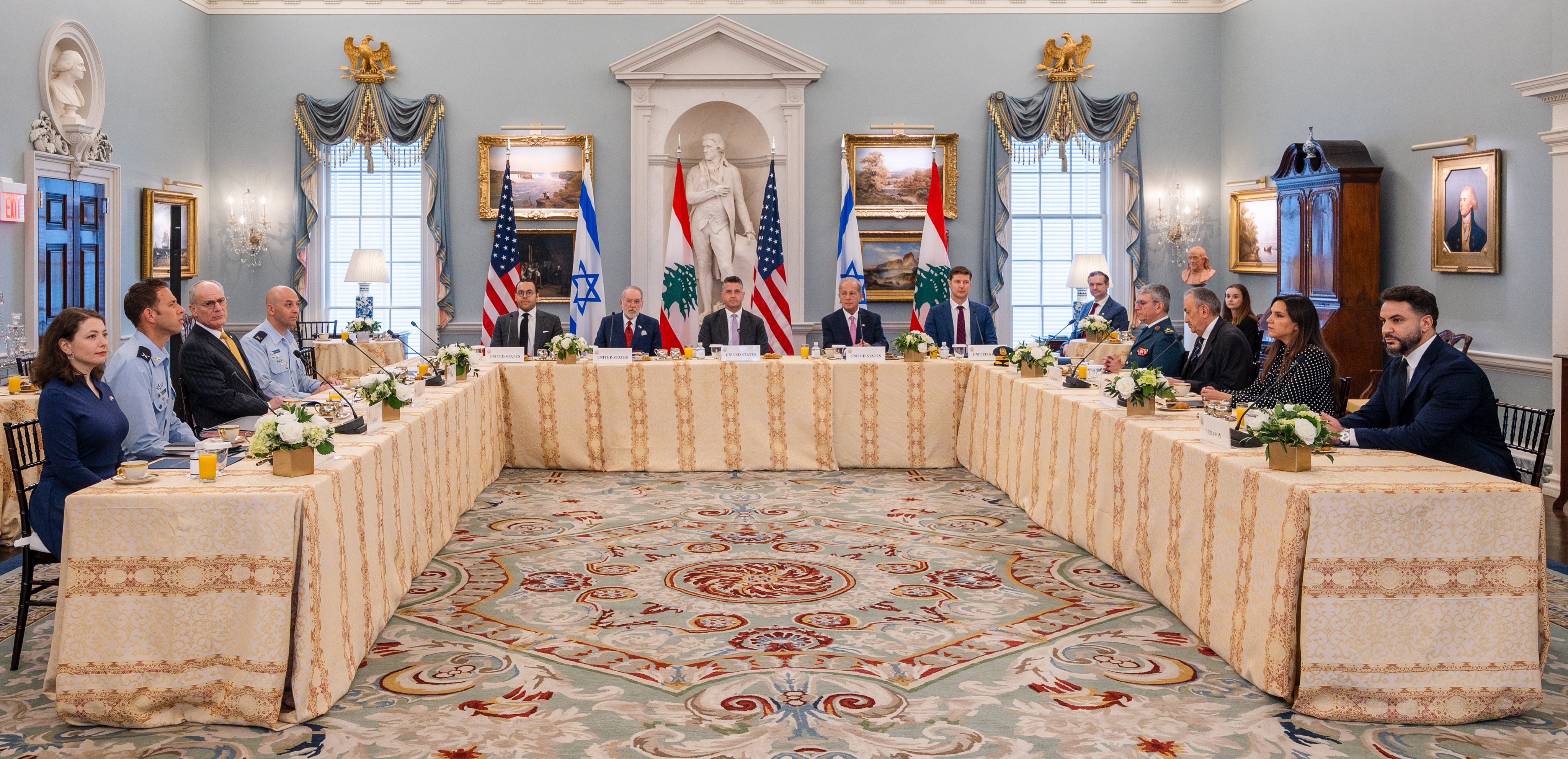
ERBIL (Kurdistan 24) - The United States announced Thursday that the ceasefire between Israel and Lebanon will be extended by 45 days following two days of negotiations hosted in Washington.
US officials hosted the third round of talks between Israel and Lebanon at the State Department on May 14 and 15. In a statement released on Friday, Thomas "Tommy" Pigott, spokesperson for the US Department of State, serving under Secretary of State Marco Rubio, the 72nd to hold the office, and President Donald Trump, described the sessions as "highly productive."
The ceasefire, which came into effect on April 16, 2026, was initially established as a 10-day cessation of hostilities brokered by the United States. On April 23, President Trump announced a three-week extension following direct mediation between the Israeli and Lebanese ambassadors. The latest 45-day extension announced on May 15 marks the third phase of the agreement.
Pigott confirmed that the State Department will reconvene the political track of negotiations on June 2 and June 3. He also announced the launch of a separate security track that will begin at the Pentagon on May 29, involving military delegations from both Israel and Lebanon.
According to a May 8 statement by Pigott on the State Department's official website, the talks aim to build a framework for lasting peace and security arrangements, the full restoration of Lebanese sovereignty throughout Lebanese territory, the delineation of borders, and the creation of concrete pathways for humanitarian relief and reconstruction in Lebanon.
Washington has said it hopes the negotiations will advance lasting peace between the two countries, mutual recognition of sovereignty and territorial integrity, and stronger security arrangements along their shared border.
Secretary of State Rubio stated earlier that a peace agreement between Lebanon and Israel is "eminently achievable." However, he cautioned that the process would be difficult given ongoing regional dynamics, pointing to the presence and activities of Hezbollah within Lebanese territory as the core obstacle to stability.
More than 10 weeks into the conflict that escalated out of the broader Iran war, hostilities between Hezbollah and Israeli forces have continued despite the ceasefire, largely concentrated in southern Lebanon.
The dual-track approach, political at the State Department and military at the Pentagon, reflects the complexity of the issues at hand and marks the most structured diplomatic architecture Washington has deployed between the two sides in decades.