Gulf Allies Urge U.S. to Sustain Military Campaign Against Iran, Officials Say
Officials from Saudi Arabia, the United Arab Emirates, Kuwait, and Bahrain have conveyed in private discussions that they do not want the military campaign to end until there are significant changes in Iran’s leadership or a marked shift in its regional conduct, according to an AP report.
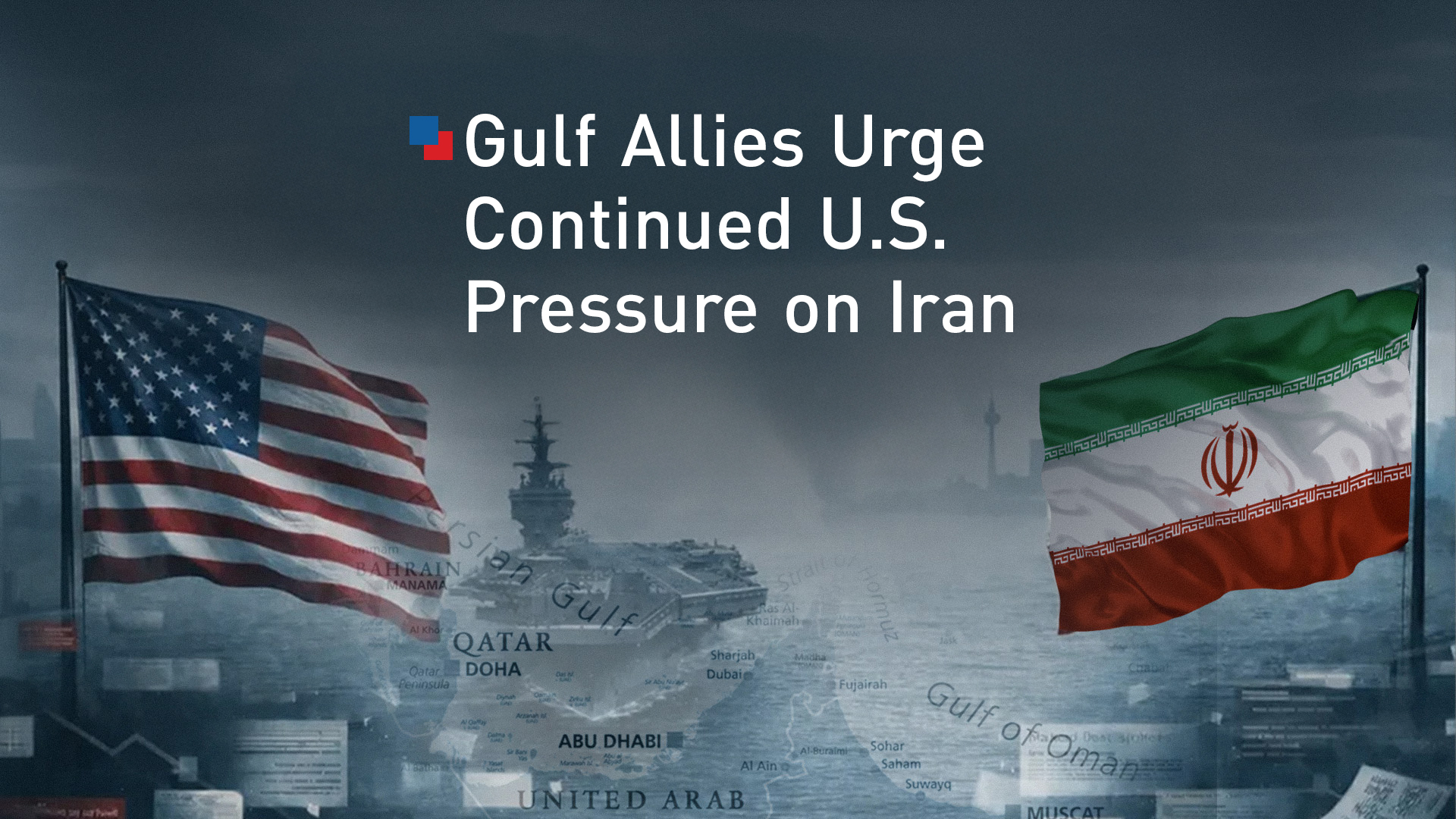
ERBIL (Kurdistan24) - Gulf Arab allies of the United States, led by Saudi Arabia and the United Arab Emirates, are pressing U.S. President Donald Trump to continue military operations against Iran, arguing that the monthlong U.S.-led campaign has not sufficiently weakened Tehran, according to U.S., Gulf, and Israeli officials cited by The Associated Press.
Officials from Saudi Arabia, the United Arab Emirates, Kuwait, and Bahrain have conveyed in private discussions that they do not want the military campaign to end until there are significant changes in Iran’s leadership or a marked shift in its regional conduct, according to the officials, who spoke on condition of anonymity because they were not authorized to comment publicly.
The effort reflects a shift from earlier concerns among Gulf states that the conflict could destabilize the region.
At the outset of the war, several Gulf governments had expressed frustration that they were not given adequate advance notice of the U.S.-Israeli strikes and warned of potential consequences for regional stability.
However, officials now describe a growing alignment with Washington, with some Gulf leaders framing the current moment as an opportunity to substantially degrade Iran’s governing system and military capabilities.
The push comes as Trump has alternated between suggesting that Iran’s leadership may be prepared to negotiate an end to the conflict and warning of further escalation if an agreement is not reached.
The war has resulted in more than 3,000 deaths across the Middle East and has contributed to volatility in global markets, according to the AP report.
Speaking to reporters aboard Air Force One, Trump said Gulf countries were actively supporting the U.S. position.
“Saudi Arabia’s fighting back hard. Qatar is fighting back. UAE is fighting back. Kuwait’s fighting back. Bahrain’s fighting back,” he said, describing what he characterized as a unified regional stance.
While Gulf states host U.S. forces and have allowed their territory to be used for military operations, they have not directly participated in offensive strikes against Iran. Their support has varied, with some governments advocating stronger action and others favoring diplomatic efforts.
A Gulf diplomat cited by AP described divisions within the bloc. Saudi Arabia and the United Arab Emirates have led calls for increased military pressure, while Oman and Qatar have continued to advocate for a negotiated resolution.
The diplomat said the UAE has taken a particularly assertive position, including urging consideration of a ground offensive.
The UAE’s stance has been shaped in part by sustained attacks from Iran.
According to the report, the country has faced more than 2,300 missile and drone strikes during the conflict. Officials have expressed concern that ongoing attacks could undermine its reputation as a regional hub for commerce and tourism.
In a column published by the English-language newspaper The National, UAE Minister of State Noura Al Kaabi criticized Iran’s conduct.
“An Iranian regime that launches ballistic missiles at homes, weaponizes global trade and supports proxies is no longer an acceptable feature of the regional landscape,” she wrote, adding that the UAE seeks assurances that such actions will not recur.
Saudi Arabia has also articulated conditions for any eventual settlement. According to officials cited in the report, Riyadh has argued that ending the conflict prematurely would not yield sufficient security guarantees.
Saudi officials have indicated that any agreement must address Iran’s nuclear program, dismantle its ballistic missile capabilities, halt its support for regional proxy groups, and ensure that the Strait of Hormuz cannot be disrupted.
The Strait of Hormuz, a key maritime chokepoint, previously accounted for approximately 20% of global oil flows before the conflict. Gulf officials have emphasized the strategic importance of maintaining uninterrupted access through the waterway.
Saudi Crown Prince Mohammed bin Salman has communicated to U.S. officials that further weakening Iran’s military and political leadership aligns with the long-term interests of the Gulf region, according to a person briefed on the discussions.
At the same time, Saudi authorities remain concerned about the risk of retaliatory strikes on critical infrastructure, particularly energy facilities central to the kingdom’s economy.
A Saudi government official cited by AP said that while Riyadh ultimately seeks a political resolution, its immediate priority is protecting its population and infrastructure from further attacks.
U.S. Secretary of State Marco Rubio emphasized alignment between Washington and its Gulf partners. Speaking on ABC’s “Good Morning America,” Rubio said regional governments share U.S. concerns about Iran’s capabilities.
“They are religious zealots who can never be allowed to possess a nuclear weapon because they have an apocalyptic vision of the future,” Rubio said, adding that neighboring countries have supported U.S. efforts.
The White House declined to comment directly on the discussions with Gulf allies.
Iranian officials have rejected accusations that their operations target civilian populations. Iranian Foreign Minister Abbas Araghchi said Tehran’s attacks are directed at U.S. forces in the region.
In a statement posted on social media, he described Saudi Arabia as a “brotherly nation” and said Iran respects the kingdom, while asserting that its military actions are aimed at what he termed “enemy aggressors.”
The statement was issued after reports that Iranian strikes had impacted civilian areas in Gulf countries. Araghchi also called for the removal of U.S. forces from the region.
Trump has sought to highlight Gulf support as part of his broader defense of the military campaign, particularly as he has criticized NATO allies for not participating.
Speaking at an event in Miami sponsored by Saudi Arabia’s sovereign wealth fund, he praised Bahrain, Kuwait, Qatar, Saudi Arabia, and the United Arab Emirates for what he described as their “bravery.”
The president also acknowledged that some Gulf states had initially been reluctant to support the campaign but said they had since aligned more closely with Washington.
“They weren’t thinking this was going to happen,” Trump said, referring to Iran’s retaliatory strikes. “And they turned against them and really became very powerfully aligned.”
Despite the growing alignment, the United States has not formally requested that Gulf countries join offensive operations. Analysts and officials cited in the report pointed to operational and political considerations.
One factor is the complexity of coordinating multiple air forces in an already congested operational environment. Early in the conflict, three U.S. fighter jets were mistakenly downed by friendly Kuwaiti fire during an Iranian assault, though all crew members ejected safely.
In a separate incident, six U.S. service members were killed when a refueling aircraft crashed in western Iraq on March 12.
Diplomatic considerations have also played a role. Only the UAE and Bahrain among the Gulf states maintain formal diplomatic relations with Israel, complicating the prospect of deeper military coordination, according to Yasmine Farouk of the International Crisis Group, as cited in the AP report.
Iran has warned that it could escalate its response if the conflict intensifies further. Officials in Tehran have indicated that critical infrastructure in neighboring countries, including desalination plants essential for water supply, could become targets if the United States expands its strikes.
The warning follows statements by Trump that he could order attacks on Iran’s energy infrastructure if Tehran does not reopen the Strait of Hormuz by a specified deadline.
Analysts cited in the report said uncertainty about U.S. objectives and the duration of the conflict has contributed to hesitation among some Gulf states. While there is broad support for countering Iran, questions remain about the end goals of the campaign and the extent of U.S. commitment.
Farouk said that without a clearly defined objective, some governments may be reluctant to deepen their involvement. However, she noted that a major escalation or a high-casualty event in the region could prompt a shift in their stance.
The evolving positions of Gulf states underscore the complexity of regional dynamics as the conflict continues. While public statements emphasize unity, private discussions reflect differing priorities and risk assessments among U.S. partners.
The current alignment, officials said, reflects both shared concerns about Iran’s capabilities and the immediate pressures created by the ongoing conflict. At the same time, the absence of direct participation in offensive operations highlights the limits of that alignment.
As the United States weighs its next steps, Gulf governments are continuing to press their case for sustained pressure on Iran, while also preparing for potential retaliatory actions that could affect their own security and economic stability.
The diplomatic and military calculations on all sides remain closely linked to developments on the ground, with officials indicating that positions could shift in response to changes in the conflict’s trajectory.
The calls from Gulf allies for continued U.S. military engagement reflect a convergence of strategic concerns, even as differences persist over the means and risks associated with further escalation.
The discussions come amid ongoing efforts by U.S. officials to assess both the military effectiveness of the campaign and the broader regional implications, according to the report.
The situation remains fluid, with Gulf states balancing support for U.S. objectives against concerns about the potential consequences of a prolonged conflict.
The report indicates that Gulf leaders are seeking to influence U.S. decision-making at a critical juncture, as Washington considers whether to maintain or adjust its current course.
The positions articulated by Gulf officials underscore their interest in shaping the outcome of the conflict, while also managing the risks it poses to their own security.
The United States continues to engage with regional partners as it evaluates its strategy, with officials emphasizing coordination while acknowledging the challenges involved.
The push by Gulf allies for sustained military pressure on Iran highlights the stakes involved for regional actors, as well as the broader implications for stability and security in the Middle East.
The developments reflect an ongoing effort by Gulf governments to ensure that any resolution addresses their core security concerns, even as they navigate the uncertainties of an evolving conflict.
The situation remains under close scrutiny by regional and international actors, with further developments expected to shape the course of the conflict and the responses of those involved.