Netanyahu Vows to Continue War, Says Israel Will Keep ‘Crushing’ Iran’s regime
Netanyahu vows to continue war against Iran, while Tehran signals willingness to end it with conditions. Regional strikes intensify, casualties rise, and global energy concerns deepen.
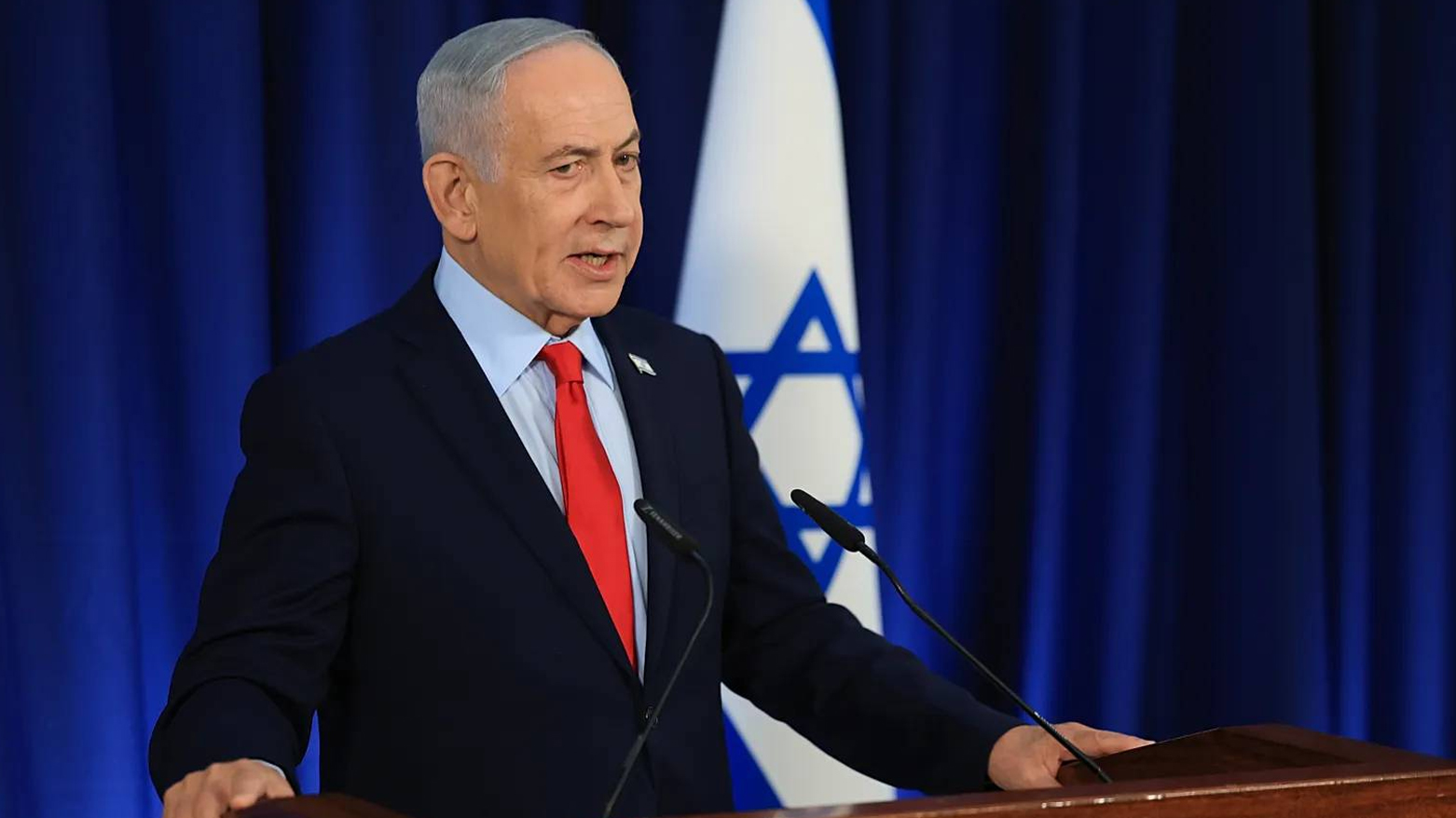
ERBIL (Kurdistan24) - Under the glare of an expanding regional conflict, Israeli Prime Minister Benjamin Netanyahu declared on Tuesday, that Israel will press forward with its military campaign, vowing to continue “crushing the terrorist regime in Iran,” as Tehran signaled conditional openness to ending the war.
In a televised statement on Tuesday evening, Netanyahu said the campaign “has not ended,” stressing: “We will continue crushing the terrorist regime. We will strengthen the security zones around us and achieve our objectives.” He referred to areas where Israeli forces are deployed beyond its borders, including Gaza, Syria, and Lebanon.
He added: “We have made Israel a regional power and, in some aspects, a global power. We have changed the face of the Middle East.”
His remarks came shortly after Iranian President Masoud Pezeshkian stated that Iran possesses the “will to end” the war, but requires guarantees to prevent “repetition of aggression.”
According to his office, Pezeshkian conveyed during a phone call with European Council President Antonio Costa that ending the war depends on “essential conditions,” particularly guarantees against renewed attacks. He reiterated key Iranian demands, including ending what he described as aggression, financial compensation, clear accountability, and a halt to fighting across all fronts.
Amid the war, global markets have reacted with concern, as fuel prices surged, with gasoline reaching 4 dollars per gallon in the United States.
In parallel, Iran’s Islamic Revolutionary Guard Corps issued a warning on Tuesday, threatening to target major US technology companies—including Apple, Google, Meta, Tesla, Cisco, HP, Intel, Microsoft, IBM, Nvidia, and Boeing—if further Iranian leaders are assassinated. The statement described these firms as “spy companies” allegedly involved in planning operations and said they would become “legitimate targets” from 8:00 p.m. on Wednesday, April 1.
The warning followed Iranian reports that US-Israeli strikes hit military installations in central Iran, alongside other civilian sites. Iranian authorities also said one of the country’s largest pharmaceutical companies, producing anesthesia and cancer treatment drugs, was targeted.
Developments on the ground continued to unfold rapidly. Explosions were reported in the central city of Isfahan, while Iranian media indicated damage Zanjan and multiple power outages in parts of Tehran.
US President Donald Trump sent mixed signals regarding the trajectory of the conflict—alternating between potential escalation, including the possibility of deploying ground troops, and seeking a swift end through negotiations.
US Defense Secretary Pete Hegseth said in Washington after visiting American forces in the region: “The coming days will be decisive. Iran understands that and has very limited military capacity to do anything about it.” He added that war cannot be won by revealing intentions in advance, including decisions on deploying ground troops.
Meanwhile, Pope Leo XIV expressed hope that Washington would work toward ending the conflict, urging a reduction in violence. He said: “I was informed that President Trump recently said he wants to end the war. I hope he will seek a way out. I hope he will look for a way to reduce the violence and the bombardment.”
Trump on Monday threatened to “bomb and erase all power stations, oil wells, Kharg Island, and perhaps all desalination plants” in Iran if no agreement is reached to reopen the Strait of Hormuz, which Tehran has effectively closed through threats and attacks on shipping since the war began.
Iran, for its part, has allowed some Chinese container ships to pass while imposing fees on others and maintaining a complete ban on US and Israeli vessels.
The conflict has also spilled across the region. In the United Arab Emirates, four people were injured by falling debris in southern Dubai, while two were wounded near Riyadh as Saudi air defenses intercepted a drone.
In Israel, emergency services reported eight people lightly injured in Bnei Brak near Tel Aviv due to falling debris, while at least ten explosions were heard in the Jerusalem area following missile launches from Iran.
The war has disrupted global energy flows, with attacks on oil tankers and export facilities drawing attention to the strategic Strait of Hormuz, further intensifying economic concerns.
On the humanitarian front, eight people, including a paramedic, were killed in Israeli strikes on southern Lebanon on Tuesday, according to the Lebanese Ministry of Health. The Israeli military also announced the deaths of four soldiers “during combat” in southern Lebanon.
Israeli airstrikes extended to Beirut, including a building near the main road leading to Beirut International Airport, following evacuation warnings by the Israeli army over proximity to what it described as a Hezbollah facility. Another strike targeted an apartment in Mansourieh, north of Beirut.
Israeli Defense Minister Israel Katz stated that Israeli forces would maintain control over a large area of southern Lebanon even after the war ends.
As Israel intensifies its military campaign and Iran conditions any end to the war on sweeping guarantees, the conflict continues to expand across multiple fronts, deepening both regional instability and global repercussions.