Trump Says He Is Considering NATO Exit Amid Rift Over Iran War
US president calls alliance a “paper tiger” as tensions deepen with European allies over military support
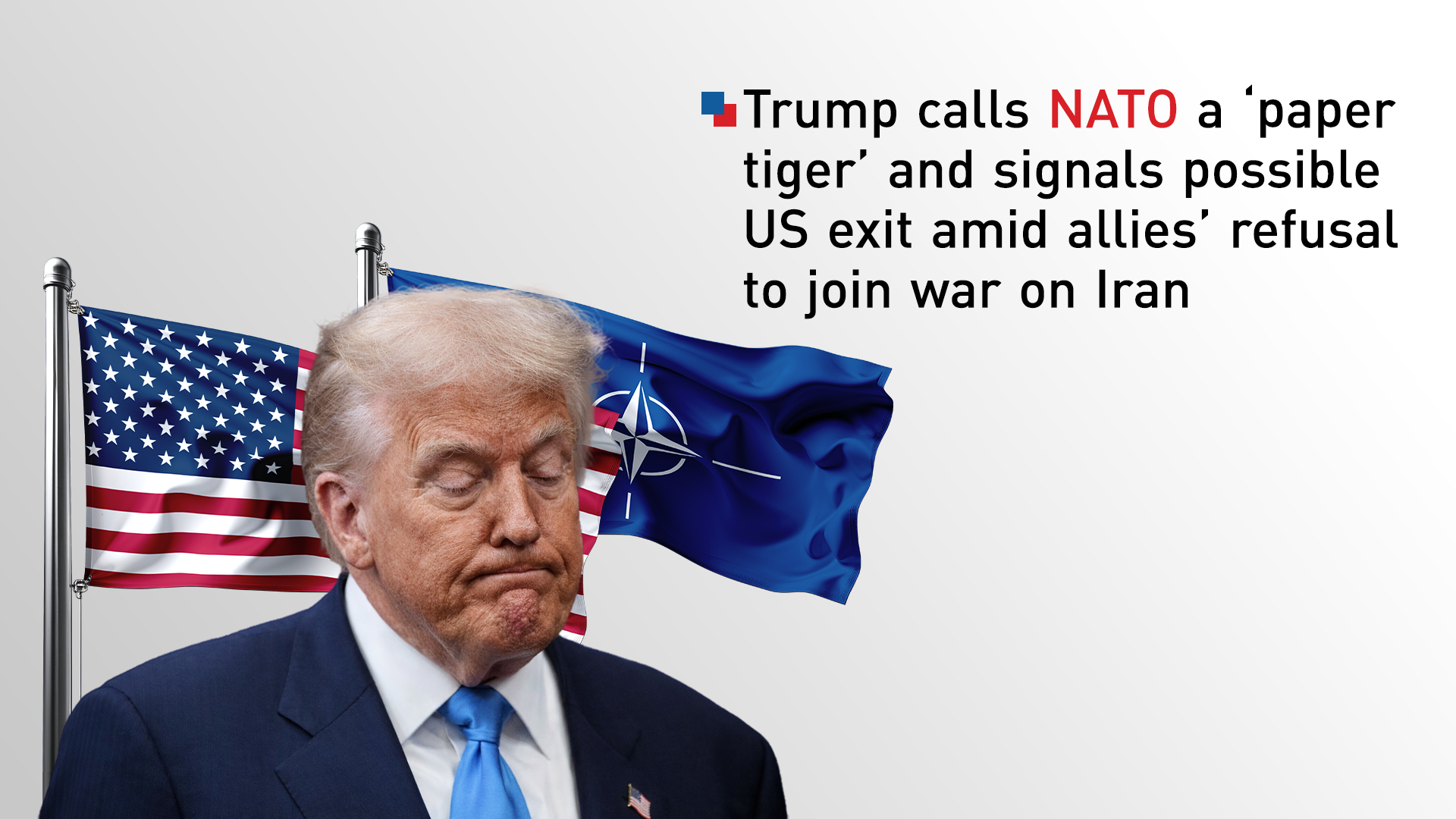
ERBIL (Kurdistan24) — U.S. President Donald Trump stated that he is “strongly considering” withdrawing the United States from NATO, signaling a major potential shift in transatlantic security ties amid disagreements over the ongoing war with Iran.
In an interview with The Telegraph, published on Wednesday, Trump described NATO as a “paper tiger” and suggested that exiting the alliance was now “beyond reconsideration,” marking one of his strongest criticisms of the bloc since returning to office.
His remarks come after NATO members declined to join US-led efforts to reopen the strategically vital Strait of Hormuz, which Iran has effectively shut for weeks.
“NATO partners were not there for us,” Trump said, arguing that US support for allies has not been reciprocated. He also reiterated long-standing skepticism about the alliance, adding that Russian President Vladimir Putin was aware of what he characterized as NATO’s weaknesses.
The dispute underscores a widening divide between Washington and European capitals over the conflict, which began on February 28 with joint US-Israeli strikes targeting Iran. The closure of the Strait of Hormuz—through which roughly 20 percent of global oil shipments pass—has driven up energy prices and raised fears of a broader economic downturn.
Trump also singled out the United Kingdom and its Prime Minister Keir Starmer, criticizing London’s refusal to participate in military operations against Iran.
In pointed remarks, he questioned the readiness of Britain’s naval capabilities and accused the government of prioritizing renewable energy investments over defense spending.
The criticism reflects growing frustration within the White House. US Secretary of State Marco Rubio described NATO as a “one-way street,” arguing that allies had failed to provide access to military bases during the conflict. He said Washington would likely “re-examine” its relationship with the alliance once the war concludes.
“If NATO is about us defending Europe, but they deny us basing rights when we need them, that’s not a sustainable arrangement,” Rubio said in remarks to Fox News.
The Trump administration has also been weighing structural changes to the alliance, including proposals for a “pay-to-play” model that could limit decision-making influence for members that fail to meet defense spending targets.
Officials are additionally considering reducing US troop deployments in Europe, including a possible withdrawal from Germany.
The escalating rhetoric has renewed attention on NATO’s collective defense clause, known as Article 5, which stipulates that an attack on one member is considered an attack on all. The clause has only been invoked once, following the September 11 attacks, after which NATO allies joined the US in the war in Afghanistan.
However, analysts note that Article 5 does not apply to offensive military operations such as the current conflict with Iran, limiting the alliance’s formal obligations in the crisis.
Trump is expected to deliver a national address later Wednesday outlining the state of the war, which he has said could end within “two to three weeks,” with the stated objective of preventing Iran from acquiring nuclear weapons.
As tensions persist, Trump’s remarks raise the prospect of a historic rupture in NATO, a cornerstone of Western security for more than seven decades, at a time of heightened geopolitical instability.