Iraq's Shiite Coordination Framework Rejects Attacks on Neighboring States
Iraq's Coordination Framework convenes an emergency session with Prime Minister Ali al-Zaidi, condemning cross-border attacks and pledging to complete cabinet
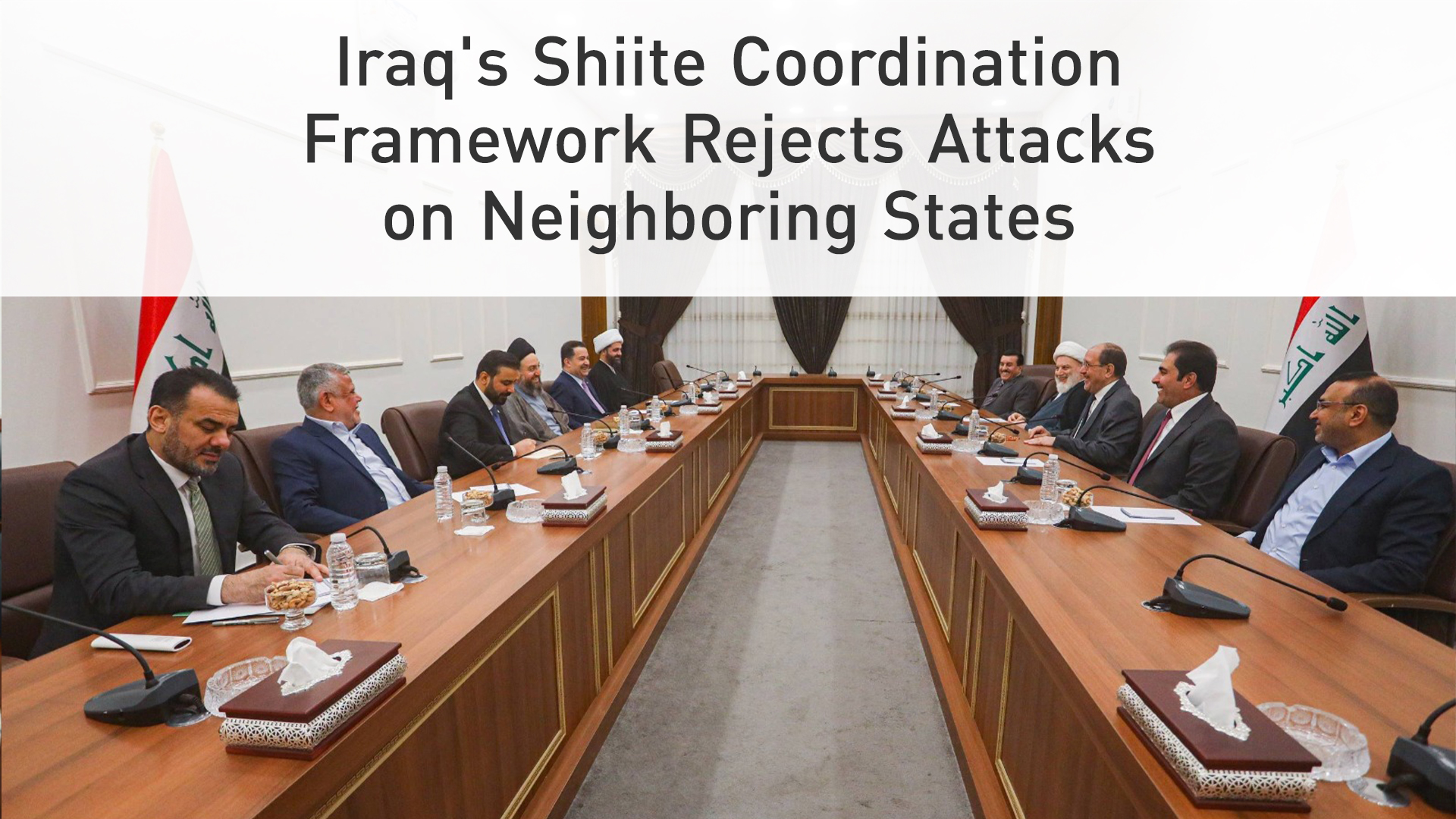
ERBIL (Kurdistan24) - With regional tensions running at a fever pitch and the shadow of the Barakah nuclear plant attack hanging over Baghdad, Iraq's Coordination Framework gathered Thursday in an extraordinary session at the office of Hadi al-Amiri — convened, according to the coalition's statement, just 20 minutes before the scheduled time — to address the country's most pressing political and security challenges in a single sitting.
Prime Minister Ali al-Zaidi was present as the bloc charted a course through two intertwined crises: the urgent question of government formation and the increasingly fraught matter of Iraq's alleged role, in a string of drone attacks targeting its neighbors.
The Coordination Framework announced that constitutional procedures and national consultations required to finalize al-Zaidi's ministerial cabinet will formally begin after the Eid al-Adha holiday.
The decision signals a deliberate, consensus-driven approach to completing the government, with the coalition signaling that the post-Eid period will mark the start of active negotiations over remaining portfolios.
On the security front, the Coordination Framework rejected any aggression against neighboring and Arab states, reaffirming the principles of national sovereignty and the imperative of keeping the region from sliding into deeper instability.
The coalition called on Iraq's security agencies to conclude their ongoing investigations and take all necessary measures to protect the country's security and territorial integrity.
A crisis with a nuclear dimension
The session unfolded against the backdrop of one of the most serious incidents to rattle the Gulf in recent memory. On May 17, three drones struck the Barakah Nuclear Power Plant in Abu Dhabi — the Arab world's only operational nuclear facility and the source of nearly a quarter of the UAE's electricity.
One drone hit an electrical generator near the facility and triggered a fire; two others were intercepted before reaching their targets.
There were no casualties and no radiation leaks, Emirati authorities confirmed.
The UAE's Ministry of Defense subsequently announced that technical tracking of the drones concluded they had all originated from Iraqi territory, a finding that immediately placed Baghdad at the center of a diplomatic storm.
The UAE formally requested an emergency session of the UN Security Council, urging it to condemn what Abu Dhabi described as a terrorist attack on peaceful nuclear infrastructure and a clear violation of international law.
Baghdad had already moved to contain the fallout before Thursday's Coordination Framework meeting.
On Tuesday, government spokesperson Bassem al-Awadi strongly condemned the drone attacks and reaffirmed Iraq's "brotherly and special relations" with the UAE, pledging continued cooperation aimed at deepening ties and preventing military escalation.
Al-Zaidi, as commander-in-chief of the armed forces, had separately chaired the first meeting of the Ministerial Council for National Security, where officials condemned the attacks on both the UAE and Saudi Arabia, announced the formation of a special committee to coordinate with both countries, and directed security agencies to take all necessary measures against those responsible if Iraqi territory is confirmed to have been used as a launch point.
Al-Zaidi made clear that the government "will not tolerate any individual or group seeking to threaten Iraq's security or that of its brotherly neighbors and regional partners."
Pressure on armed factions
The Barakah episode has sharpened the long-standing debate over the presence of armed factions operating outside direct state command in Iraq.
Al-Zaidi's insistence that weapons must remain exclusively under state control, a position he reaffirmed at the National Security Council meeting, takes on heightened significance in the context of an attack that the UAE has formally traced back to Iraqi soil.
For the Coordination Framework, Thursday's meeting represented both a political statement and a practical commitment: that Baghdad will pursue the formation of a functional government while simultaneously holding the line against its territory being used as a platform for regional destabilization.