UK Deploys Counter-Drone System to Kuwait After Attacks on Energy Facilities
The UK deployed a counter-drone system to Kuwait after reported attacks on key facilities, with officials confirming efforts to protect infrastructure and personnel, AFP reported.
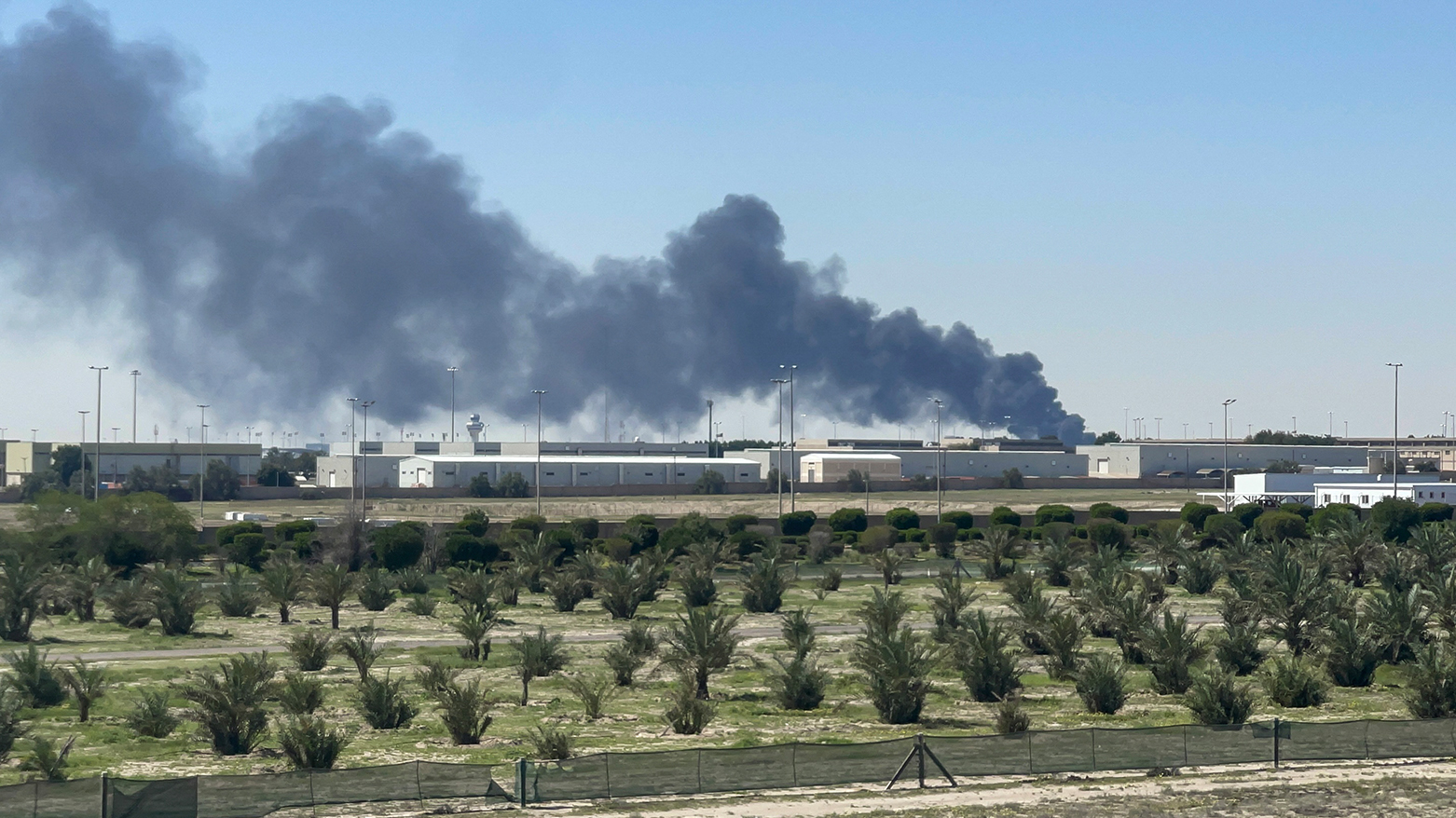
ERBIL (Kurdistan24) - UK deploys anti-drone system to Kuwait as British authorities confirmed the deployment of a ground-based air defense system to Kuwait following reported drone and missile attacks targeting key energy infrastructure, including an oil refinery and a power and desalination facility, AFP reported on Friday.
Britain’s Royal Air Force said Thursday that the RAF Regiment had deployed its Rapid Sentry counter-drone system to Kuwait, describing it as a “highly effective” platform intended to counter aerial threats. The announcement followed what British Prime Minister Keir Starmer described as a “reckless” overnight drone attack on a Kuwaiti oil refinery, according to a Downing Street readout cited by AFP.
“The RAF Regiment has deployed its highly effective Rapid Sentry counter-drone system to Kuwait,” the Royal Air Force said in a statement, as reported by AFP, adding that the system is designed to provide ground-based protection against drone incursions.
The deployment was initially outlined earlier in the week, when UK Defence Secretary John Healey said the system had been “battle-tested,” AFP reported, signaling readiness for operational use in the region. British officials said the system would help safeguard both Kuwaiti and British personnel and infrastructure while seeking to avoid broader escalation, according to the Downing Street statement.
Downing Street said Starmer, in his conversation with Kuwait’s crown prince, condemned the attack and discussed the defensive deployment. “They discussed the deployment of the UK’s Rapid Sentry air defence system to Kuwait, which will protect Kuwaiti and British personnel and interests in the region, while avoiding escalation into wider conflict,” the statement said, as cited by AFP.
The British deployment came amid a series of attacks reported in Kuwait on Friday.
According to Kuwait’s electricity and water ministry, a power generation and desalination complex was struck in what officials described as an Iranian attack. A ministry spokesperson, quoted by the official Kuwait News Agency and reported by AFP, said “one of the power generation and water desalination stations was subjected to an attack this dawn by the sinful Iranian aggression, resulting in material damage.”
An AFP correspondent in Kuwait City said there had been no disruption to electricity or water services following the incident.
Separately, Kuwaiti authorities said an oil refinery had also been targeted by drones. The state-run Kuwait Petroleum Corp. said Iranian drones struck the Mina al-Ahmadi refinery, sparking fires that firefighters were working to contain, according to reporting by The Associated Press. The company reported no injuries, AP said.
The Associated Press reported that Iranian missiles set alight a refinery and damaged a desalination plant in Kuwait on Friday, in attacks that coincided with continued Israeli and U.S. strikes on Iranian targets. The developments come as the conflict, which began on Feb. 28, entered its sixth week, according to AP reporting.
Kuwait has attributed the attacks to Iran, as well as to Iranian-backed groups operating in the region, officials said, as cited by AP. The incidents form part of a broader pattern of strikes affecting Gulf countries, including Kuwait, the United Arab Emirates, and Bahrain, which have been drawn into the conflict through retaliatory actions, the AP report noted.
According to The Associated Press, the attacks on Gulf energy infrastructure have contributed to significant disruptions in regional stability, including sharp increases in oil prices. The report said Iran’s actions, combined with its control over the Strait of Hormuz, have had global economic implications due to the strategic importance of the waterway.
The Strait of Hormuz is a critical shipping route through which a substantial portion of the world’s oil and natural gas supplies pass. Traffic through the strait has dropped significantly since the onset of the conflict, according to data cited by AP, with far fewer vessels transiting the route than under normal conditions.
Kuwait’s desalination infrastructure is particularly significant, as it provides the majority of the country’s drinking water. Approximately 90% of Kuwait’s potable water supply is derived from desalination processes, according to The Associated Press, making such facilities a key component of national infrastructure.
The targeting of desalination plants has become a notable feature of the conflict. Such facilities have increasingly been affected, with both sides previously accusing each other of striking water infrastructure, AP reported. Gulf states have characterized attacks on desalination plants as a direct threat to civilian livelihoods, the report added.
The broader military context includes ongoing strikes by the United States and Israel on Iranian targets. U.S. President Donald Trump said that U.S. forces would continue to strike Iran “very hard” in the coming weeks, according to remarks cited by The Associated Press.
Military movements have also been reported in the region. A U.S. aircraft carrier departed Split, Croatia, and remains prepared for deployment, while other carriers, including the USS Abraham Lincoln and the USS George H. W. Bush, have been positioned or are en route to the Middle East, the AP reported, citing U.S. Navy statements.
In addition to Kuwait, other Gulf states have reported incidents linked to the conflict. Authorities in the United Arab Emirates shut down gas facilities in Abu Dhabi after debris from a missile interception caused a fire, according to AP reporting.
Warnings of incoming missile fire were also issued by Israel, Bahrain, and Kuwait, though it remained unclear in some cases whether strikes had directly impacted specific locations, The Associated Press reported.
Within Iran, activists cited by AP reported explosions in Tehran and the central city of Isfahan, indicating ongoing strikes inside Iranian territory. Iranian authorities said at least 1,973 people had been killed since the start of the conflict, figures cited by The Associated Press showed.
The AP also cited data from the Armed Conflict Location and Event Data group, which said civilian casualties in Iran were often linked to strikes on government-related sites located in populated areas, rather than indiscriminate attacks.
Amid the ongoing conflict, diplomatic and security concerns have extended beyond immediate military engagements. French President Emmanuel Macron and South Korean President Lee Jae Myung agreed to cooperate to help reopen the Strait of Hormuz and address economic uncertainties resulting from the conflict, according to AP reporting.
Other international actors have also indicated a willingness to support maritime security efforts. Ukrainian President Volodymyr Zelenskyy said Ukraine could contribute to reopening shipping routes if invited, citing experience in maintaining maritime operations under adverse conditions, The Associated Press reported.
The security situation has also affected international deployments. Ireland’s defense minister canceled a planned visit to Lebanon after military officials assessed conditions as too dangerous, following the killing of peacekeepers in the region, according to AP.
The conflict has prompted concerns from international organizations. Amnesty International warned that Iran had recruited children as young as 12 into its Basij force, describing the practice as a potential war crime, AP reported, citing the organization’s statement.
The evolving situation has also led to discussions about potential diplomatic pathways. Former Iranian foreign minister Mohammad Javad Zarif suggested that Iran could limit its nuclear program and reopen the Strait of Hormuz as part of a broader agreement to end the conflict, according to an article cited by The Associated Press.
Despite these developments, the immediate focus remains on the security of critical infrastructure in affected countries. In Kuwait, officials have emphasized that essential services continue to operate despite the reported damage to facilities, according to AFP reporting.
The British deployment of the Rapid Sentry system represents a targeted response aimed at strengthening defensive capabilities in Kuwait. UK officials have framed the move as a measure to protect personnel and infrastructure without contributing to escalation, according to statements cited by AFP.
The Royal Air Force statement and Downing Street comments indicate that the deployment is part of a coordinated effort between the United Kingdom and Kuwait, following direct communication between their leadership, AFP reported.
Kuwaiti authorities have not reported casualties in connection with the recent attacks, but have confirmed material damage to both energy and water infrastructure, according to statements cited by AFP and AP.
The situation remains fluid, with continued reports of military activity across multiple locations in the region, including within Iran and across Gulf states, according to ongoing coverage by AFP and The Associated Press.
The United Kingdom’s deployment of a counter-drone system to Kuwait follows confirmed attacks on energy infrastructure, as officials in both countries emphasize defensive measures amid ongoing regional hostilities, according to AFP.