Trump Says U.S. Could Open Hormuz Strait, Take Oil in Truth Social Post
Trump signals Hormuz ambitions as war escalates, with Tehran blast, rising U.S. defense spending, and continued strikes on Iran’s infrastructure amid widening regional impact.
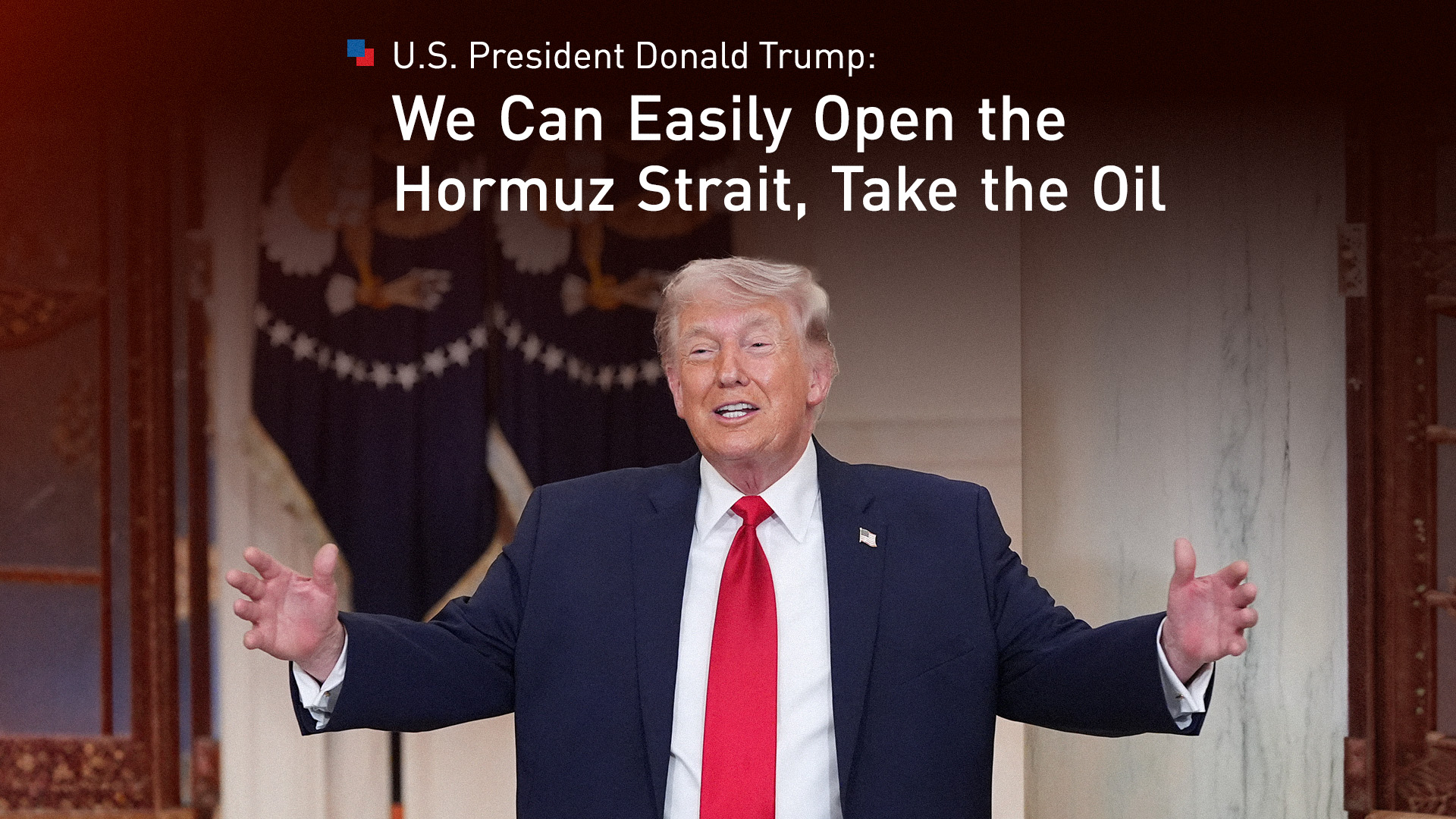
ERBIL (Kurdistan24) - U.S. President Donald Trump said in a post on Truth Social on Friday that “with a little more time, we can easily OPEN THE HORMUZ STRAIT, TAKE THE OIL, & MAKE A FORTUNE,” without detailing how such an outcome would be achieved, as the White House separately requested a $1.5 trillion defense budget and a large explosion was reported in northern Tehran amid ongoing conflict, according to AFP and other reports.
The message, published on Trump’s Truth Social platform, did not elaborate on operational specifics or clarify what oil resources he was referencing, according to the post. The statement came as the White House formally submitted a budget proposal to Congress seeking a significant increase in defense spending tied to the ongoing war with Iran, AFP reported.
According to AFP, the proposed budget outlines $1.5 trillion in total defense resources for 2027, marking a $445 billion increase, or 42 percent, from 2026 levels. The proposal, described in a White House document, builds on what it called a “historic” $1 trillion defense topline for 2026, AFP said. U.S. media cited by AFP noted that the increase would represent the largest year-on-year rise in Pentagon spending since World War II, although such proposals require congressional approval.
Developments in Washington coincided with reports of a large explosion in Iran’s capital. AFP journalists in Tehran said a blast shook northern parts of the city on Friday, with smoke visible rising from the site. One journalist reported that the impact caused windows to shake in a residential apartment, AFP said, adding that the exact location of the explosion was not immediately clear.
The incidents come amid continued military operations involving the United States and Israel against Iran, as well as Iranian missile activity across the region, according to reporting by The Associated Press.
Israeli Prime Minister Benjamin Netanyahu said Israeli strikes have destroyed 70 percent of Iran’s steel production capacity, according to a video statement cited by The Times of Israel. Netanyahu said the operations were being conducted “in full coordination” with the United States, adding that Israeli forces would continue targeting Iranian infrastructure and military assets.
“This is a tremendous achievement that deprives the Revolutionary Guards of both financial resources and the ability to produce many weapons,” Netanyahu said, according to remarks reported by The Times of Israel. He added that Israeli forces were “eliminating commanders, bombing bridges and striking infrastructure,” the report noted.
Netanyahu’s remarks align with broader operational developments described by The Associated Press, which reported that the conflict—now in its sixth week—has involved sustained strikes across multiple locations. Iranian missile launches have targeted Israel and Gulf states, while Israeli and U.S. forces have continued strikes within Iran, AP said.
According to AP reporting, Iranian missile activity has affected energy infrastructure in the Gulf. In Kuwait, missiles set fire to a refinery and damaged a desalination plant, with authorities confirming material damage but no reported injuries. Separately, debris from a missile interception in Abu Dhabi injured at least 12 people, officials said, as cited by AP.
Regional governments, including Israel, Bahrain, and Kuwait, have issued warnings about incoming missile fire, although the extent of direct impacts has not always been immediately clear, according to AP.
Within Iran, activists cited by The Associated Press reported additional explosions in Tehran and the central city of Isfahan, indicating ongoing strikes. Iranian authorities have said that at least 1,973 people have been killed since the conflict began on Feb. 28, AP reported.
Data cited by AP from the Armed Conflict Location and Event Data group indicated that civilian casualties have often occurred in connection with strikes on government or military sites located in populated areas. The group documented fewer than 100 such incidents, according to the report.
The broader military posture of the United States has also evolved during the conflict. President Trump said U.S. forces would continue striking Iran “very hard” in the coming weeks, according to remarks cited by The Associated Press. The report added that U.S. naval forces, including aircraft carriers, have been repositioned or deployed toward the region.
Maritime activity has been significantly affected, particularly in the Strait of Hormuz. According to data cited by AP, vessel traffic through the strategic waterway has declined sharply since the start of the conflict, contributing to rising oil prices due to its central role in global energy transit.
Diplomatic and security responses have continued alongside military operations. The Associated Press reported that French President Emmanuel Macron and South Korean President Lee Jae Myung agreed to cooperate on efforts to reopen the Strait of Hormuz. Ukrainian President Volodymyr Zelenskyy also said Kyiv could assist in securing maritime routes if invited, AP reported.
Humanitarian concerns have also emerged during the conflict. Amnesty International said Iran has recruited children as young as 12 into its Basij force, describing the practice as a potential violation of international law, according to AP. The organization said such deployments place minors at significant risk amid ongoing strikes.
Netanyahu’s emphasis on the destruction of Iran’s steel production capacity highlights the strategic focus on industrial infrastructure. Steel production is widely used in both civilian and military manufacturing, and its disruption affects economic output and weapons development, according to reporting cited by international media.
The latest statements and developments underscore the continued intensity of military operations and their impact across multiple sectors, including defense spending, infrastructure, and regional security dynamics, as reported by AFP, The Times of Israel, and The Associated Press.
The developments follow Trump’s public remarks, the U.S. budget proposal, and confirmed strike activity, including reported damage to Iran’s industrial capacity and ongoing regional military operations.