Iranian Diplomatic Source Warns U.S. Over Ground Operation as Conflict Expands Across Region
Iran has warned that it would determine the outcome of any U.S. ground operation, as the conflict with the United States and Israel continues across multiple fronts.
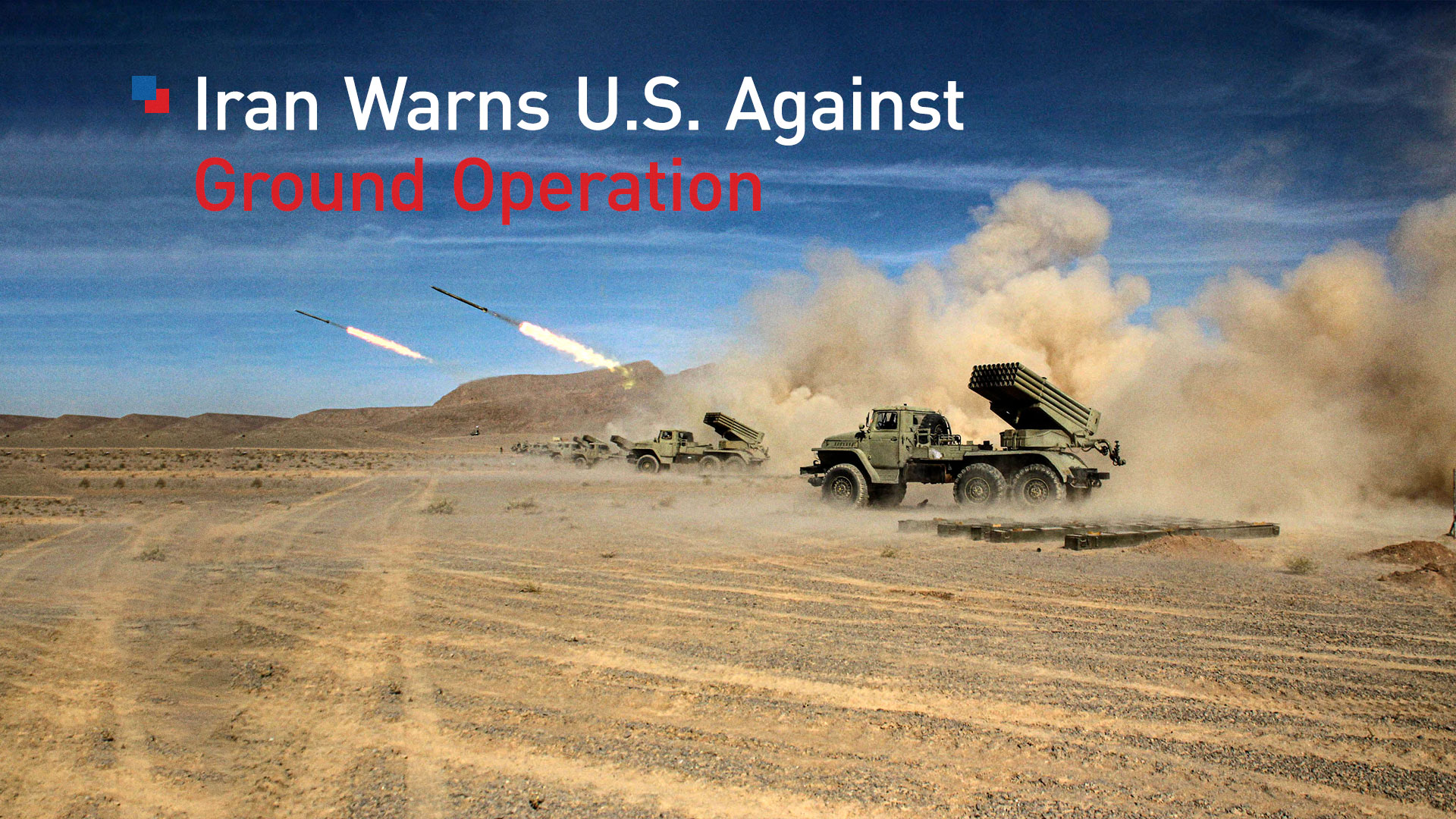
ERBIL (Kurdistan24) - Ria Novosti reported on April 4 that a diplomatic source in Iran warned the United States against launching a ground operation, stating that if such a mission were initiated, Tehran would determine its outcome, as tensions continue to escalate amid ongoing U.S.-Israeli military actions and Iranian retaliatory strikes across the region.
“If the Americans begin a ground operation, then we will be the ones to finish it,” the source said, according to the Ria Novosti report. The source also expressed confidence that Iran would prevail in any confrontation with U.S. forces and stated that no negotiations were currently taking place between the two sides, despite what the report described as requests from Washington.
The remarks come as U.S. President Donald Trump has indicated that Washington could carry out “powerful strikes” against Iran within the next two to three weeks, while U.S. Defense Secretary Pete Hegseth said earlier this week that the Pentagon was not ruling out any options for continued military operations, including a potential ground intervention.
The warning from the Iranian source was issued against the backdrop of a widening conflict that began on Feb. 28, when the United States and Israel launched joint military strikes against Iranian targets. Since then, Iranian forces have carried out retaliatory attacks against Israel and U.S. military installations across the Middle East, according to the report, contributing to what officials and observers have described as a period of sustained regional instability.
The Ria Novosti report did not provide additional operational details regarding the potential for a ground engagement, but it framed the statement as a direct response to recent U.S. signals that ground options remain under consideration. The source’s comments were presented alongside references to Trump’s remarks and Hegseth’s statements, linking the warning to evolving U.S. military positioning in the region.
Parallel developments outlined in other reports indicate that Iran has taken concrete steps to prepare for the possibility of a ground assault. According to those reports, Tehran has elevated its military readiness to the highest level, reinforcing defenses around key strategic and economic assets, particularly its primary oil export infrastructure.
A report cited by The Wall Street Journal stated that Iranian authorities have strengthened defenses on Kharg Island, the country’s main oil export hub. Officials have deployed guided missile systems in the area, mined coastal approaches, and booby-trapped sensitive facilities, according to the report. It also noted the construction of defensive tunnels on strategically located islands, intended to counter potential ground incursions.
In addition to military preparations, Iranian authorities have launched a nationwide mobilization campaign aimed at recruiting volunteers for logistical and operational support roles. The initiative, described under the slogan “Sacrifice” (Ghorbanidun), seeks to mobilize large segments of the population in support of the war effort. Estimates cited in the reports suggest that Iran maintains approximately one million active and reserve personnel, with around 190,000 members belonging to the Islamic Revolutionary Guard Corps.
The reports indicated that Iran’s defensive planning incorporates multiple elements, including the use of terrain, asymmetric warfare tactics such as drones and fast boats, and the deployment of short-range missiles and naval mines. These measures are intended to counter potential military advances and disrupt maritime operations, particularly in sensitive areas such as the Strait of Hormuz.
The Strait of Hormuz has emerged as a central focus of both military and diplomatic activity. Diplomatic sources told reporters that Iran has formally requested Russia to block a draft resolution introduced by Bahrain at the United Nations Security Council concerning the reopening and security of the waterway.
According to two UN diplomats, Bahrain, which holds the rotating presidency of the council, postponed a scheduled vote on the resolution after Russia and China expressed objections to the text. The draft resolution, supported by Gulf states and the United States, calls for the use of “defensive tools” to ensure maritime security in the strait, through which approximately one-fifth of global oil supplies transit.
Earlier versions of the draft reportedly included the phrase “use of all necessary means,” which was later revised to “appropriate defensive means” for a six-month period in an effort to address concerns from council members. Despite these revisions, Russia and China remained dissatisfied, leading to the postponement of the vote to an unspecified date next week.
An Iranian diplomatic source told reporters that Tehran had asked Moscow to prevent the resolution from passing, stating that it would “further complicate the situation.” Reports also indicated that Bahrain and the United Arab Emirates have been working together on the proposal, with the aim of restoring security to the waterway. However, the possibility of a veto by Russia or China remains unresolved.
The same reports noted that maritime traffic through the Strait of Hormuz has been severely disrupted as a result of the ongoing conflict, contributing to significant increases in global fuel prices. The disruption underscores the strategic importance of the waterway and its role in the broader geopolitical and economic dimensions of the conflict.
At the same time, military operations have continued across multiple fronts. In Iran, reports indicated that powerful explosions were heard in Tehran on Friday night and early Saturday morning, coinciding with increased aerial activity. Iranian media outlets, including the Fars News Agency, reported that air defense systems were activated to intercept incoming threats.
The strikes reportedly targeted a range of locations in and around the capital, including Kolketchal, Jamshidiyeh, the Jamaran mountains, Shahriar, Niavaran, Shemiranat, the Abak neighborhood, and Sa’adat Abad. Israeli officials confirmed that a new wave of airstrikes had been launched against Iranian military bases, missile facilities, and defense systems.
The continuation of air operations reflects the sustained intensity of the conflict, which has now entered its sixth week. According to the reports, the scope of the confrontation has expanded beyond Iran to include neighboring regions, with Lebanon emerging as another active theater.
In Lebanon, the Israeli army launched a new phase of attacks early Saturday, targeting Hezbollah positions and infrastructure in Beirut. News sources reported that six airstrikes hit the Dahieh area in the southern part of the capital. The previous day, Israeli forces had conducted strikes on multiple Beirut neighborhoods, including Hadath, Saint Therese, and the American neighborhood, resulting in the destruction of several residential buildings.
The Lebanese Ministry of Health reported that an airstrike near a mosque in the town of Sakhmar killed two people and injured 15 others. Additional bombardments were reported in southern Lebanon, affecting towns such as Shehabieh, Tiri, Konin, and the city of Tyre.
The Israeli army accused Hezbollah of launching a missile that struck a base used by the United Nations Interim Force in Lebanon (UNIFIL), injuring three peacekeepers. In response, Hezbollah stated that it had conducted a series of retaliatory operations, including missile attacks on the Israeli city of Nahariya and strikes targeting Israeli military positions in Avivim. The group also reported launching a drone attack on the Kiryat Shmona area.
According to Israeli military figures cited in the reports, more than 3,500 targets have been struck across Lebanon over the past month. Hezbollah, for its part, said it had carried out 1,309 military operations during the same period, with approximately half targeting areas inside Israel. The reports also indicated that Israeli ground forces have been deployed into southern Lebanon, adding a land component to the ongoing air campaign.
The convergence of these developments has reinforced the broader trajectory of the conflict, which now encompasses multiple operational theaters and diplomatic arenas. The initial U.S.-Israeli strikes against Iran have evolved into a sustained campaign, accompanied by retaliatory actions, regional spillover, and increased international engagement.
The warning issued by the Iranian diplomatic source, as reported by Ria Novosti, reflects the current phase of the conflict, in which the possibility of further escalation remains under discussion by key actors. The statement directly addressed the prospect of a U.S. ground operation and emphasized Iran’s position that it would control the outcome of any such engagement.
At the same time, the absence of active negotiations, as noted by the source, highlights the limited diplomatic engagement between the parties at this stage. While diplomatic activity continues at the United Nations and among regional actors, the reports do not indicate any direct talks between Washington and Tehran.
The combination of military operations, defensive preparations, and diplomatic maneuvering suggests a conflict that is continuing to evolve across multiple dimensions. The reporting indicates that both sides are maintaining active military postures while also engaging in parallel diplomatic efforts related to specific issues such as maritime security.
The developments described in the reports collectively point to a sustained period of instability in the region, with no immediate indication of de-escalation within the scope of the available information. The situation remains fluid, with ongoing operations in Iran and Lebanon, continued tensions over the Strait of Hormuz, and unresolved diplomatic initiatives at the United Nations.