Turkish Parliament Speaker Calls for New Civil, Democratic Constitution
Numan Kurtulmuş said the reconciliation effort must deepen through national unity and democratic expansion, echoing President Erdoğan's earlier call for a civilian, all-encompassing charter.
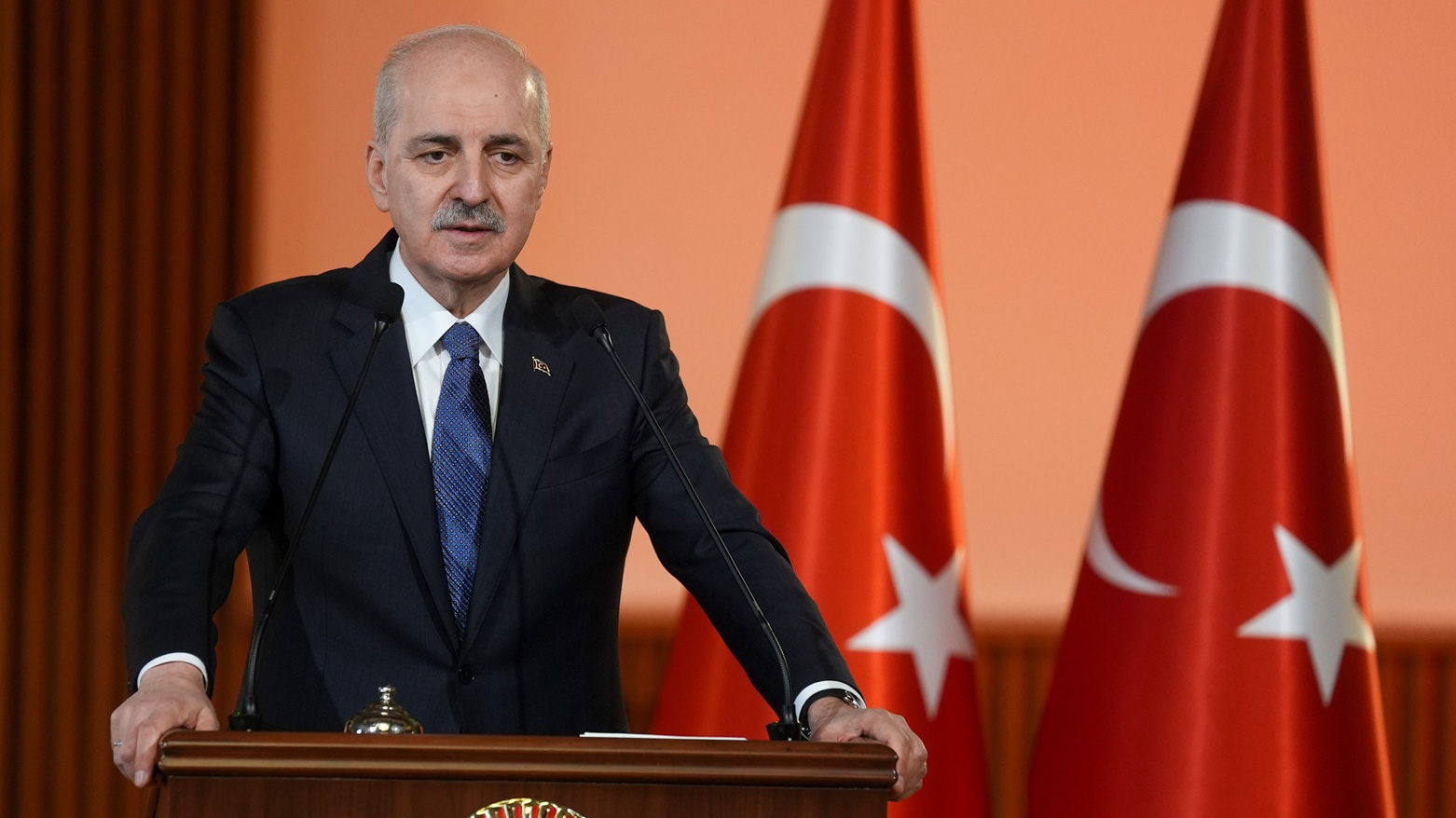
ERBIL (Kurdistan24) - The speaker of Türkiye's parliament used an Eid al-Adha message on Wednesday to call for a new constitution and declare that the country's peace process must enter a more substantive phase, the latest signal from Ankara's leadership that the initiative is being tied directly to a broader democratic transformation.
Numan Kurtulmuş, speaking on Wednesday, said the peace process would become more meaningful in the period ahead "by working toward national unity, the rule of law, and the expansion of democratic political channels."
He added that a new constitution, one that is "civil, democratic, libertarian, and encompassing of all segments of society," must be drafted, and called for the matter to be placed firmly on the political agenda.
Kurtulmuş's remarks echoed a statement made by President Recep Tayyip Erdoğan on May 11, in which the president declared that no unlawful interference in the use of judicial authority would be tolerated.
Erdoğan also called for "a new, comprehensive, libertarian, and civil constitution" and expressed confidence that such a charter could establish a higher legal logic capable of simultaneously protecting law, democracy, the state, and the people, noting that the country's general constitution had already been amended four times.
"We have before us the opportunity to build our democracy from the ground up," Erdoğan said.
The constitutional push comes as Türkiye's peace process with the Kurdistan Workers' Party (PKK), which began in October 2024 following a call by Nationalist Movement Party (MHP) chairman Devlet Bahçeli, navigates one of its most contested periods.
Bahçeli, who has been among the process's most vocal proponents, said in May that the initiative was nearing realization and proposed that imprisoned PKK leader Abdullah Öcalan be designated as a "Peace Process and Political Affairs Coordinator" to oversee the group's disarmament and dissolution, a role he said would be strictly limited to ending armed hostilities and would leave Öcalan's prison sentence unchanged.
Yet even as senior Turkish officials express optimism, significant fractures have emerged. PKK commander Murat Karayılan claimed the process had "effectively been frozen by the government," citing more than a month without contact with Öcalan and criticizing Ankara for demanding disarmament without offering corresponding legal guarantees.
The Peoples' Equality and Democracy Party (DEM Party) has positioned itself between the two narratives, with deputy co-chair Mahfuz Güleryüz describing the situation as a "temporary stalemate" rather than a full halt, while acknowledging that the absence of a promised legal roadmap and direct communication with Öcalan remain serious obstacles.
Behind the scenes, Türkiye's National Intelligence Organization (MIT) has been holding contacts with PKK representatives in Qandil, and the government is reportedly drafting legislation, tentatively titled the "Social Integration and National Harmony Law Proposal," to create a formal legal framework for the reintegration of former fighters.
By framing the peace process alongside constitutional renewal, both Kurtulmuş and Erdoğan are signaling that Ankara envisions the resolution of the Kurdish question not as a standalone security arrangement, but as part of a wider restructuring of Türkiye's political order.
Whether that vision can bridge the gap between the government's optimism and the Kurdish political actors' demands for concrete legal guarantees remains the defining question of the months ahead.