Trump Says Second U.S. Airman Rescued in Iran as Regional Strikes Intensify
Donald Trump announced the successful rescue of a U.S. pilot behind enemy lines in Iran, calling it one of the most daring operations in U.S. military history and affirming that no American warfighter was left behind.
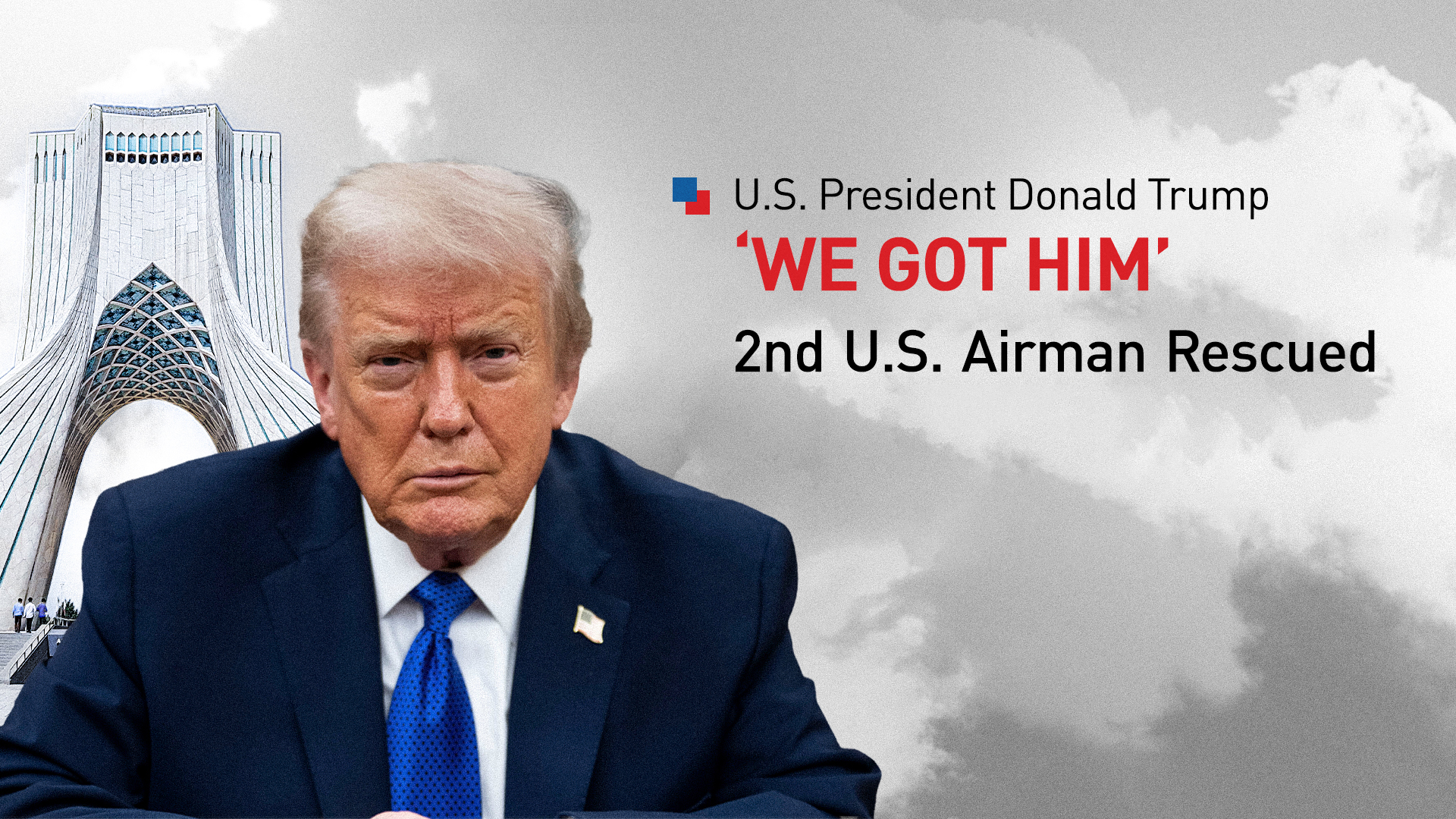
ERBIL (Kurdistan24) - U.S. President Donald Trump said Sunday that American forces had successfully rescued a second airman downed in Iran, describing the mission as one of the most complex search-and-rescue operations conducted by the United States, as missile and drone attacks by Iran targeted Israel and Gulf states.
The announcement, made in a statement posted on Truth Social, confirmed that the second airman had been recovered after operating behind enemy lines in mountainous terrain inside Iran. Trump said the airman sustained injuries but was expected to recover.
“This brave Warrior was behind enemy lines in the treacherous mountains of Iran, being hunted down by our enemies,” Trump said, adding that the operation followed the earlier rescue of another pilot, which had not been disclosed at the time to avoid compromising ongoing efforts.
The rescue comes amid a significant escalation in hostilities across the Middle East. According to regional authorities, Iran launched missiles and drones early Sunday toward Israel and Kuwait, prompting air defense responses in both countries. Officials in Kuwait and Israel confirmed that interception systems had been activated to counter incoming threats.
The United Arab Emirates also reported that its air defenses responded to missile attacks targeting industrial sectors, including aluminum facilities, while Bahrain authorities said a fire broke out at a refinery as a result of what they described as Iranian aggression.
The developments follow a warning issued by Trump, who said Iran had been given 48 hours to reach an agreement or face severe consequences. In a statement posted Saturday, Trump reiterated an earlier ultimatum tied to the Strait of Hormuz, a key maritime corridor for global energy supplies.
“Time is running out — 48 hours before all Hell will reign down on them,” Trump wrote, referring to a deadline linked to demands that Iran reopen the strategic waterway.
Iran’s central military command rejected the warning. General Ali Abdollahi Aliabadi described the ultimatum as a “helpless, nervous, unbalanced and stupid action,” and warned in response that “the gates of hell will open for you.”
The conflict, which began more than a month ago following U.S.-Israeli strikes, has expanded geographically and intensified in scope, affecting multiple countries and key infrastructure across the region.
Strikes have increasingly targeted economic and industrial sites. On Saturday, attacks attributed to U.S. or Israeli forces struck a petrochemical hub in southwestern Iran, killing five people, according to the deputy governor of Khuzestan province. Additional strikes reportedly hit a cement plant and a trade terminal near the Iran-Iraq border, where one fatality was reported.
Iran has responded with missile and drone attacks targeting Israel and U.S.-aligned states in the Gulf. Authorities in Bahrain reported that shrapnel from intercepted drones injured four people on Saturday, while officials in Dubai said debris from aerial interceptions struck two buildings, including one housing a U.S. technology company.
The escalation has also raised concerns about the safety of nuclear facilities. A strike near Iran’s Bushehr nuclear power plant on Saturday killed a security guard and prompted Russia to evacuate 198 workers involved in the plant’s operation. Russia, which has played a role in constructing and supporting the facility, condemned the incident as “an evil deed.”
Iranian Foreign Minister Abbas Araghchi warned that continued strikes near the site could lead to radioactive consequences extending beyond Iran’s borders. He said such an outcome could affect Gulf Cooperation Council capitals due to the plant’s proximity to neighboring countries.
Rafael Grossi, head of the International Atomic Energy Agency (IAEA), said no increase in radiation levels had been detected at the Bushehr site following the latest incident. However, he expressed “deep concern” and noted that the facility had been targeted multiple times in recent weeks.
Former IAEA chief Mohamed El-Baradei also commented publicly, urging Gulf governments to intervene diplomatically. In a statement posted on social media, he called on regional leaders to act to prevent further escalation.
The widening conflict has also disrupted key maritime and energy routes. Iranian forces have maintained control over the Strait of Hormuz, a critical passage for global oil and gas shipments, while also targeting economic assets in neighboring countries.
Military operations have extended beyond Iran and the Gulf. The Israeli military said Friday it had struck more than 3,500 targets across Lebanon over the past month, in operations linked to ongoing hostilities with Iran-backed Hezbollah. Israeli authorities also issued evacuation warnings Saturday for areas near a border crossing between Syria and Lebanon ahead of planned strikes.
Civilian reactions within the region have reflected growing concern. In Tel Aviv, hundreds of demonstrators gathered to protest the war and call for renewed peace negotiations, according to local reports.
The broader economic impact has been significant, with attacks on energy infrastructure and shipping routes contributing to volatility in global markets. The continued targeting of industrial sites has heightened concerns about supply disruptions and regional stability.
Officials across multiple countries have continued to monitor developments, particularly in relation to air defense responses and the security of critical infrastructure.
Trump’s announcement regarding the rescue of the second airman marks a notable development in the U.S. military’s involvement in the conflict, underscoring the operational risks faced by personnel in contested areas.
The situation remains fluid, with military actions and diplomatic statements continuing across several fronts as the conflict enters a more expansive phase involving multiple regional actors.