PM Barzani Marks Anniversary of UNSC Resolution 688, Cites Lasting Impact of International Support
PM Masrour Barzani recalls 35 years since UNSC Resolution 688, honoring international support that saved lives and helped build today’s Kurdistan Region. "We will never forget the sacrifices of the past and the support of our friends," PM Barzani stated.
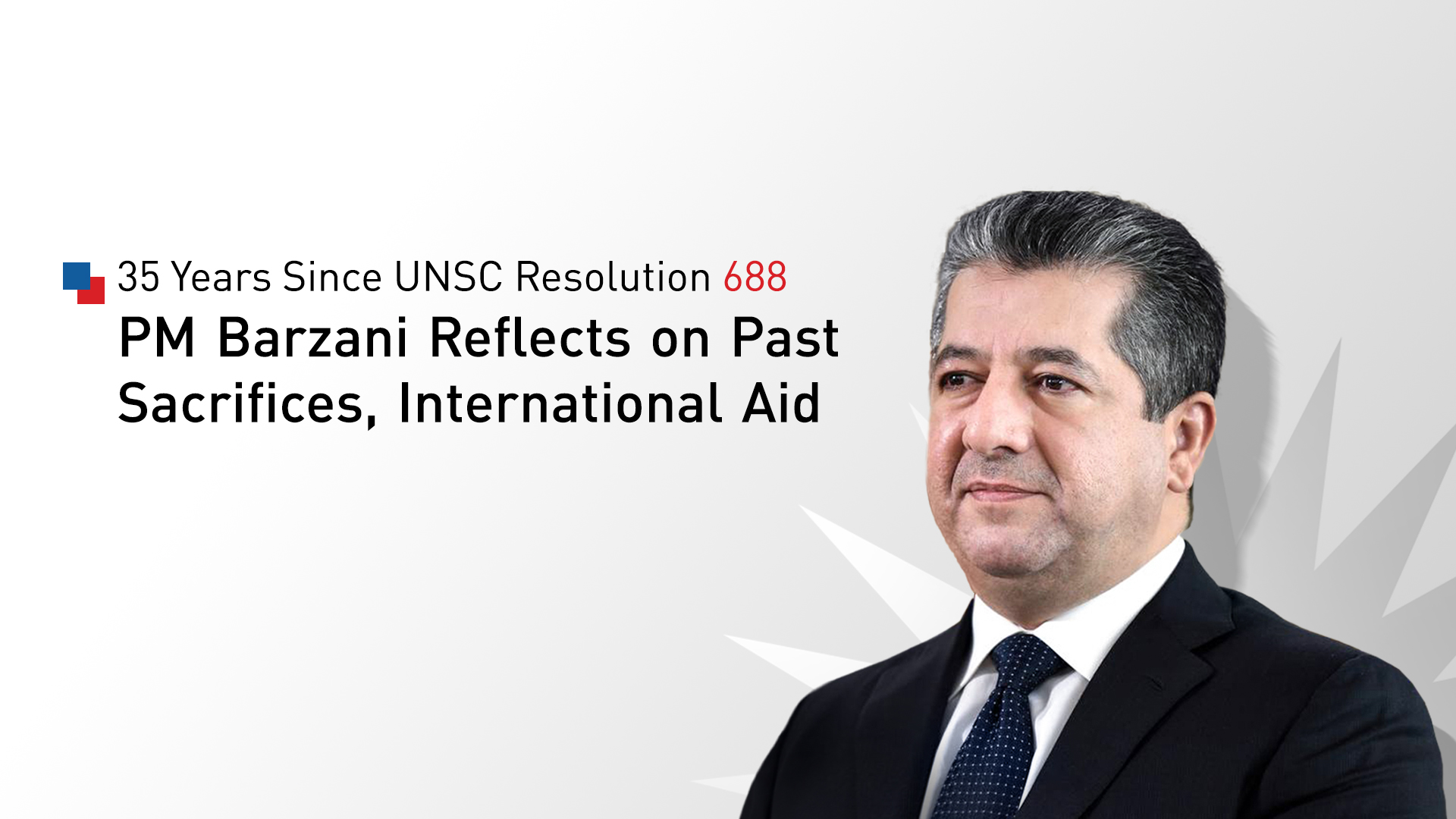
ERBIL (Kurdistan24) - Kurdistan Region Prime Minister Masrour Barzani via a post on X, on Sunday said that the people of Kurdistan continue to remember the international support provided following the adoption of United Nations Security Council Resolution 688, describing it as a turning point that helped save lives and lay the foundations of the Kurdistan Region.
“Thirty-five years after UNSC Resolution 688, the people of Kurdistan still remember the international support that came at a time when genocide, displacement, and oppression threatened our survival,” PM Barzani said in the statement. “That support helped save lives, open the way for humanitarian relief, and lay the foundation for the Kurdistan Region as it stands today.”
“We will never forget the sacrifices of the past and the support of our friends,” he added.
Thirty-five years after UNSC Resolution 688, the people of Kurdistan still remember the international support that came at a time when genocide, displacement, and oppression threatened our survival. That support helped save lives, open the way for humanitarian relief, and lay the… pic.twitter.com/bsQtyczxyr
— Masrour Barzani (@masrourbarzani) April 5, 2026
The Prime Minister’s remarks coincided with the anniversary of the resolution’s adoption on April 5, 1991, following a period of violence and displacement affecting Kurdish populations in Kurdistani areas in Iraq.
According to historical accounts referenced alongside the statement, the events leading to the resolution followed a widespread uprising against the government of Saddam Hussein in the aftermath of the Gulf War.
Iraqi forces subsequently launched military operations in Kurdish areas, which included bombardment, executions, and forced displacement, prompting large-scale population movements toward mountainous regions and international borders.
Reports at the time indicated that nearly one million people were displaced during the crisis, creating a humanitarian situation that drew international attention. As images of the conditions reached global audiences, several countries, including France, Iran, and Türkiye, formally appealed to the United Nations Security Council to intervene.
On April 5, 1991, the Security Council adopted Resolution 688, condemning the repression of civilians in Iraq and calling for immediate humanitarian access. The resolution passed with 10 votes in favor, while Cuba, Yemen, and Zimbabwe voted against, and China and India abstained, according to the historical record cited in the background information.
The adoption of the resolution was followed by coordinated international action. The United States, the United Kingdom, and France initiated Operation Provide Comfort, a combined military and humanitarian effort aimed at protecting civilians and facilitating aid delivery in northern Iraq.
As part of the operation, a no-fly zone was established above the 36th parallel, limiting Iraqi military activity in the region and enabling humanitarian organizations to operate. The measures contributed to the creation of conditions that allowed displaced populations to return and begin reconstruction efforts, according to the background material.
Over time, these developments supported the establishment of governing institutions in the Kurdistan Region. The formation of the Kurdistan Parliament and the Kurdistan Regional Government emerged in the years following the intervention, providing a framework for political administration and institutional development.
The effects of Resolution 688 extended beyond immediate humanitarian relief, contributing to longer-term political and economic developments. The Kurdistan Region subsequently developed administrative structures and expanded international engagement, with multiple countries establishing diplomatic representation in Erbil.
PM Barzani’s statement emphasized the enduring significance of the international response, linking past support to present-day institutional realities.
The anniversary is observed annually by Kurdish communities, reflecting on the events of 1991 and their aftermath. The statement aligns with broader commemorative practices marking the adoption of Resolution 688 and its role in shaping the modern political landscape of the Kurdistan Region.
The Prime Minister’s message underscored the continued relevance of the resolution as a historical reference point. The background information describes it as a foundation for subsequent developments in governance and international relations within the region.