The Anatomy of an Extraction: How SERE Doctrine and a CIA Deception Saved an American Airman
Behind the spectacle of modern air war, survival is silent. After an F-15E was downed in Iran, a lone airman endured 48 hours in hiding—guided by SERE doctrine—until a high-risk rescue brought him home, proving survival hinges on discipline, not drama.
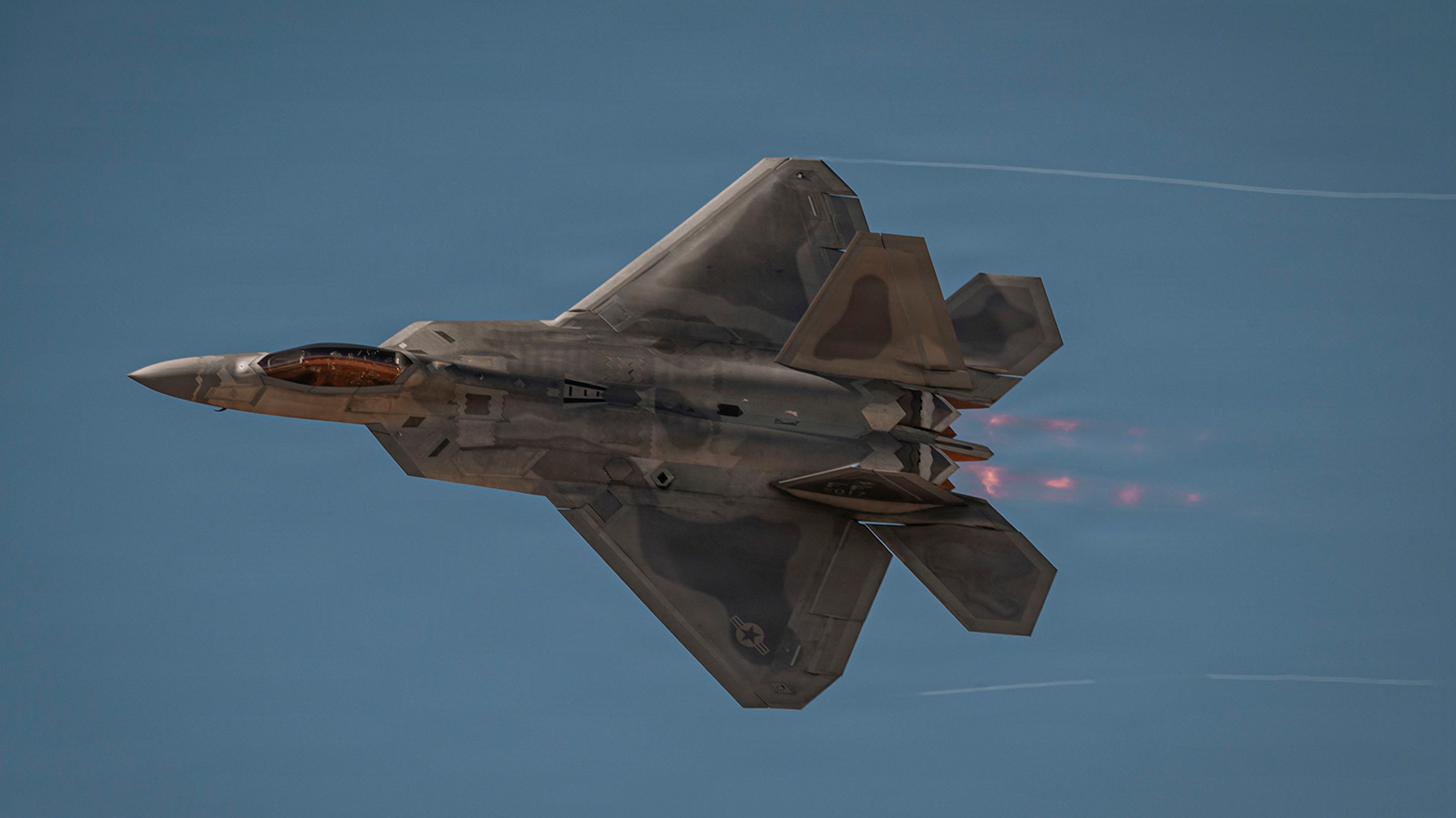
ERBIL (Kurdistan24) - In the modern cinematic imagination—recently bolstered by the adrenaline-fueled sequences of Top Gun: Maverick—a downed aviator’s survival behind enemy lines is often depicted as a fast-paced montage of sprinting through forests and exchanging gunfire with faceless adversaries. The reality, however, is far more agonizing. It is a slow, grueling test of psychological endurance, silence, and the rigid application of military doctrine.
This stark reality was laid bare recently in the mountainous terrain of southwestern Iran. Following a kinetic escalation in the Middle East, a U.S. Air Force F-15E Strike Eagle was shot down over Iranian territory.
While the pilot was swiftly recovered, the aircraft’s Weapons Systems Officer (WSO) remained unaccounted for, plunging the U.S. military into one of the most extensive and complex search-and-rescue operations in its history.
For nearly 48 hours, the airman evaded capture by relying on a foundation of training that is as rigorously academic as it is physically punishing: SERE.
Survival, Evasion, Resistance, and Escape (SERE) training is the U.S. military’s premier program for preparing personnel to endure isolating events. Rooted in the harsh lessons of conflicts past—from the frozen forests of the Korean War to the notorious "Hanoi Hilton" in Vietnam—SERE is less about heroics and more about the cold calculus of staying alive.
According to Air Force Handbook 10-644, the official manual governing SERE operations, the primary mission of an isolated person is to "return to friendly control without giving aid or comfort to the enemy, to return early and in good physical and mental condition."
To achieve this, the manual emphasizes that the most critical tool an evader possesses is not their radio or their weapon, but their "will to survive."
The handbook cites the 1995 ordeal of Captain Brian Udell, an F-15E pilot who ejected at supersonic speeds over the Atlantic, as a historical testament to the fact that sheer determination can bridge the gap between a crisis and a successful recovery.
For the downed WSO in Iran, that crisis period began the moment his parachute canopy collapsed. Stripped of the technological supremacy of a fighter jet, the airman was suddenly reduced to the fundamentals of the human condition.
Following the SERE doctrine's "Five Phases of Evasion," his immediate action was to sanitize the area of his landing, discard compromising equipment, and initiate movement.
Reports indicate that the airman climbed several thousand feet up a steep rocky ridge. To the layperson, climbing higher into the treacherous mountains of Iran while injured might seem counterintuitive. But to a SERE graduate, it is textbook evasion.
The SERE manual dictates that evaders should seek the "military crest"—a position approximately three-quarters of the way up a hill. This vantage point prevents the evader from silhouetting themselves against the skyline, while also keeping them above the valleys where sound tends to magnify and enemy patrols typically travel.
Once elevated, the airman established a "hide site" utilizing the BLISS principle: Blend, Low silhouette, Irregular shape, Small, and Secluded. In an environment where the "human terrain" is the greatest threat—where a local shepherd or a wandering child can easily compromise an evader's position—invisibility is the only currency of value.
The airman, then, seemed to have remained concealed, battling the psychological stressors of isolation, fatigue, and the ever-present threat of discovery by armed tribal groups and Iranian military patrols scouring the area.
While the airman managed the micro-environment of his hide site, the macro-environment of the U.S. national security apparatus was operating at full tilt. Finding a single human being in the mountains is, as one official described it, akin to finding "a needle in a haystack."
The airman utilized encrypted communications and an emergency beacon—likely a variant of the CSEL (Combat Survivor Evader Locator) system or a HOOK2 GPS interrogator, which provides low-probability-of-intercept bursts of data directly to U.S. Central Command (CENTCOM).
Simultaneously, the CIA orchestrated a sophisticated deception campaign inside Iran.
Recognizing that Iranian forces were intercepting local chatter and mobilizing search parties, the CIA fed false intelligence into the operational theater.
By creating the illusion that U.S. forces had already located and were moving the airman elsewhere on the ground, the agency effectively siphoned Iranian military attention away from the ridge where the WSO was actually hidden.
Furthermore, allied intelligence from Israel helped map Iranian air defense postures, temporarily halting enemy air activity during the crucial extraction window.
When the 36-hour operational window opened, the rescue force—comprising elite special operations teams and dozens of aircraft—descended.
Even the extraction phase, however, is fraught with peril. SERE doctrine meticulously outlines the protocol for interacting with recovery forces.
Evaders are taught to assume a non-threatening posture, secure all loose gear to prevent it from becoming shrapnel in the violent rotor wash of a hovering helicopter, and implicitly follow the commands of the rescue team, who must assume the environment is hostile until proven otherwise.
But modern warfare rarely adheres to a perfect script. During the extraction, a U.S. aircraft—reportedly a C-130 Hercules utilized in the logistical support of the rescue—became hopelessly mired in the mud. In a hostile environment, an immobile aircraft is a liability and a potential intelligence windfall for the enemy.
Applying standard operational procedure, U.S. forces made the swift, clinical decision to destroy the stranded aircraft on the ground, denying Iranian forces access to sensitive avionics and communications gear.
The airman, injured but alive, was successfully hoisted into a recovery aircraft. U.S. personnel discharged weapons only to keep approaching Iranian forces at bay, successfully completing the extraction without a single American casualty.
The destruction of a multi-million-dollar aircraft in the Iranian mud serves as a poignant footnote to the operation. It underscores a fundamental ethos of the U.S. Armed Forces: hardware is expendable; the human warfighter is not.
The successful rescue of the F-15E crew in Iran is a testament to the seamless integration of global intelligence, aerial superiority, and sheer firepower. Yet, at its core, the operation hinged on a solitary individual hiding on a rocky ridge, relying on the quiet, stoic disciplines forged in SERE training. It is a vivid reminder that beneath the umbrella of modern technological warfare, survival still ultimately relies on the resilience of the human spirit.