'Thousands Were Hunting Him Down': Trump Reveals Dramatic Details of F-15 Rescue Operation in Iran
Trump revealed that a 200 special forces rescued a downed F-15 crew member from Iran after 24 hours, with US officials initially fearing an Iranian trap. Iran downed the jet with a shoulder-fired missile.
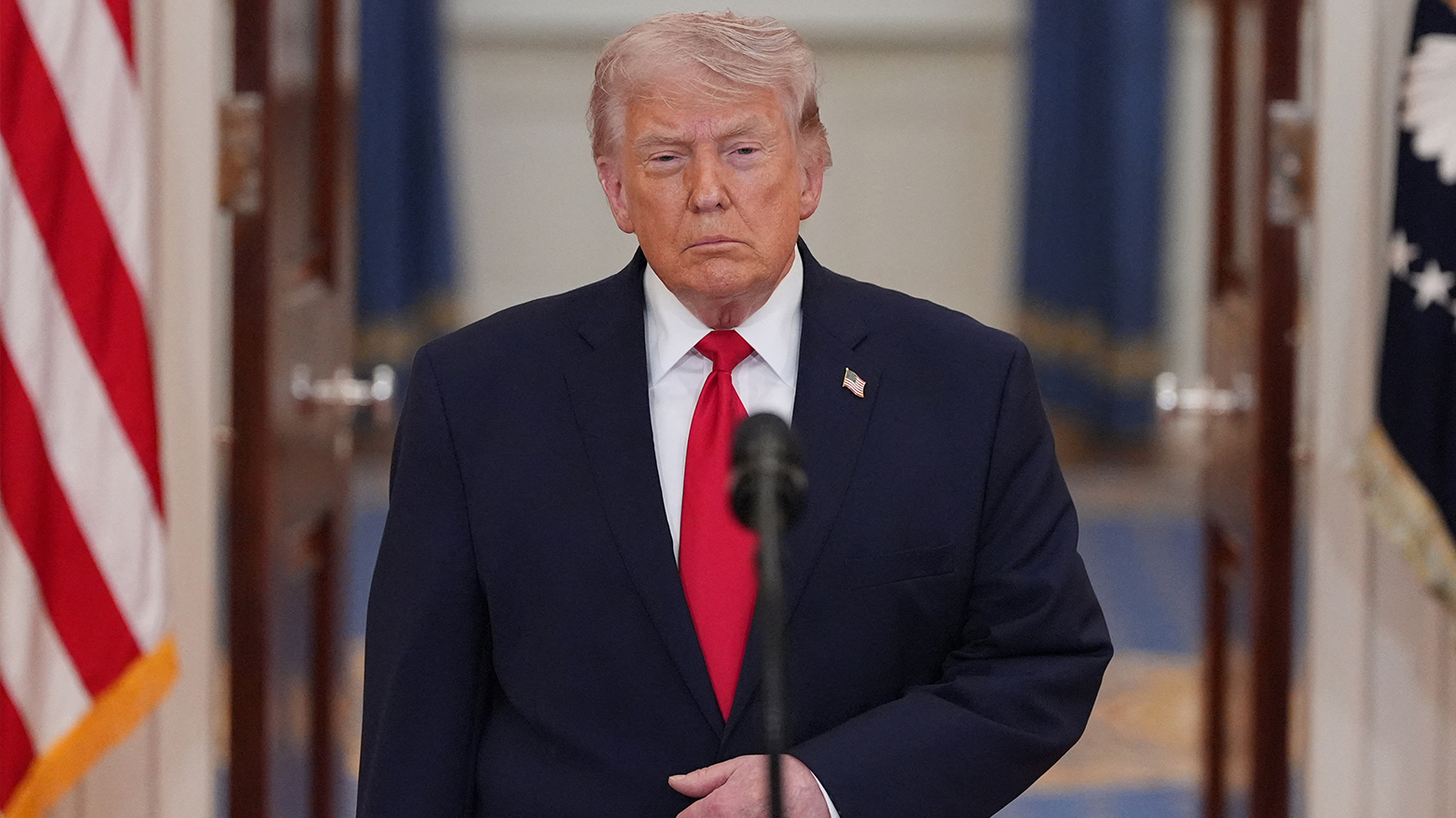
ERBIL (Kurdistan24) - For more than 24 hours, a wounded American officer lay hidden in a mountain crevice somewhere inside Iran, hunted by what President Donald Trump described as thousands of Iranian military personnel and civilians offered a bounty for his capture — while US officials debated whether his radio signal was real or a trap.
Speaking to Axios on Sunday, April 5, 2026, Trump revealed the tense behind-the-scenes details of the rescue operation that retrieved the surviving crew member of a downed F-15. The officer had survived more than 24 hours in the mountains despite being wounded before being extracted in a special forces operation on Saturday.
Trump said approximately 200 soldiers from special operations units participated in the rescue. He also disclosed that Iran's military shot down the F-15 using a shoulder-fired missile, adding tersely: "They got lucky."
A message that raised fears of a trap
The most fraught moment of the operation came when the stranded officer transmitted a short, unusual radio message after ejecting from the aircraft. Trump recounted that the officer said: "Power be to God." A US defence official confirmed Trump's account but said the exact phrase used was "God is good" — the same phrase Defense Secretary Hegseth used in a post on X on Sunday morning.
The message gave US officials pause. "What he said on the radio sounded like something a Muslim would say," Trump said. Officials initially feared the officer may have been captured and that Iranian forces were sending false signals to lure US forces into a trap. It was only after verifying through people who knew the officer — who confirmed he was a religious person — that the US military was satisfied he was alive and free. "It was not completely clear early on, but we stuck with it and verified he was alive and not captured," a US defence official said.
Two crew members, two operations
The US military had tracked the officer's location using what Trump described as "beeping information," and ultimately spotted him hiding in a crevice in the mountain using American surveillance technology. Trump noted that the pilot had been rescued earlier — more quickly, in daylight, and under heavy Iranian fire — in what a US defense official described as "a bold and quick snatch." The second rescue, of the weapons system officer, was conducted at night after US forces established a temporary base inside Iran.
"The two crew members were spread apart by a couple miles. Hundreds of IRGC soldiers were everywhere," the defense official said.
Israel's role
Trump acknowledged that Israel helped the US military "a little bit" during the search and rescue of both crew members. A US defense official clarified that Israel did not provide information about the weapons system officer's specific location but did share intelligence about the general situation on the ground. The Israeli Air Force conducted one strike to prevent Iranian forces from reaching the area, according to Israeli officials.
"They have been good partners. They have been great and brave people. We are like a big brother and little brother," Trump said of Israel.
The rescue operation unfolded as Trump separately warned, in an interview with Axios on the same day, that negotiations with Tehran had reached a deep stage but that his final deadline expires on Tuesday. He cautioned that if no agreement is reached, he would devastate all of Iran's infrastructure, and stressed his intention to "leave Iran in the middle of the war" until the Strait of Hormuz is reopened and Tehran surrenders.