IRGC Says Intelligence Chief Killed in Attack as Regional Hostilities Continue
The reported killing of the IRGC intelligence chief, Major General Seyyed Majid Khademi, comes as hostilities across multiple fronts continue, with officials on all sides issuing statements amid ongoing military and diplomatic developments.
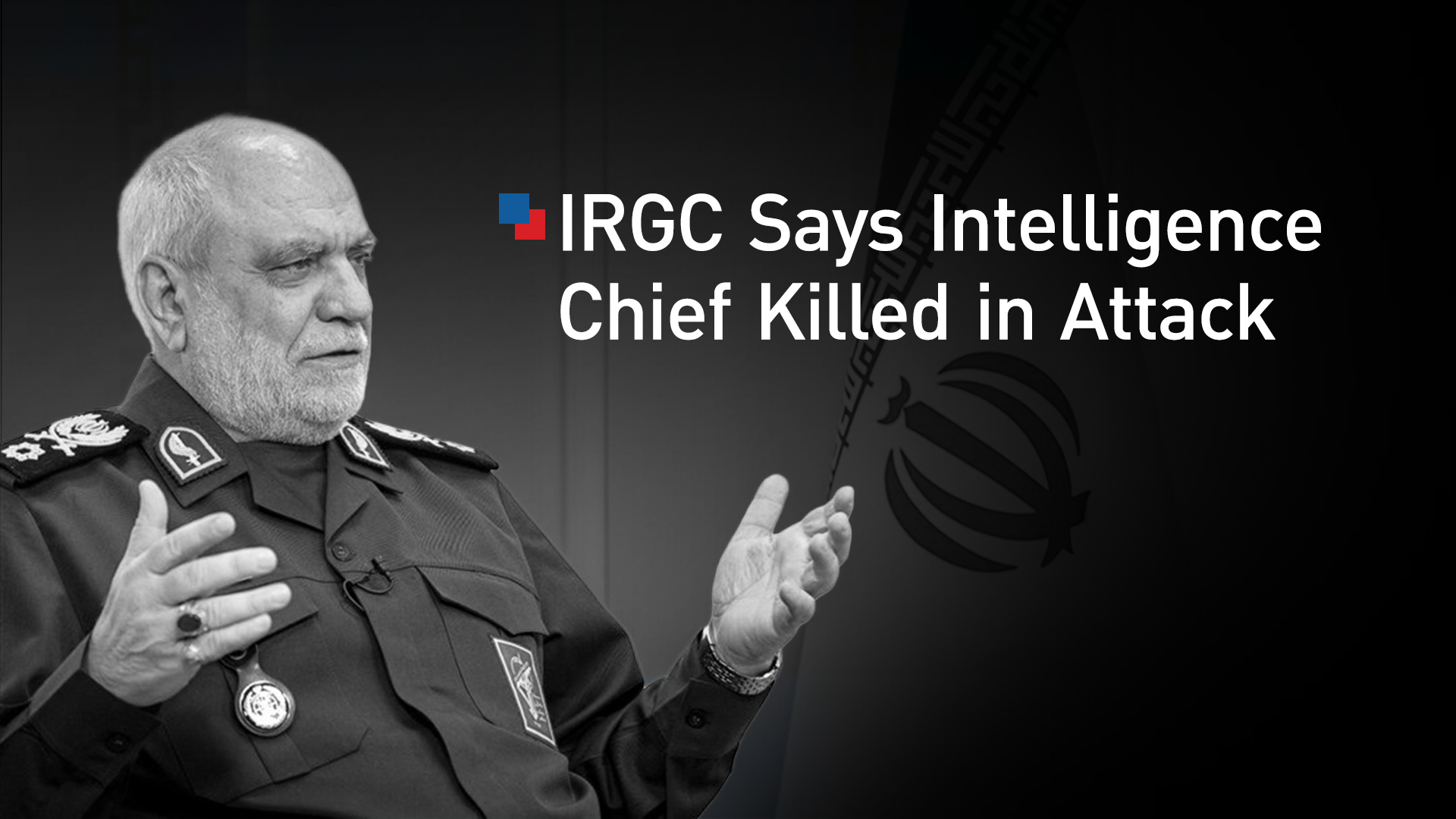
ERBIL (Kurdistan24) - Iran’s Islamic Revolutionary Guard Corps (IRGC), in a statement carried by the IRGC-affiliated Tasnim News Agency, said that Major General Seyyed Majid Khademi, head of its Intelligence Organization, was killed early Monday in what it described as a “criminal terrorist attack” carried out by an “American-Zionist enemy” during ongoing hostilities referred to as the “Third Imposed War.”
The statement, issued by the IRGC’s public relations office and reported by Tasnim, announced that Khademi had “attained the exalted grace of martyrdom” following the attack. It did not specify the location of the incident or provide operational details regarding the circumstances of the killing.
According to the statement, Khademi had served for decades in intelligence and security roles, with the IRGC describing his contributions as “great, lasting, and instructive” in safeguarding Iran’s security and confronting foreign adversaries. The statement framed his death as occurring in the context of ongoing conflict involving Iran and its opponents.
The IRGC statement included religious and political language, offering condolences to Iran’s leadership, including the Supreme Leader and commander-in-chief of the armed forces, as well as to Khademi’s family and colleagues. It also said that further information regarding funeral and burial arrangements would be announced later.
The announcement comes amid escalating military exchanges across the region, as reported by multiple international and official sources. According to developments compiled by AFP, Israeli forces said they had conducted a wave of strikes against what they described as “regime targets” in Tehran, while Iranian media reported attacks affecting residential areas in the capital.
Iran’s state broadcaster IRIB reported that gas outages affected parts of Tehran following a strike on a university facility, according to AFP. Separate reports cited damage to civilian infrastructure in the city.
In Israel, emergency services reported casualties following Iranian missile strikes. Israel’s Fire and Rescue Service said two people were killed after a missile struck a residential building in the northern city of Haifa, causing partial collapse. Authorities were also searching for two individuals reported missing in the debris, AFP reported, citing official statements.
Iranian officials have issued warnings regarding potential escalation. A spokesman for the Khatam al-Anbiya Central Headquarters, quoted by IRIB and cited by AFP, said that any further attacks on civilian targets would prompt “much more devastating and widespread” retaliatory operations.
Diplomatic tensions have also intensified. Iran’s Deputy Foreign Minister Kazem Gharibabadi said that threats by U.S. President Donald Trump to target Iranian infrastructure, including power plants and bridges, could constitute war crimes. In remarks posted on social media and cited by AFP, Gharibabadi referenced provisions of the Rome Statute of the International Criminal Court.
Trump, according to AFP, has warned of potential strikes on Iranian infrastructure if Tehran does not agree to reopen maritime routes, including the Strait of Hormuz. He indicated a deadline in a social media post, stating “Tuesday, 8:00 P.M. Eastern Time,” without further elaboration.
Military activity has extended beyond Iran and Israel. Gulf states have reported incoming threats. Kuwait’s military said its air defenses were actively intercepting missiles and drones targeting its territory, while the United Arab Emirates reported that air defense systems responded to a similar attack, with debris injuring one person in Abu Dhabi, according to AFP.
In Lebanon, Israeli strikes have resulted in multiple casualties, AFP reported, citing Lebanese health authorities. At least 15 people were killed and dozens injured in strikes across several areas, including Beirut and southern regions. Meanwhile, the Lebanese group Hezbollah said it had launched rockets targeting northern Israeli towns.
Energy markets have responded to the continued instability. According to AFP, global oil benchmarks rose sharply, with North Sea Brent crude opening above $110 per barrel and U.S. West Texas Intermediate also posting gains, reflecting concerns over supply disruptions linked to the conflict.
In a separate development, Trump said a U.S. airman from a downed F-15 fighter jet had been rescued in what he described as a “daring” operation involving multiple aircraft. However, Iran’s military said the operation had been “completely foiled,” according to AFP, reflecting conflicting accounts surrounding the incident.
The IRGC statement announcing Khademi’s death did not directly reference these broader developments but situated the killing within the context of what it described as ongoing confrontation with foreign adversaries. It characterized Khademi as a senior figure whose work would continue to influence Iran’s intelligence community.
The announcement adds to a series of high-profile developments reported in recent days, as exchanges of strikes, official warnings, and diplomatic statements underscore the widening scope of the conflict.
The IRGC said further details regarding Khademi’s funeral arrangements would be provided at a later time, without specifying a timeline.