Iran’s New Supreme Leader Reportedly Incapacitated Following Airstrike, Times Report Suggests
Mojtaba Khamenei remains incapacitated in Qom, raising questions about Iran’s leadership amid ongoing regional hostilities, a recent Times report suggests.
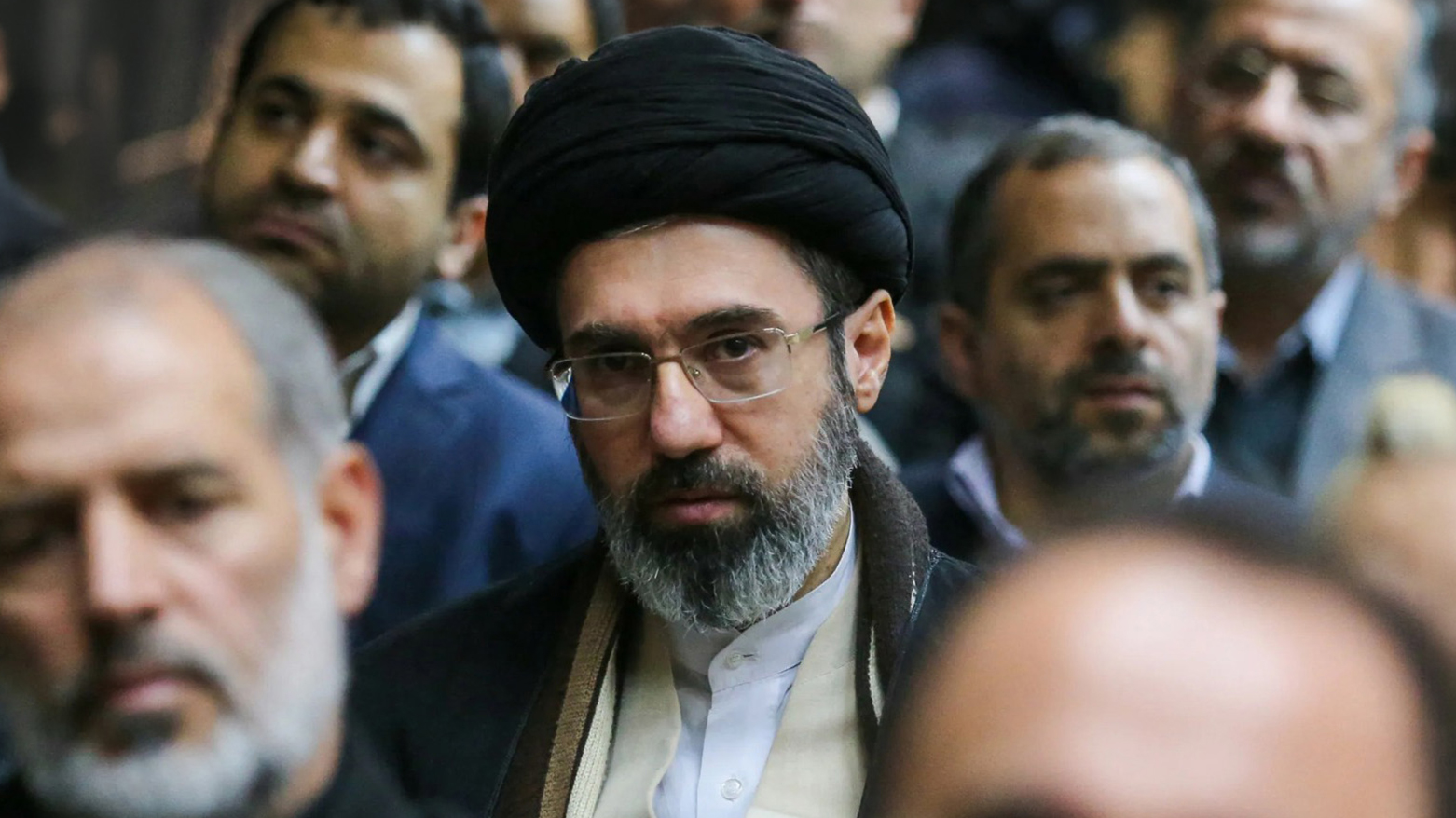
ERBIL (Kurdistan24) - Mojtaba Khamenei, who was appointed Iran’s supreme leader after the death of his father, Ayatollah Ali Khamenei, is reportedly incapacitated and receiving treatment for a severe medical condition in the city of Qom, according to intelligence assessments and diplomatic sources. The situation has raised questions about his ability to exercise authority over the country amid ongoing hostilities in the Middle East.
A diplomatic memo, reportedly based on American and Israeli intelligence and shared with Gulf allies, indicated that Mojtaba Khamenei was wounded in the same U.S.-Israeli airstrike that killed his father, his mother, his wife Zahra Haddad-Adel, and one of his sons on Feb. 28, 2026, the opening day of the war that has since escalated across the region.
The memo reportedly stated that the new supreme leader is “being treated in Qom in a severe condition, unable to be involved in any decision making by the regime,” according to The Times.
The assessment appears to confirm longstanding reports about Mojtaba Khamenei’s critical condition. While Iranian officials have insisted that he is in charge, opposition groups and independent observers have suggested he remains in a coma or otherwise medically incapacitated. Reports have also indicated facial injuries and a broken leg.
An AI-produced video released on Iranian state television on Monday showed a figure purported to be Khamenei walking into a war room and reviewing a map of Israel’s Dimona nuclear facility, but the absence of a recorded voice reinforced doubts about his operational capacity.
According to the memo, preparations are underway in Qom to construct a large mausoleum for multiple graves, suggesting that the elder Khamenei’s burial is being arranged alongside other family members, and potentially including Mojtaba himself in the long term.
The choice of Qom, 87 miles south of Tehran and regarded as a holy city in Shiite Islam, is significant as the religious capital of the country. The location also raises security concerns, given the potential for further attacks or disruptions.
While the Iranian government initially indicated that Ayatollah Ali Khamenei’s burial would take place in Mashhad, in northeast Iran, reports noted that security considerations may have prompted a delay.
Iranian authorities have cited “anticipation of unprecedented turnout” as the reason for postponement, though the 40-day mourning period traditionally observed in Shiite Islam will conclude shortly, potentially affecting ceremonial arrangements.
Intelligence sources also highlighted that authorities sought to avoid the kind of public disruption that occurred at the funeral of Ayatollah Ruhollah Khomeini in 1989, when crowd surges led to the accidental fall of his shroud and exposed his body to onlookers.
The developments regarding the leadership vacuum coincide with ongoing military and diplomatic activity across the region.
According to AFP reports, Israeli forces carried out a “wave” of airstrikes targeting sites in Tehran and Karaj, triggering explosions in both cities, while Israel activated air defenses in response to Iranian missile launches.
Saudi Arabia reported overnight missile attacks on a petrochemical complex in Jubail, which followed similar strikes on Iranian facilities.
The kingdom’s defense ministry said its air defenses intercepted and destroyed seven ballistic missiles launched toward its eastern region. Authorities also temporarily closed the King Fahd Bridge connecting Saudi Arabia and Bahrain due to heightened security alerts.
Diplomatic engagement has continued in parallel with military developments. Iran’s ambassador to Pakistan, which is mediating between Iran and the United States, described Tuesday that efforts to end the conflict were approaching a “critical” and “sensitive” stage.
Meanwhile, the UN Security Council was reported to be preparing a vote on a resolution addressing threats to the Strait of Hormuz, demanding Iran halt attacks on commercial vessels and ensure freedom of navigation, though the latest draft does not authorize the use of force.
Tehran has effectively restricted access to the strategic waterway since U.S.-Israeli strikes on Feb. 28, contributing to volatility in global oil and gas markets.
Mojtaba Khamenei, 56, was formally selected to succeed his father in early March, following the airstrike that killed Ali Khamenei.
Despite his designation, he has not been seen or heard publicly since the strike, except through statements read on state television.
Reports suggest that the Islamic Revolutionary Guard Corps (IRGC) may be exercising de facto control in his absence. The IRGC has also reportedly clashed with the Mojahedin-e-Khalq near Tehran, in the Motahari Complex, which housed Khamenei’s office and other institutional pillars of the regime, including the Guardian Council and the Assembly of Experts.
While Iranian authorities continue to present Mojtaba Khamenei as the operational leader, the lack of verified public appearances and medical reports has heightened uncertainty about the internal chain of command. U.S. officials, including President Donald Trump, have indicated they are negotiating with other Iranian figures but not directly with the supreme leader, reflecting concerns over his current condition and capacity to govern.
Iranian state news agencies had previously reported that Ali Khamenei would be buried in Mashhad, but no date has been officially announced. Local media have suggested that public ceremonies in Tehran could occur, though security concerns may limit attendance.
The focus on Qom as a current treatment and potential burial location underscores the centrality of Shiite religious authority and ceremonial considerations in the management of leadership succession.
The current leadership uncertainty intersects with ongoing regional hostilities, including Israeli strikes, missile exchanges, and military actions in Iraq and Saudi Arabia.
AFP reporting indicated that a second Philippine national was killed in northern Israel when an Iranian missile struck a residential building in Haifa, highlighting the international humanitarian impact of the conflict. Israeli rescue services recovered the bodies of four people from the rubble.
Gulf allies and intelligence agencies have closely monitored the status of Mojtaba Khamenei, and details of his location and condition appear to have been known to U.S. and Israeli spy agencies for some time.
The release of such information reflects heightened international interest in Iran’s succession dynamics and potential implications for regional stability.
Iran’s domestic response has included public demonstrations in support of the government, with portraits of both Ali and Mojtaba Khamenei displayed in Tehran’s Enqelab Square.
While authorities assert continuity of governance, the combination of medical incapacity, familial losses in the airstrike, and ongoing military pressures has created a situation of significant uncertainty in Iran’s political and military hierarchy.
The treatment of Mojtaba Khamenei in Qom, alongside preparations for the burial of his father, suggests that authorities are attempting to manage both symbolic and operational aspects of the leadership transition while mitigating security risks.
Reports note that officials are constructing facilities to accommodate multiple graves, reflecting concerns over potential casualties among senior family members or the leadership cadre.
As Iran navigates the ongoing war and internal succession challenges, the incapacitation of its supreme leader adds a complex dimension to both domestic governance and regional diplomacy.
Observers note that the IRGC’s role in decision-making may be amplified in the absence of direct leadership, though official statements continue to present Mojtaba Khamenei as in charge.
The combination of ongoing strikes, missile interceptions, and diplomatic engagement underscores the multi-layered nature of the crisis.
Regional states, international organizations, and intelligence services are closely following developments, with particular focus on Iran’s capacity to command military operations, maintain internal control, and participate in negotiations regarding hostilities and strategic maritime routes.
Iranian authorities and intelligence agencies have not released further medical updates, and the government’s official position continues to assert Mojtaba Khamenei’s leadership despite reports of severe incapacitation.
The interplay between military developments, leadership uncertainty, and religious ceremonial priorities continues to shape the country’s response to ongoing hostilities.
Preparations for the burial of Ali Khamenei, potential treatment or incapacitation of Mojtaba Khamenei, and the operational posture of the IRGC represent key elements in understanding the current governance and security landscape in Iran.
International and regional actors are closely monitoring the situation, balancing diplomatic engagement with heightened awareness of military and political risks.
The status of Mojtaba Khamenei, combined with ongoing regional hostilities and strategic security concerns, continues to be a focal point for global intelligence agencies, diplomatic channels, and military planners.