Erbil International Airport Set to Resume Flights as Iraqi Airspace Reopens
Operations restart follows U.S.-Iran ceasefire, with full readiness confirmed for incoming and outgoing travel
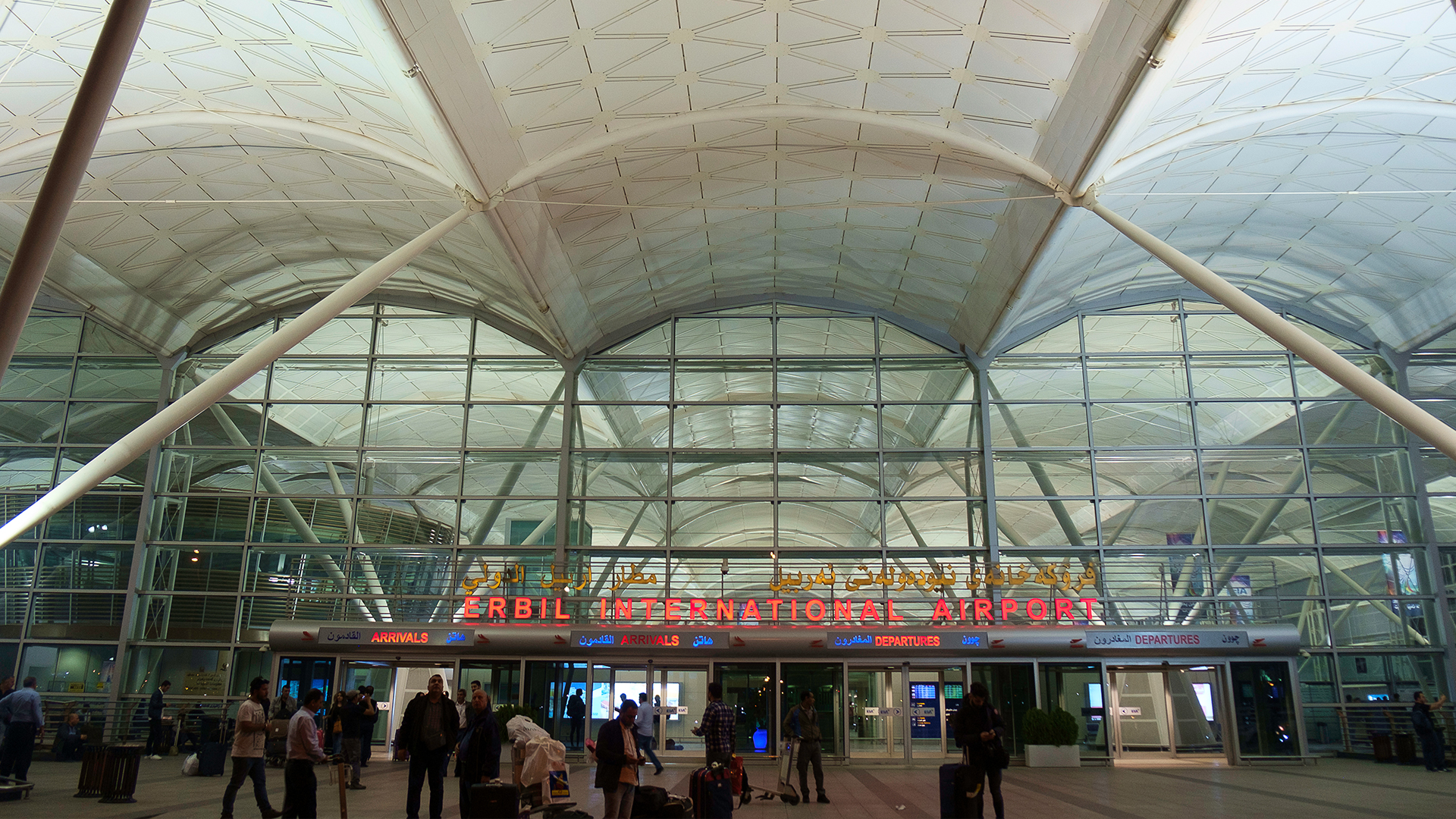
ERBIL (Kurdistan24) — Erbil International Airport is preparing to resume full flight operations following the reopening of Iraqi airspace, officials confirmed, marking a significant step toward normalization after weeks of regional disruption.
Ahmed Hoshyar, Director of Erbil International Airport, on Wednesday told Kurdistan24 that all technical and administrative preparations have been completed, and the airport is fully ready to receive and dispatch flights.
He added that teams are currently finalizing scheduling details for arrivals and departures to and from multiple international destinations.
According to Hoshyar, all airport departments and operational teams are in a state of full readiness, with coordination underway under the supervision of Iraqi aviation authorities.
Flight operations are expected to resume in the near term, restoring connectivity for travelers and cargo after a prolonged suspension.
The reopening of Iraqi airspace follows the lifting of restrictions on civilian aviation, allowing airports across the country to prepare for the gradual return of air traffic.
Erbil International Airport, one of Iraq’s busiest hubs, had been significantly affected by the closure, which disrupted both commercial and humanitarian flights.
The resumption of flights is expected to ease pressure on regional transport networks and facilitate the movement of passengers, goods, and aid, particularly as demand for travel rebounds.
The development follows a two-week ceasefire agreement reached between the United States and Iran, which has helped reduce immediate security risks across the region.
The truce, brokered through international mediation, came after weeks of escalating tensions that had severely impacted airspace safety and forced multiple countries across the Middle East, including Iraq, to suspend or restrict flights.
With the ceasefire holding—for now—aviation authorities have moved quickly to restore operations, viewing the current lull in hostilities as a critical window to stabilize infrastructure and resume essential services.
While officials caution that the situation remains fluid, the reopening of Erbil International Airport is being seen as an early indicator of broader recovery efforts, as regional actors cautiously shift from crisis management toward normalization.