Senior Iranian Commander Says Opponents Misunderstood 'Great Power' of Iranian People
Iranian official Mohammad Jafar Asadi said public pressure forced the US into Apr. 11 talks in Islamabad, as high-level delegations meet following 40 days of war.
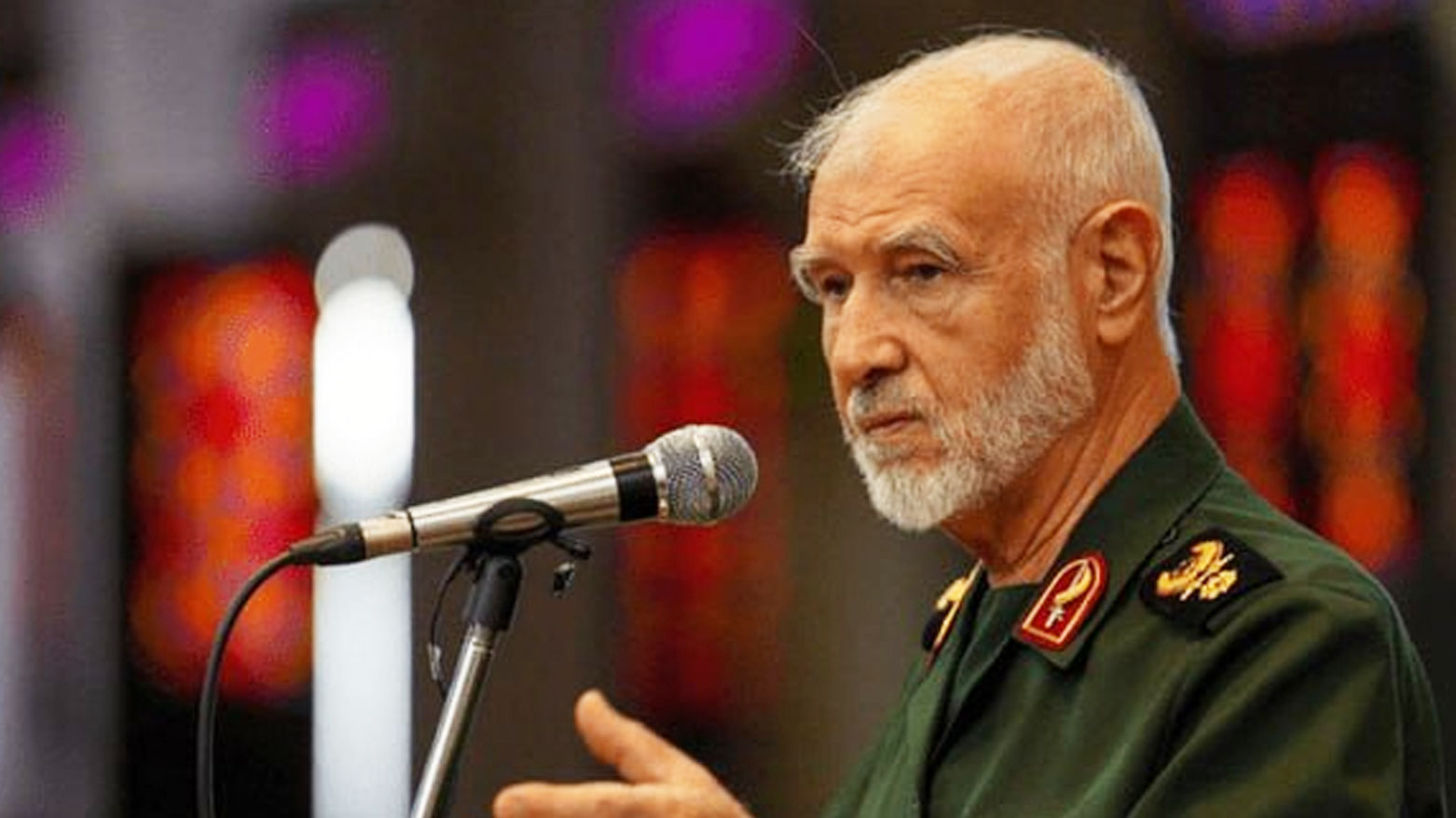
ERBIL (Kurdistan24) - Before the high-stakes negotiations between Iran and the United States starts in Islamabad, a senior Iranian military official has asserted that domestic public pressure played a decisive role in bringing Washington back to the negotiating table.
Mohammad Jafar Asadi, Deputy for Inspection Affairs at Khatam al-Anbiya Headquarters, said in a televised interview that the presence and resilience of the Iranian people compelled the United States to engage in talks.
He stated: “If we speak fairly, the people brought us to this stage. Yes, we fulfilled our duties on the frontlines and in the Squares, but what forced the United States to sit at the negotiating table was the heroic people of Iran.”
Asadi added that this “great power” had existed from the beginning, but had not been fully recognized by adversaries. He said opponents failed to understand this dynamic, particularly from a purely material perspective.
He continued: “It is their right not to understand these matters, because they do not believe in God or religion. They are moving down a wrong path that one would be ashamed to even describe.”
His remarks come as a new phase of direct negotiations between Iran and the United States began on Saturday, in Islamabad, following 40 days of war, heightened tensions, and the announcement of a ceasefire.
The talks are being hosted at the Islamabad branch of the Serena Hotel, which has been fully cleared by the Pakistani government to accommodate the delegations.
All other guests were removed to transform the venue into a dedicated diplomatic hub.
The five-star hotel, featuring 334 rooms and 53 suites, combines traditional Islamic architecture with modern design, and has become the focal point of international attention.
Security measures have been intensified, with Pakistani forces sealing off a three-kilometer perimeter around the venue and enforcing strict surveillance protocols.
A 70-member Iranian delegation arrived in Pakistan ahead of the talks, including 26 negotiators and 23 media personnel. The team is led by Mohammad Bagher Qalibaf, Speaker of the Iranian Parliament, accompanied by Foreign Minister Abbas Araghchi and his deputies, as well as Ali Akbar Ahmadian, Secretary of the Supreme National Security Council, and Abdolnaser Hemmati, Governor of the Central Bank of Iran.
The US delegation is headed by Vice President J.D. Vance, alongside Steve Witkoff, special envoy of President Donald Trump, and Jared Kushner, former White House advisor.
Ahead of the meeting, Trump stated that Iran appeared to have limited leverage remaining, aside from exerting short-term pressure on international maritime routes, adding that the presence of Iranian officials in the negotiations reflected this reality.