Mass Fish Die-Off in Wasit Linked to Pollution from Diyala River
At dawn along the Tigris in Iraq's southeastern province of Wasit, fish cages that had sustained years of labor yielded only silence—thousands of lifeless bodies afloat, the river altered overnight by a surge of polluted water from the Diyala, its invisible chemistry suddenly and decisively lethal.
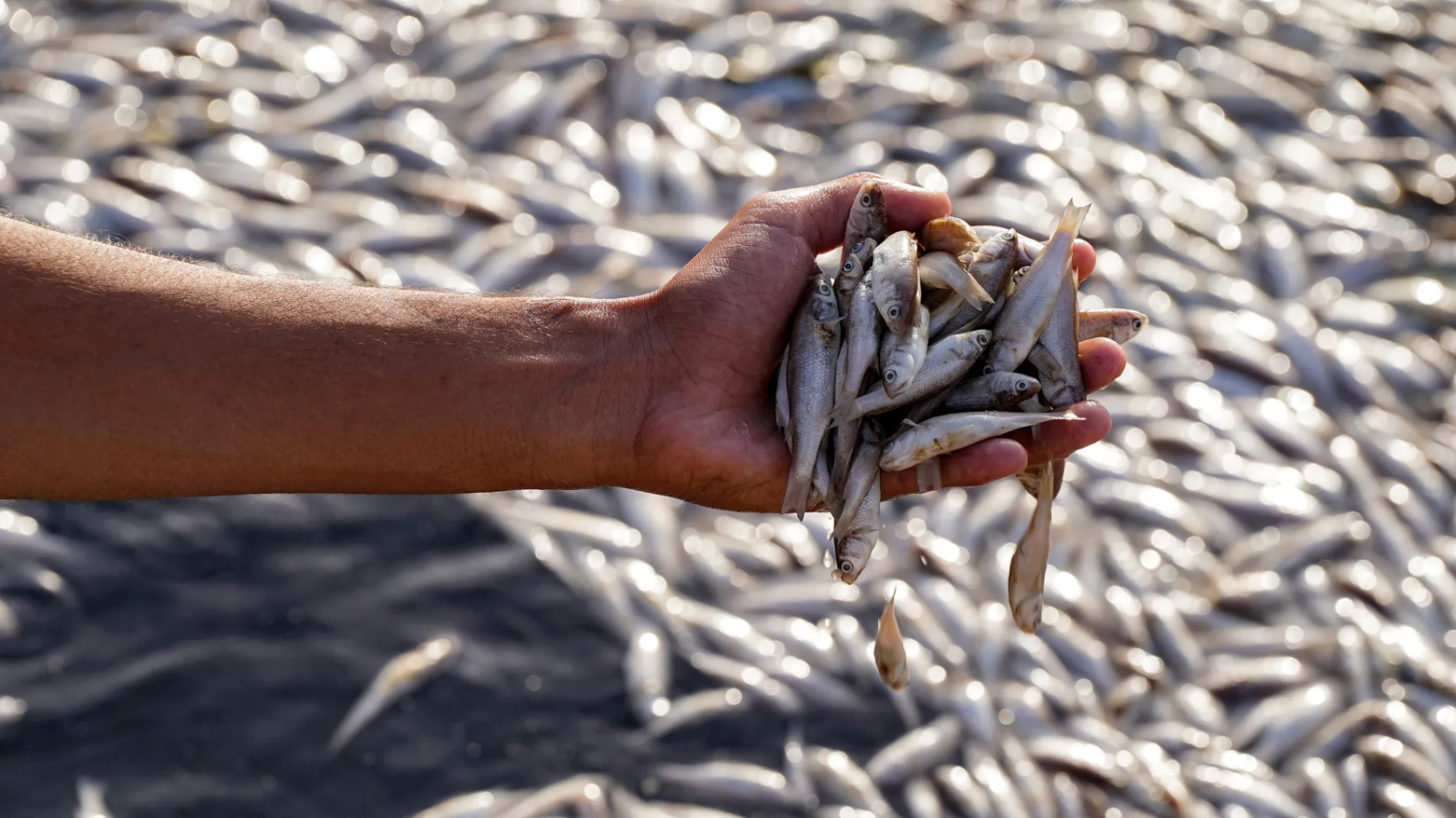
ERBIL (Kurdistan24) - Along stretches of the Tigris River in Wasit Governorate, fish cages that ordinarily sustain a steady rhythm of agricultural production have fallen silent. In their place, thousands of lifeless fish now float at the water’s surface, marking one of the most severe environmental incidents to affect Iraq’s inland fisheries in recent years.
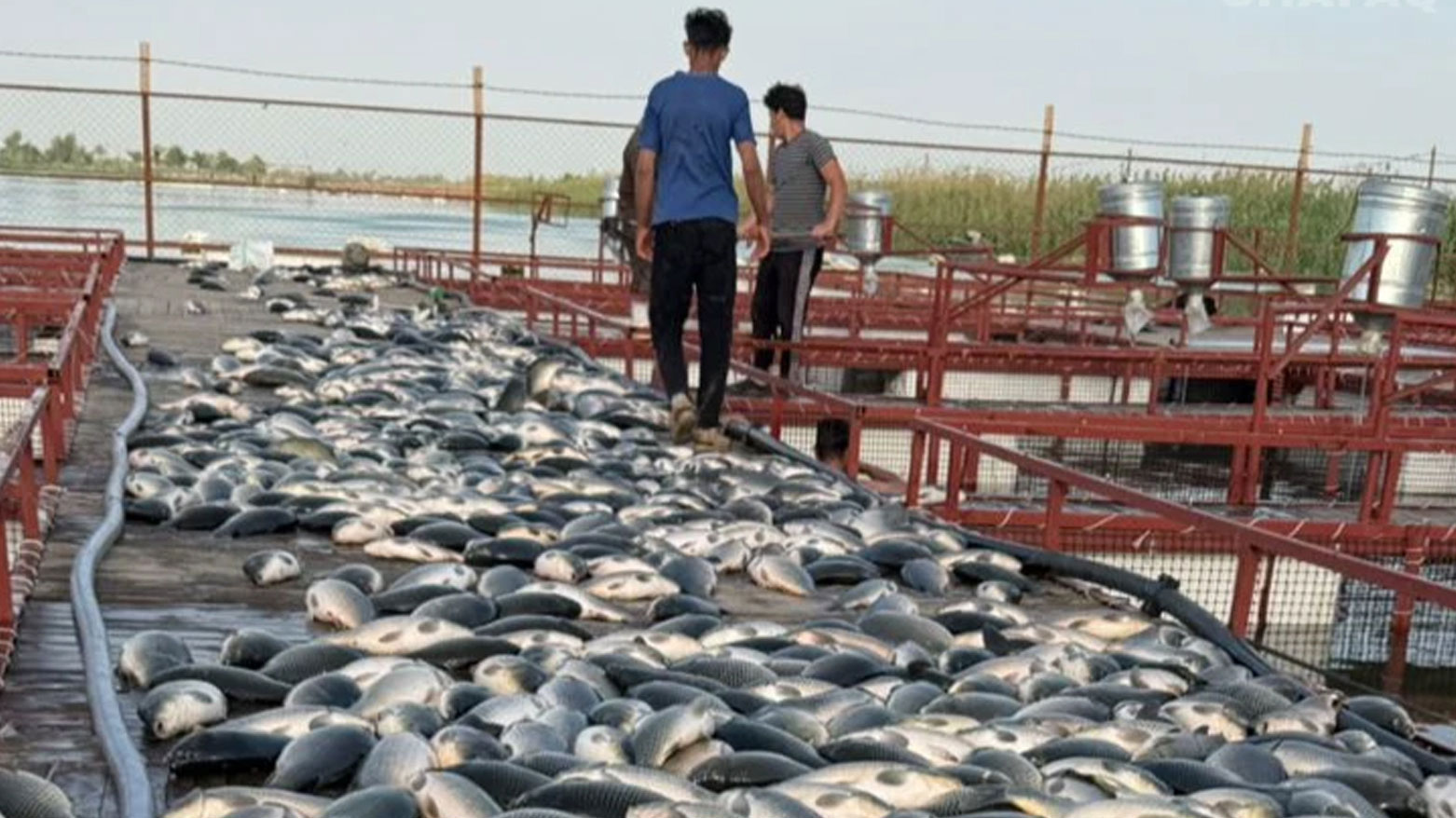
The die-off, reported within the past day across multiple districts including Kut, Aziziyah, and Numaniyah, has resulted in the loss of an estimated 1,000 to 1,200 tons of fish, according to Iraqi fisheries officials. Authorities and industry representatives attribute the incident primarily to a sharp deterioration in water quality caused by pollution flowing from the Diyala River into the Tigris.
Fish farmers first identified the scale of the crisis early in the morning, when routine inspections of floating cages revealed widespread mortality. The farms, which line the riverbanks and depend on a controlled aquatic environment, were suddenly overwhelmed by what several stakeholders described as toxic water conditions.
Rasoul Karim, executive director of the Baraka fish farming project in Wasit, described the moment as a systemic collapse rather than an isolated failure.
“On a morning that was supposed to be full of work, we woke up to find a real disaster,” he said, characterizing the losses as the destruction of years of accumulated labor and investment. His account aligns with broader reports from across the governorate, where similar scenes were documented in multiple farming clusters.
According to Iyad al-Talibi, head of the Iraqi Association of Fish Producers, the underlying trigger predates the visible die-off by several days. He said that a surge of heavily polluted water moved downstream from the Diyala River approximately four days before the incident became apparent. The influx, he explained, consisted of stagnant and foul-smelling water that had accumulated over an extended period, carrying with it concentrated waste and sediment deposits.
As this water mass entered the Tigris, it altered the chemical composition of the river environment, raising pollution levels to what al-Talibi described as “record” concentrations. The rapid movement of contaminants appears to have left fish stocks with little capacity to adapt, particularly within confined cage systems where water exchange is limited and exposure is immediate.
The scale of the losses suggests a near-total collapse of fish production across affected zones. Species impacted include carp and crucian carp, among others, as well as broader aquatic life within the same ecosystem. Industry officials warned that the consequences extend beyond immediate economic damage, potentially affecting regional food supply chains and local livelihoods dependent on aquaculture.
Government authorities have initiated an official response, forming investigative and field assessment committees tasked with quantifying damages and identifying the precise causes of the incident. These committees are expected to examine both environmental conditions and regulatory compliance, including the management of wastewater and industrial discharge upstream.
The role of untreated sewage has emerged as a central focus of the inquiry. According to statements from environmental and veterinary authorities, large volumes of unprocessed wastewater are believed to have entered the Diyala River, eventually flowing into the Tigris without adequate filtration or treatment. This pathway is consistent with longstanding concerns about Iraq’s water infrastructure, where gaps in sewage treatment capacity have periodically led to contamination of major waterways.
Amer Shafiq al-Hamdani, vice president of the Iraqi Veterinary Syndicate, provided a detailed assessment of the potential composition of the pollutants involved. He indicated that sewage water entering the river system may contain a mixture of toxic substances, including heavy metals and industrial byproducts. These materials, he explained, can accumulate in river sediments over time before being reintroduced into the water column under certain environmental conditions.
Recent rainfall appears to have played a catalytic role in this process. According to al-Hamdani, precipitation can mobilize contaminants that have settled in soil and sediment, dissolving metals such as lead and cadmium and carrying them into river systems. Once present in the water, these elements can be absorbed by aquatic organisms, including fish, with limited capacity for excretion.
“The fish’s body does not completely expel these metals,” al-Hamdani said, warning that their accumulation poses a latent risk to human health. Consumption of contaminated fish, he added, may not produce immediate symptoms but could lead to longer-term health effects as toxins build up in the body over time.
This public health dimension has introduced an additional layer of urgency to the crisis. Authorities are now confronted not only with the economic fallout for fish farmers but also with the need to assess whether affected fish stocks have entered local markets. Al-Hamdani emphasized that, if contamination by sewage and heavy metals is confirmed, a complete ban on the consumption of these fish would be necessary to mitigate health risks.
The incident has also renewed scrutiny of regulatory enforcement mechanisms governing water quality and waste management. Environmental experts and industry stakeholders have called for what they describe as “radical solutions” to address persistent sources of pollution, particularly along tributaries such as the Diyala River. These calls reflect a broader pattern in Iraq, where water scarcity, infrastructure degradation, and population pressures have combined to intensify stress on river systems.
Historically, the Tigris River has served as a central artery for agriculture, drinking water, and industry across Iraq. Its ecological stability is therefore closely linked to multiple sectors, from food production to public health. Episodes of mass fish mortality, while not unprecedented, are often treated as indicators of systemic imbalance within this interconnected framework.
In this case, the geographic spread of the die-off—from Kut through Aziziyah to Numaniyah—suggests that the pollution event was not localized but rather propagated along a significant stretch of the river. This pattern is consistent with a high-volume discharge or surge originating upstream, reinforcing accounts provided by fisheries officials regarding the role of the Diyala River.
The economic implications are substantial. Fish farming constitutes a key component of Wasit’s agricultural output, providing both employment and a source of protein for local markets. Losses on the scale reported—up to 1,200 tons—represent not only immediate financial damage but also potential disruptions to supply chains, price stability, and future production cycles.
For individual farmers, the impact is more immediate and acute. Many operate on narrow margins, with investments tied up in feed, infrastructure, and stock that require months to mature. The sudden loss of entire harvests, as described by Karim and others, effectively erases these investments, leaving limited avenues for recovery in the absence of compensation or state support.
At the institutional level, the formation of investigative committees indicates an effort to establish accountability and prevent recurrence. However, the effectiveness of such measures will depend on the scope of their mandate and the extent to which their findings translate into enforceable policy changes. Previous environmental incidents in Iraq have often led to temporary interventions without addressing underlying structural issues.
Regionally, the episode underscores the vulnerability of shared water resources to cumulative environmental pressures. Rivers such as the Tigris and Diyala traverse multiple administrative and ecological zones, making coordinated management both necessary and complex. Pollution originating in one area can have downstream effects that are difficult to contain, as evidenced by the current situation in Wasit.
Internationally, concerns about water quality in Iraq intersect with broader discussions about environmental governance, infrastructure investment, and climate resilience. While the present incident is rooted in local conditions, it reflects challenges faced by other river-dependent regions where aging infrastructure and limited regulatory capacity contribute to environmental degradation.
In the immediate term, attention remains focused on containment and assessment. Authorities must determine the full extent of contamination, ensure that affected fish do not enter consumption channels, and provide guidance to both farmers and the public. These steps are essential to stabilizing the situation and preventing secondary impacts.
Beyond the immediate response, the incident raises unresolved questions about long-term water management strategies. The interplay between sewage disposal, industrial activity, and natural factors such as rainfall suggests that isolated interventions may be insufficient. Instead, a more integrated approach—encompassing infrastructure upgrades, regulatory enforcement, and environmental monitoring—may be required to mitigate future risks.
As investigative teams continue their work, the outcome of their findings will likely shape both policy responses and public confidence in institutional oversight. For now, the Tigris in Wasit offers a visible measure of the stakes involved: an essential resource under strain, and a local economy confronting the consequences of environmental imbalance whose full implications have yet to be determined.