US, Iran Fail to Reach Deal After Marathon Islamabad Talks
Vance presents “final offer” as tensions persist over nuclear demands and Strait of Hormuz
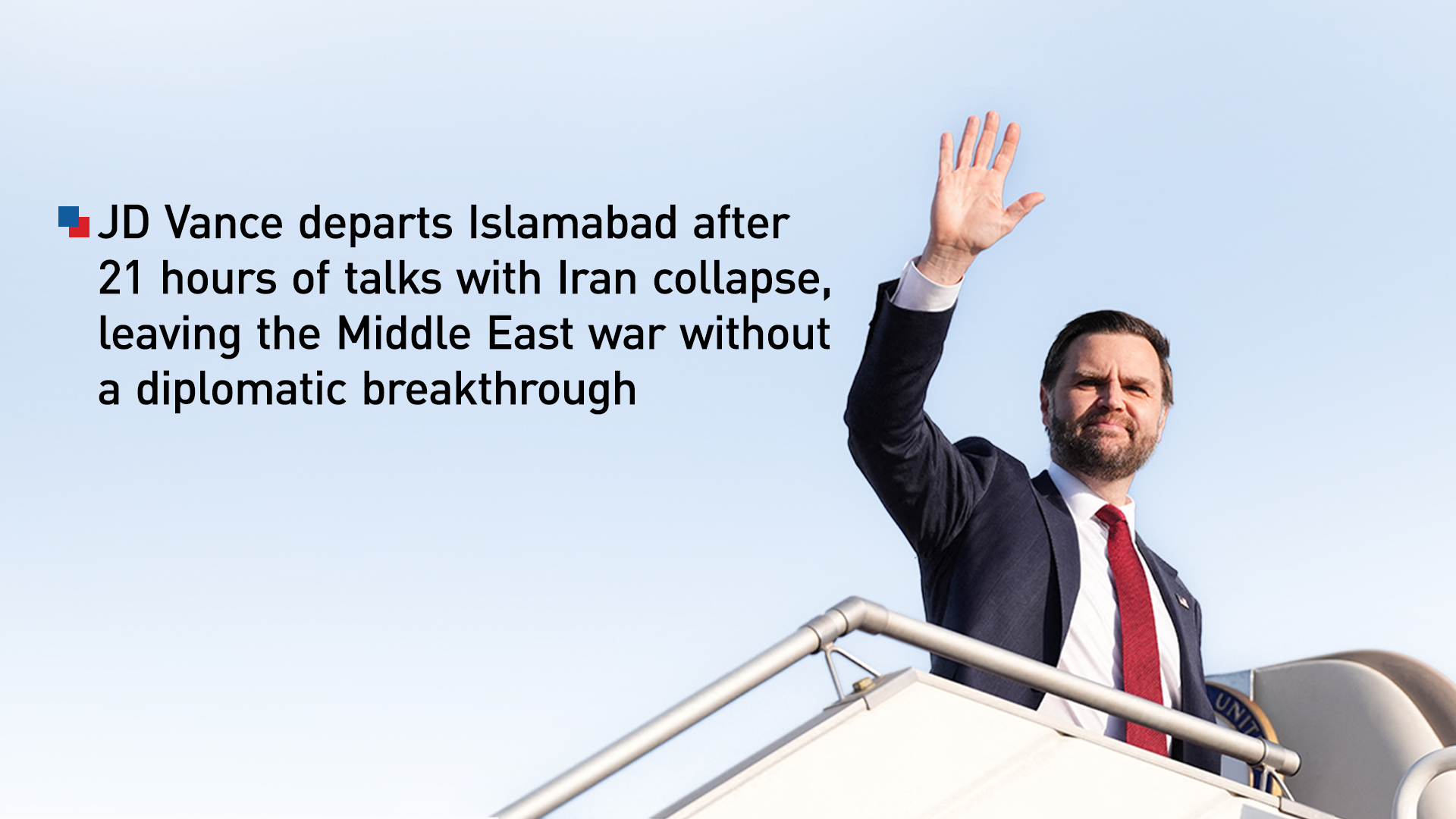
ERBIL (Kurdistan24) — The United States and Iran failed to reach an agreement to end the ongoing Middle East war after 21 hours of high-level negotiations in Islamabad, US Vice President JD Vance said Sunday, announcing he was departing Pakistan after presenting Tehran with what he described as Washington’s “final and best offer.”
Vance said the United States is seeking a “fundamental commitment” from Iran that it will not develop a nuclear weapon, but acknowledged that such assurances were not secured during the talks—the highest-level engagement between the two countries since the 1979 Islamic Revolution.
“We leave here with a very simple proposal… our final and best offer. We’ll see if the Iranians accept it,” Vance told reporters before boarding Air Force Two.
Despite the lack of a breakthrough, Vance indicated Washington is still allowing time for Tehran to consider the proposal. Earlier in the week, the United States announced a two-week pause in joint operations with Israel to facilitate diplomacy.
The conflict, which began after US and Israeli strikes on Iran on February 28, has triggered retaliatory attacks from Tehran and escalated into a broader regional crisis, rattling global energy markets and disrupting economic stability.
Negotiations in Islamabad were marked by deep divisions, particularly over the strategic Strait of Hormuz, a critical oil transit chokepoint through which roughly one-fifth of global supply passes.
Iranian media accused Washington of making “excessive demands” related to the waterway, while the US military said it had deployed minesweeping vessels to ensure safe passage for tankers.
Tehran denied any US naval presence in the strait and warned of severe consequences if American warships entered.
The Revolutionary Guards’ naval command stated that any military transit would be “dealt with severely,” adding that Iran’s conditional guarantees of safe passage applied only to civilian vessels during the temporary ceasefire.
Iran has leveraged its geographic control over the strait following the initial strikes, contributing to surging global oil prices and intensifying political pressure on Washington and its allies.
US President Donald Trump struck a defiant tone during the talks, asserting that Washington had already achieved military victory.
“Whether we make a deal or not makes no difference to me… we’ve won,” Trump said, citing the killing of senior Iranian leaders and the destruction of key infrastructure. Iran, however, has rejected such claims and maintained its longstanding position that it is not pursuing nuclear weapons.
Iranian officials signaled deep mistrust toward Washington. Parliamentary Speaker Mohammad Bagher Ghalibaf said past negotiations with the United States had been marked by “failure and broken promises,” while state broadcaster IRIB blamed “unreasonable demands” from the US for the collapse of talks.
Foreign Ministry spokesperson Esmaeil Baqaei downplayed expectations of a rapid breakthrough, stating that “no one had expected to reach an agreement in a single session.”
Pakistan, which hosted and mediated the negotiations, urged both sides to maintain the fragile ceasefire.
“The parties must continue to uphold their commitment,” Foreign Minister Ishaq Dar said, adding that Islamabad would continue facilitating dialogue between Tehran and Washington.
The talks brought together senior figures from both sides, including US envoys Steve Witkoff and Jared Kushner, and a 70-member Iranian delegation led by Ghalibaf and Foreign Minister Abbas Araghchi—an indication of the high stakes involved.
Meanwhile, the broader regional conflict continues unabated. Israel has intensified operations in Lebanon against Hezbollah. Israeli Prime Minister Benjamin Netanyahu on Saturday said he seeks a long-term peace deal with Lebanon but ruled out a ceasefire with Hezbollah.
Iran has linked any broader agreement to demands including the unfreezing of sanctioned assets and an end to Israeli military operations in Lebanon—conditions Washington has refused to negotiate in Islamabad.
Despite the diplomatic impasse, both sides signaled that indirect contacts may continue, leaving open a narrow path for future negotiations amid ongoing conflict and mutual suspicion.