Europe advances NATO fallback plan amid Trump threats and Iran war tensions
European countries are advancing a NATO fallback plan to maintain defense capabilities without the US, as Germany shifts policy and Trump’s threats raise concerns over American reliability
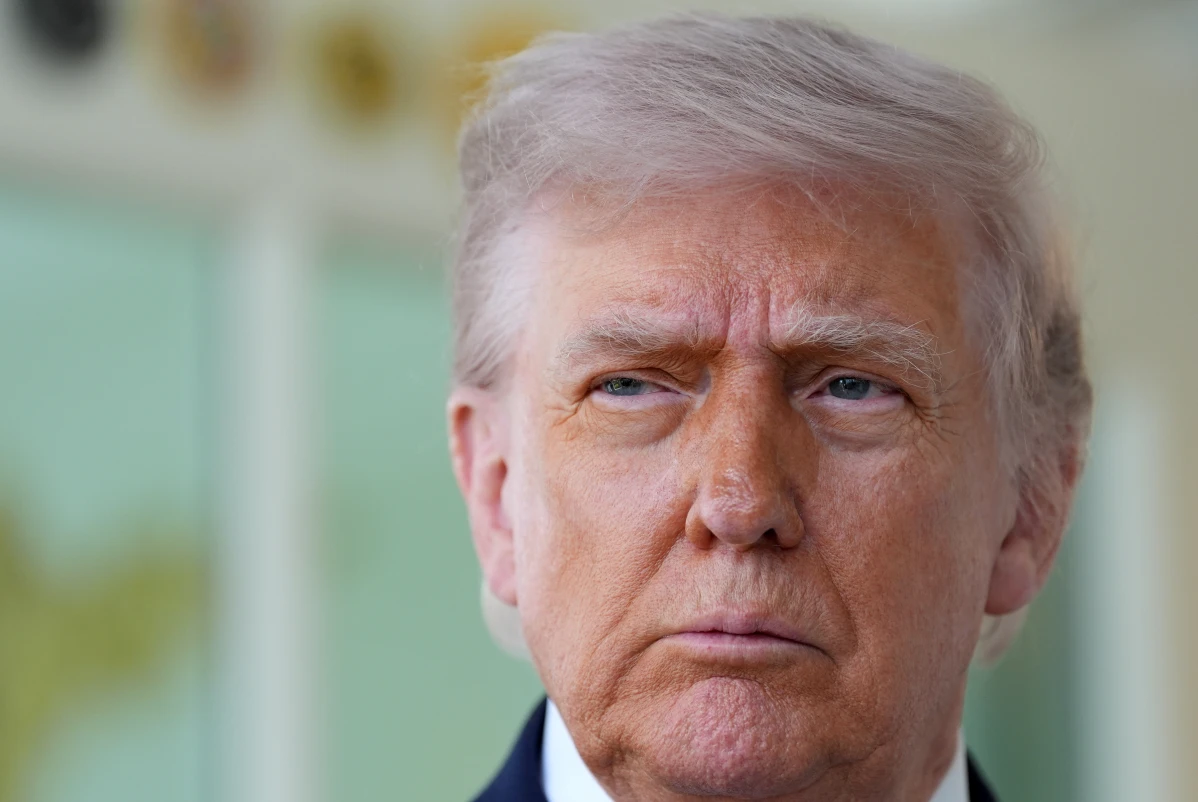
ERBIL (Kurdistan 24) - European officials are accelerating contingency plans to sustain NATO operations without the United States, as concerns deepen over Washington’s commitment during rising tensions linked to the Iran war, according to a report published by The Wall Street Journal on Tuesday.
The emerging strategy, referred to by some officials as “European NATO,” aims to ensure the continent can defend itself using the alliance’s existing military structures if the United States withdraws forces or declines to respond to threats.
Officials involved in the planning said the effort focuses on placing more Europeans in NATO’s command-and-control roles while supplementing US military capabilities with European assets. The initiative is not intended to replace the alliance but to preserve deterrence against Russia, maintain operational continuity, and uphold nuclear credibility.
The plans, initially conceived last year, have gained momentum following a significant policy shift in Germany. For decades, Berlin resisted calls for greater European defense autonomy, favoring continued reliance on the United States as the primary security guarantor. That position is now changing under German Chancellor Friedrich Merz, driven by concerns over US dependability.
The acceleration also follows statements by US President Donald Trump, who has threatened to withdraw from NATO and recently described European allies as “cowards” while calling the alliance a “paper tiger.” He also warned that Russia’s President Vladimir Putin was aware of the alliance’s perceived weaknesses.
Trump earlier indicated that leaving NATO was “beyond reconsideration” after allies declined to support his Iran campaign. While a formal withdrawal would require congressional approval, the president could still reduce US involvement by repositioning troops or withholding support.
In response, European leaders have intensified efforts to prepare for a scenario in which the United States scales back its role. Finland’s President Alexander Stubb said: “A burden shifting from the U.S. toward Europe is ongoing and it will continue…as part of U.S. defense and national security strategy.”
“The most important thing is to understand that it’s taking place and also to do it in a very managed and controllable way, instead of [the U.S.] just quickly pulling out,” Stubb said.
Stubb also emphasized the message being conveyed to Washington: “The basic message to our American friends is that after all these decades it’s time for Europe to take more responsibility for its own security and defense.”
Germany’s policy shift has unlocked broader alignment among key allies, including the United Kingdom, France, Poland, Nordic countries, and Canada, which are now contributing to what officials describe as a coalition within NATO prepared to fill potential gaps.
German Defense Minister Boris Pistorius acknowledged challenges in ongoing discussions but stressed NATO’s continued importance. “But it’s also clear that we Europeans must assume more responsibility for our defense, and we are doing that,” he said. “NATO must become more European in order to remain trans-Atlantic.”
Despite growing momentum, European officials face significant structural challenges. NATO’s framework has long depended on US leadership in logistics, intelligence, and command. While more command posts are now being held by Europeans and upcoming exercises are increasingly led by European forces, critical gaps remain.
Among the most pressing challenges are intelligence capabilities and nuclear deterrence. Officials say European forces cannot quickly replace US satellite systems, surveillance networks, and missile-warning infrastructure.
These concerns have prompted discussions on expanding the nuclear role of France and Britain. Talks have also explored whether France’s nuclear deterrent could extend to other European nations, including Germany.
The shift toward greater European responsibility has been gradual but is now accelerating, reflecting both strategic necessity and changing political calculations.
“The alliance will be more European-led,” NATO Secretary-General Mark Rutte said recently.
As tensions linked to the Iran conflict continue to shape transatlantic relations, Europe’s efforts signal a significant evolution in the balance of responsibility within NATO, with long-term implications for the alliance’s future.