Israel Warns of Severe Strikes on Iran as Regional Ceasefire Nears Expiration
In the hushed, high-stakes interval of a fading ceasefire, Israeli and American forces have recalibrated their sights toward Iranian energy facilities, promising a "backbreaking" response if talks fail. As the Strait of Hormuz remains a silent, blockaded artery, the region wobbles on the abyss.
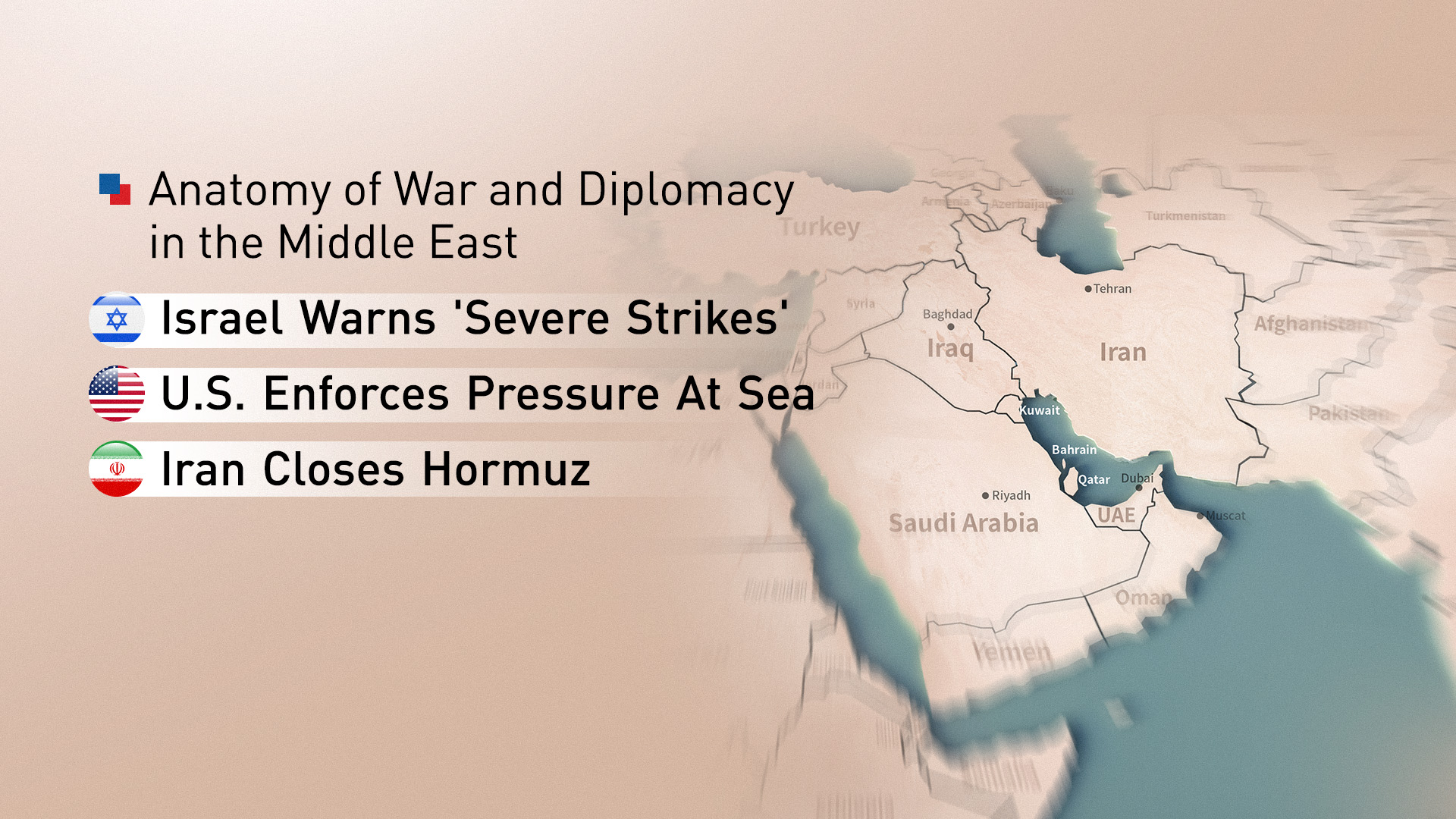
ERBIL (Kurdistan24) - An Israeli military official warned on Sunday that Israeli and United States forces will launch comprehensive strikes against Iranian energy facilities if current ceasefire negotiations collapse. The statement comes as a two-week truce between allied forces and Tehran nears expiration this week, with no formalized schedule established for the resumption of bilateral talks.
The potential resumption of hostilities threatens to permanently sever diplomatic channels recently opened through Pakistani mediation and would likely exacerbate the global economic disruption triggered by the closure of the Strait of Hormuz.
A breakdown in the ceasefire risks expanding the conflict beyond targeted military infrastructure into broader regional economic warfare, fundamentally altering global energy markets and drawing neighboring states into a protracted struggle over maritime security, supply lines, and institutional stability across the Middle East.
In preparation for a potential collapse of the truce, the Israeli cabinet convened on Sunday morning.
According to Israel Radio, the governmental assembly was dedicated to reviewing military readiness, assessing the maritime crisis in the Strait of Hormuz, and evaluating the parallel ceasefire in Lebanon. This political convention coincides with highly publicized military coordination between Tel Aviv and Washington.
According to the Hebrew-language daily Ma’ariv, US Naval Forces Central Command (CENTCOM)—the unified combatant command responsible for US military operations in the Middle East—has deepened its integration with Israeli defense structures.
CENTCOM Commander Brad Cooper recently held strategic meetings with Eyal Zamir, the Director-General of the Israeli Ministry of Defense and former Deputy Chief of Staff, to align operational protocols in the event of a sudden rupture in the truce.
An unnamed senior Israeli military official, speaking to Ma’ariv, characterized the current posture of allied forces as being at the "highest state of readiness."
The official stated that should negotiations fail, the subsequent military response would deliver a "very deadly and backbreaking blow" to Iran. Significantly, the official noted that military planners have updated their target matrix to prioritize Iranian energy facilities, representing an escalation from the campaign's initial focus on defense infrastructure.
According to operational data provided by the Israeli army, US and Israeli warplanes deployed more than 37,000 munitions against various Iranian targets during the 40 days of active conflict, which commenced on Feb. 28.
The Israeli official characterized Iran's current negotiating position as fundamentally compromised, stating that Tehran entered the talks suffering from "great exhaustion," diminished military capabilities, and a collapsing domestic economy.
Simultaneously, maritime security in the Persian Gulf has devolved into a reciprocal institutional blockade, threatening a critical artery of international trade.
CENTCOM announced that the guided-missile destroyer USS Pinckney is actively patrolling regional waters to enforce a naval blockade on Iranian ports. The US military asserts that these operations have completely halted Iran's commercial maritime activities and economic exchanges.
In direct retaliation, the military spokesperson for Iran’s Khatam al-Anbiya headquarters declared the Strait of Hormuz effectively closed to international transit.
The Iranian command stipulated that the strategic waterway—which historically accommodates approximately 20 percent of the world’s oil and liquefied natural gas shipments—is under the strict management of the Iranian armed forces.
Tehran has maintained that the strait will remain sealed until Washington formally guarantees the freedom of movement for Iranian shipping.
Expanding on this posture, the Iranian Revolutionary Guards Navy issued a formal directive on its official Sepah News platform.
The statement warned that any vessel, regardless of classification, leaving its anchorage in the Persian Gulf or the Sea of Oman, or attempting to approach the Strait of Hormuz, would be designated as cooperating with hostile forces and actively targeted.
In Washington, the administration of US President Donald Trump is navigating competing strategic imperatives, attempting to balance the pursuit of a decisive military advantage with the domestic risks of a prolonged conflict and rising energy costs.
According to detailed reporting by The Wall Street Journal, the US executive branch is grappling with the historical precedent of previous American military engagements in the region, particularly the 1979 Iranian hostage crisis under the Jimmy Carter administration.
The current administration has expressed acute concern regarding potential American casualties, a factor that has heavily influenced operational planning.
US defense officials explicitly resisted proposals to deploy American ground forces to seize Kharg Island—a maritime terminal responsible for 90 percent of Iran's oil exports. Internal assessments concluded that an amphibious assault on the island would incur unacceptable US military casualties.
Instead, President Trump has relied on a maximalist public posture, utilizing severe rhetorical ultimatums—including public warnings regarding the destruction of Iranian civilization—intended to force Tehran to the negotiating table.
The strategy yielded a precarious two-week ceasefire announced in the early hours of April 8, mediated by Pakistani officials.
However, the unilateral nature of the US military campaign has strained international alliances. Traditional European partners and the NATO alliance have declined to participate in the military operations or assist in forcing open the Strait of Hormuz.
The White House has continued to apply maximum pressure independently, with the US President characterizing the Iranian closure of the strait as an act of blackmail and insisting the US naval blockade will persist until a comprehensive agreement is secured.
The domestic economic implications of the conflict have also drawn intense scrutiny.
Prior to the ceasefire, US domestic gas prices had surged past $4.00 per gallon. US Energy Secretary Chris Wright engaged with the American Petroleum Institute to manage industry expectations, though energy executives have reportedly expressed concern that global markets have not fully priced in the systemic risk posed by the extended closure of the Strait of Hormuz.
While the primary theater of the war remains focused on Iran, the regional spillage has deeply affected Lebanon, where an overlapping 10-day ceasefire remains fragile and highly contested.
Israel's Channel 12, citing informed military sources, reported that the Israeli army has established operational control over approximately one-third of the territory located between the Israeli border and the Litani River.
The Litani River has historically served as a critical demarcation line under United Nations Security Council Resolution 1701, which sought to establish a buffer zone following the 2006 conflict.
Despite the formal cessation of broader hostilities, localized engagements persist.
The Israeli military confirmed on Sunday that an additional soldier died during combat in southern Lebanon. According to an Agence France-Presse (AFP) tally based on official military figures, the Israeli army has recorded 15 fatalities over the six-week campaign against the Iran-backed group Hezbollah.
The security environment in southern Lebanon was further destabilized by a recent attack on United Nations Interim Force in Lebanon (UNIFIL) peacekeepers, which resulted in the death of a French soldier and injuries to three others. UN Secretary-General Antonio Guterres strongly condemned the incident.
French authorities, supported by an initial UNIFIL assessment, attributed the attack to Hezbollah.
Hezbollah has formally denied involvement in the UNIFIL incident.
Hezbollah's leadership has publicly rejected the premise of a unilateral cessation of hostilities.
In a televised statement, Hezbollah Deputy Secretary-General Naim Qassem announced that the group's fighters remain mobilized and will respond directly to any Israeli military actions within Lebanon, insisting that the truce must be mutually observed.
Correspondingly, Lebanese state media reported that Israeli forces have conducted demolition operations in border towns, including Bint Jbeil, while the Israeli military reported eliminating a hostile cell in the area on Saturday.
The human cost of the central conflict has been significant, though precise verification remains challenging due to wartime restrictions.
Iran’s state-run Foundation of Martyrs and Veterans Affairs, as quoted by the ISNA news agency, reported that the war with the United States and Israel has resulted in 3,468 fatalities within Iran.
Kurdistan24 cannot independently verify these casualty figures, as independent reporting access within Iranian territory remains heavily restricted by state authorities.
The simultaneous blockades in the Strait of Hormuz by both CENTCOM and Iranian forces illustrate a structural deadlock in the region’s maritime security framework.
While the US relies on its overwhelming naval dominance to apply economic pressure and isolate Tehran, Iran leverages its geographic proximity to choke off an artery critical to the global economy.
This reciprocal denial of access effectively removes maritime trade as a mere consequence of war and elevates it to the primary theater of geopolitical leverage between Washington and Tehran, circumventing traditional military engagements in favor of systemic economic attrition.
As the current ceasefire window narrows, the diplomatic pathway remains encumbered by significant obstacles. Iranian Parliamentary Speaker Mohammad Baqer Qalibaf acknowledged in a televised address that while progress has been made during recent negotiations, the two sides remain distant from a final resolution, citing fundamental unresolved points.
With the US and Israeli militaries officially recalibrating their target sets to include civilian-adjacent energy infrastructure, and global maritime trade effectively paralyzed, the institutional mechanisms for de-escalation are severely strained.
The immediate trajectory of the crisis now hinges on whether negotiators can bridge the structural divides in upcoming diplomatic sessions before the operational pauses expire, risking a transition back into active, region-wide warfare.