No Rush, No Deadline: Trump Dismisses Time Pressure on Iran Deal as Naval Blockade Intensifies
CENTCOM confirmed 31 vessels have been turned back under the US blockade of Iranian ports, as Trump ruled out any deal timeline and warned that sanctions remain Washington's sharpest instrument of pressure against Tehran.
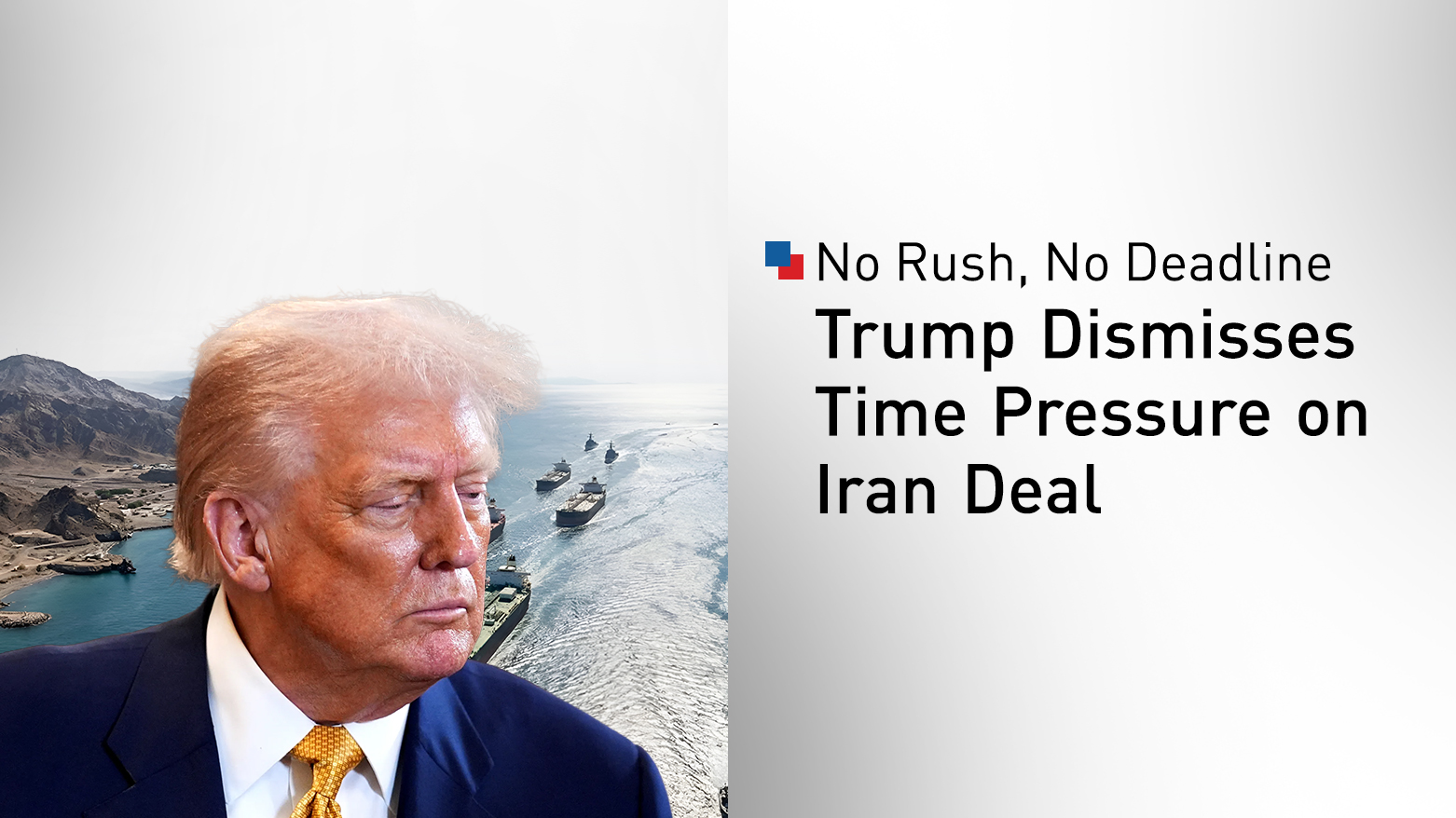
ERBIL (Kurdistan24) - U.S. President Donald Trump on Thursday, made clear he is in no hurry to reach a deal with Iran, dismissing reports of a short ceasefire window, ruling out any negotiating deadline, and warning Tehran that economic pressure is Washington's most feared weapon — more so than any military strike.
Speaking to Fox News, Trump rejected reports suggesting the ceasefire extension was limited to three to five days, saying it had been extended for an indefinite period. "We have no time frame and there is no need to rush," he said. He also dismissed suggestions that domestic political considerations were driving urgency on his part. "Those who say I want to end this because of the midterm congressional elections are far from the truth — my only goal is reaching a good deal for the American people."
In a direct message to Tehran's leadership, Trump said sanctions were a more effective instrument of pressure than bombardment. "Sanctions scare Iran more than bombing," he said. "They have faced bombardment for many years, but what they truly fear is a blockade and sanctions."
On the seizure of vessels in the Strait of Hormuz by Iranian forces on Wednesday, Trump said the ships involved were not American, but indicated the situation was being closely monitored.
White House draws firm conditions
White House Press Secretary Karoline Leavitt, speaking to the same network, said the seizure of the two vessels by Iran constituted a violation of ceasefire terms — noting that although the ships were neither American nor Israeli but international vessels, the act represented a breach of the agreed conditions.
Leavitt confirmed that Trump has set no deadline for receiving an Iranian proposal. "Ultimately, the commander-in-chief of the US armed forces sets the timeline," she said. She also outlined what Washington expects before any conflict can be brought to a close, saying Iran must agree to surrender its enriched uranium to the United States as a condition for ending the war.
Dismissing Iranian naval conduct in the Strait of Hormuz, Leavitt left little room for ambiguity. "Iranians do not control the Strait of Hormuz — what we are seeing is nothing more than maritime thuggery," she said.
Blockade by the numbers
In a post to its official X account, CENTCOM outlined the scale of the operation, describing a force of more than 10,000 US troops, over 100 fighter, rotary wing, and surveillance aircraft, and at least 17 warships enforcing a blockade that bars all ships from entering or leaving Iranian ports. Assets deployed include an aircraft carrier, amphibious assault ships, guided-missile destroyers, littoral combat ships, unmanned aircraft, and intelligence, surveillance, and reconnaissance platforms.
The majority of vessels directed to turn back have complied with US instructions, CENTCOM said, and most of those intercepted have been oil tankers. In an earlier statement, the command described the force as "the strongest and most lethal military the world has ever known."
Evasion claims denied
CENTCOM also pushed back against media reports alleging that several commercial ships had evaded the blockade, specifically naming the M/V Hero II, M/V Hedy, and M/V Dorena as vessels cited in those accounts. The command flatly rejected the claims.
Hero II and Hedy, CENTCOM said, did not pass through the blockade as part of a flotilla moving millions of barrels of oil to market — the Iranian-flagged tankers are currently anchored in Chah Bahar, Iran, after being intercepted by US forces earlier this week. The Dorena, meanwhile, is under the escort of a US Navy destroyer in the Indian Ocean after previously attempting to violate the blockade. "The US military has global reach," CENTCOM stated. "American forces are operating and enforcing the blockade across the Middle East and beyond."