Tehran Highlights Expanding Military Production Network Amid Talks with Washington
Tehran outlines its growing military production capacity while confirming its foreign minister’s visit to Pakistan will focus on mediation, not direct talks with the United States.
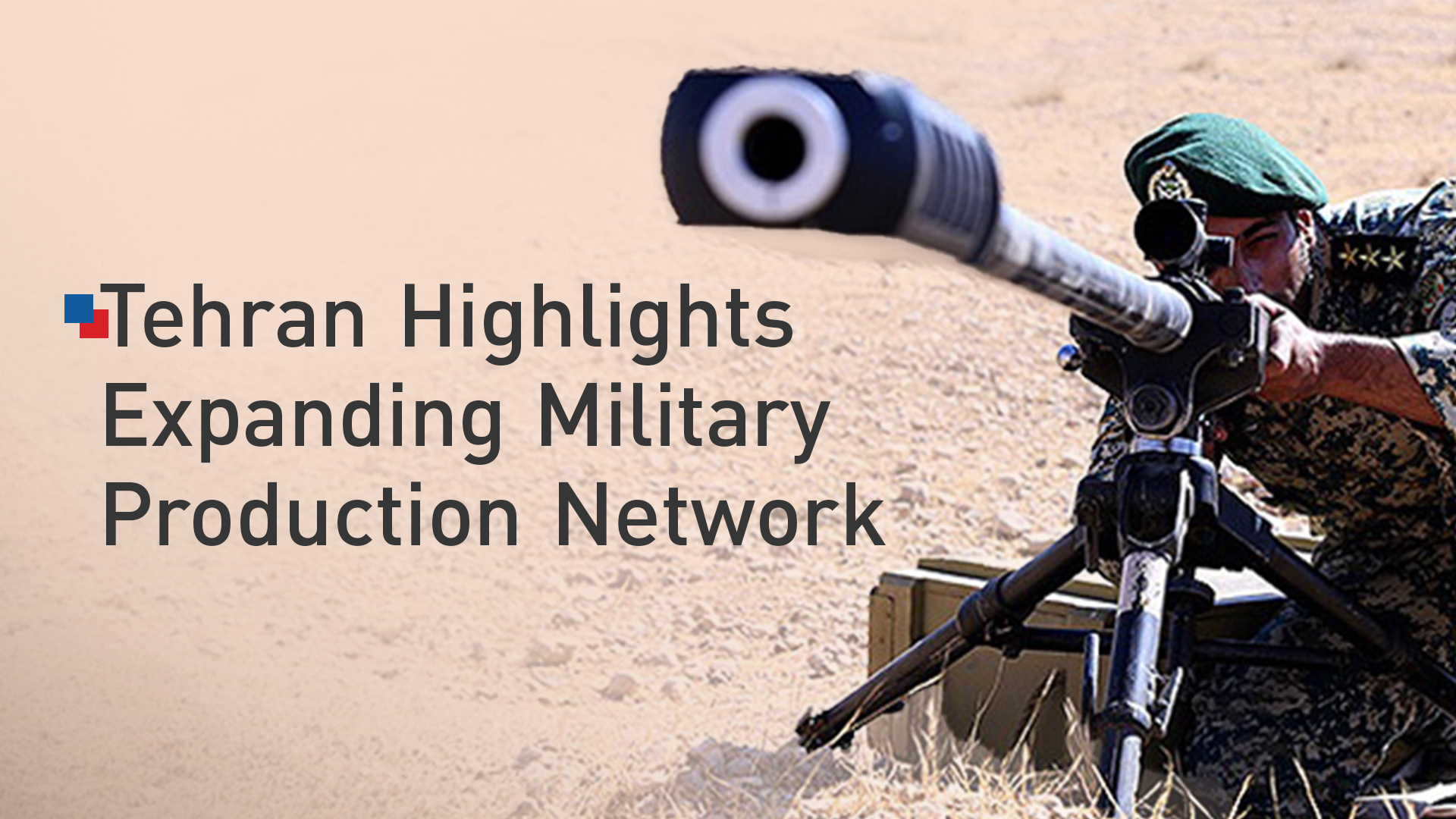
ERBIL (Kurdistan24) - Iran announced on Saturday, that nearly 9,000 companies are supporting its defense industry, as officials simultaneously clarified that ongoing diplomatic efforts in Pakistan will not involve direct negotiations with the United States but instead focus on indirect communication through intermediaries.
Reza Talaei-Nik, spokesperson for Iran’s Ministry of Defense, said the country is now capable of producing more than 1,000 different types of weapons and military equipment domestically.
Speaking to the Fars News Agency, he stated that Iran manufactures a wide range of systems, including missiles, drones, defense systems, and various other military tools, all developed with what he described as “authentic Iranian scientific expertise.”
He added that this capability is the result of more than 25 years of investment and experience in the defense sector, emphasizing that production systems are structured in a way that allows operations to continue even if certain facilities are damaged.
Talaei-Nik further revealed that nearly 9,000 companies are currently cooperating with Iran’s armed forces and Ministry of Defense in the military industry.
According to the spokesperson, more than 30 million people have also registered in what he described as a national defense campaign, calling it an unprecedented level of public participation globally.
On the Strait of Hormuz, he asserted that the waterway remains under Iran’s “strong and intelligent control,” claiming that opposing forces in the Sea of Oman have been targeted multiple times and forced to retreat under pressure.
Iran Rejects Direct Talks with Washington
In a parallel development, Iran’s Foreign Ministry denied any plans for direct negotiations with the United States during ongoing diplomatic efforts.
On Saturday, April 25, 2026, Foreign Ministry spokesperson Esmail Baghaei announced on the platform X that an official Iranian delegation had arrived in Islamabad, Pakistan.
Baghaei clarified that Foreign Minister Abbas Araghchi’s visit is aimed at meeting senior Pakistani officials to discuss mediation efforts led by Islamabad.
He stressed that the primary objective of the visit is to help end what he described as a “war imposed by the United States” and restore peace to the region.
Regarding potential direct talks with Washington, Baghaei said there are no plans for such meetings, adding that all Iranian messages and positions will instead be conveyed through Pakistani officials.
The Iranian statements come as US officials signal conditional engagement in the same diplomatic track.
White House spokesperson Karoline Leavitt said on Friday, April 24, that Steve Witkoff and Jared Kushner were expected to arrive in Pakistan on Saturday to participate in the talks.
She also noted that Vice President JD Vance could join the negotiations at a later stage if discussions prove productive.