Kurdistan Region Hit by 809 Drone and Missile Attacks, Government Says
The Kurdistan Regional Government documented 809 drone and missile attacks over 50 days, confirming 20 fatalities and extensive civilian damage amid regional hostilities.
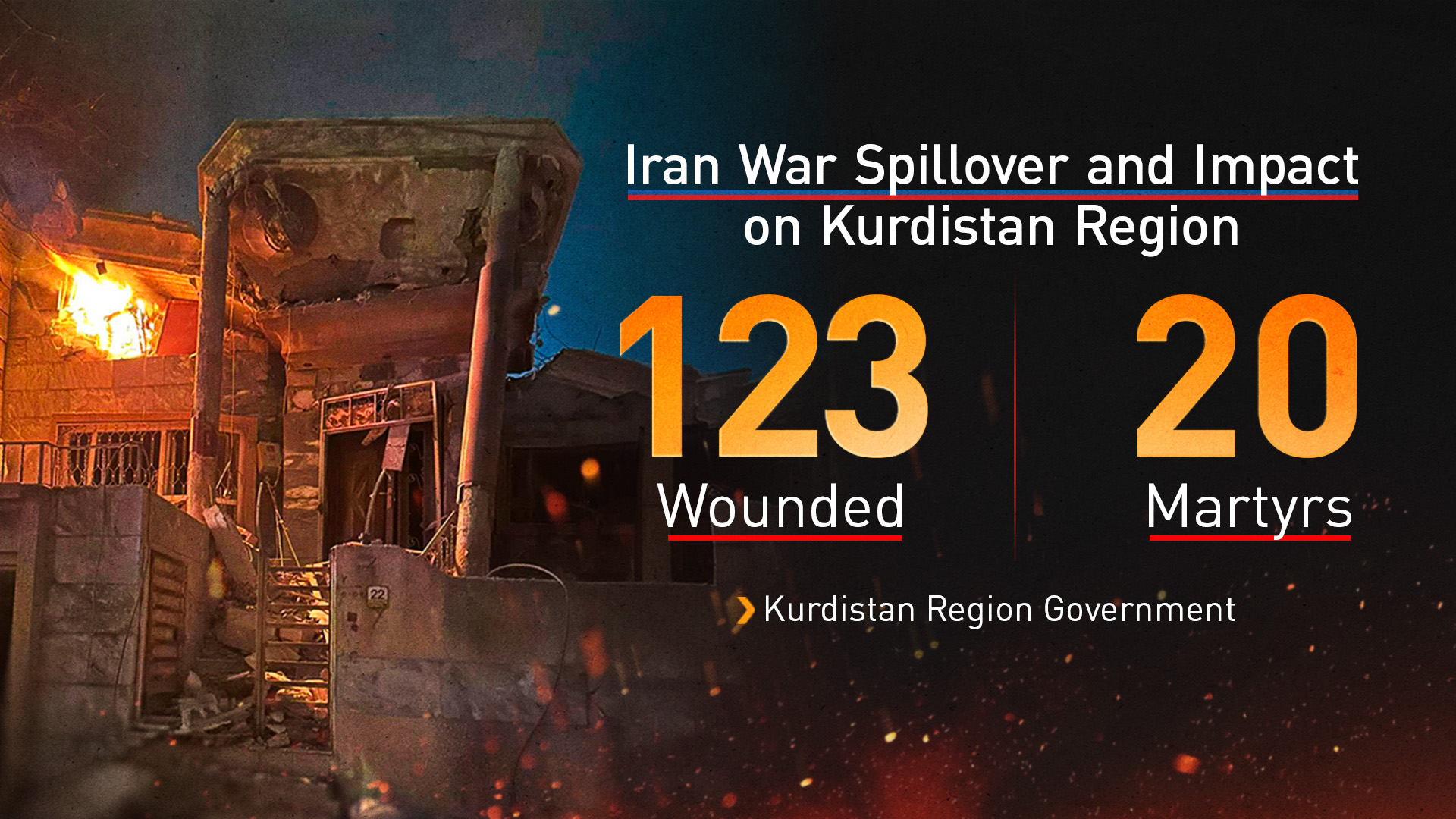
ERBIL (Kurdistan24) - The Kurdistan Regional Government announced that the Kurdistan Region has been subjected to 809 drone and missile strikes over a 50-day period, resulting in 20 fatalities and 123 injuries amid escalating regional hostilities.
Released by the government’s Media and Information Department, the comprehensive statistical report documents the severe human and material toll inflicted upon the autonomous region between February 28 and April 20, 2026.
According to the official records, the wave of bombardments coincides directly with the outbreak of armed conflict involving the United States, Israel, and Iran.
Despite maintaining strict institutional neutrality in the ongoing geopolitical confrontation, the Kurdistan Region has absorbed the highest level of collateral damage and direct strikes among non-participating entities.
The strikes, which have predominantly targeted the capital province of Erbil, highlight the severe spillover effects of the broader regional war on a recognized constitutional entity within federal Iraq.
The continuous targeting of the region underscores the vulnerability of its civilian infrastructure and the complexities of its security framework.
As the conflict progresses, the regional government relies on coordinated defense and diplomatic mechanisms with the federal authorities in Baghdad, making the recurrent breaches of its airspace a critical issue for both regional stability and national sovereignty.
Scale and Scope of the Bombardments
According to the statistics published by the Media and Information Department, the attacks have been executed under what the government characterized as baseless pretexts.
The comprehensive dataset categorizes the incidents by weapon type and geographic location, offering a granular view of the security crisis over the specified timeframe.
Of the 809 total attacks documented during the 50-day reporting window, the overwhelming majority were carried out using unmanned aerial systems.
Drone attacks accounted for 701 of the incidents, reflecting a sustained aerial campaign. Missile strikes comprised the remaining 108 incidents, contributing significantly to the structural damage and casualty rates observed across the affected provinces.
The official records emphasize a stark disproportion between the region's non-combatant status and the scale of the violence it has endured.
The documented 20 fatalities, referred to as martyrs in the official statement, and 123 wounded individuals represent a significant loss of life for an administration that remains unaligned in the active U.S.-Israel-Iran conflict.
Geographic Distribution of Strikes
The statistical breakdown reveals a widespread but uneven distribution of the attacks across the Kurdistan Region’s administrative zones, with the capital province emerging as the primary focal point of the hostilities.
Erbil Province absorbed the highest volume of military action, sustaining a total of 477 distinct attacks.
This figure encompasses 419 drone incursions and 58 missile strikes. The human cost in Erbil was the most severe, accounting for half of the region's total fatalities with 10 individuals killed and 83 wounded.
The provinces of Sulaimani and Halabja collectively experienced the second-highest frequency of bombardments. The areas were subjected to 235 attacks, comprising 194 drone deployments and 41 missile strikes. These incidents resulted in three fatalities and six injuries.
In the Soran Independent Administration, authorities recorded 68 attacks, which included 59 drone strikes and nine missile strikes. This localized concentration of violence led to a high casualty rate relative to the number of attacks, resulting in seven fatalities and 34 wounded individuals.
Conversely, Duhok Province faced 29 separate attacks, all of which were executed by drones without any missile components. No casualties were reported within the province during this period, though the economic disruption remained substantial.
Impact on Civilian Infrastructure
The Media and Information Department's report highlights a clear pattern of strikes intersecting with civilian population centers and commercial enterprises.
The government explicitly noted that civilian locations, the lives and properties of citizens, and the broader private sector were repeatedly targeted throughout the 50 days of bombardment.
The economic and infrastructural impact was most concentrated in Erbil Province, where 726 citizens reported severe damage to their residences, commercial properties, and vehicles. The systemic disruption to daily life and commerce underscores the widespread nature of the attacks.
In Sulaimani and Halabja, the data identified 24 distinct attacks specifically targeting civilian locations, causing harm to dozens of citizens. Similarly, in the Soran Independent Administration, the strikes inflicted property damage on the homes, vehicles, and workplaces of 35 citizens.
Even in areas without reported fatalities, the material consequences were significant.
In Duhok Province, private sector companies were subjected to direct attacks on more than 13 occasions, resulting in considerable damage to corporate assets and the adjacent homes of local residents.
Statistics of attacks on the Kurdistan Region from February 28 to April 20, 2026
| Province and Independent Administrations | Attacks | Drone Attacks | Missile Attacks | Martyrs | Wounded |
| Erbil | 477 | 419 | 58 | 10 | 83 |
| Sulaimani and Halabja | 235 | 194 | 41 | 3 | 6 |
| Duhok | 29 | 29 | - | - | - |
| Soran Independent Administration | 68 | 59 | 9 | 7 | 34 |
| Total | 809 | 701 | 108 | 20 | 123 |
Diplomatic Appeals and Sovereignty
The continuous bombardment has prompted sustained diplomatic engagement and urgent security appeals from Erbil.
Since the initiation of the regional war in late February, the international community has consistently issued condemnations regarding the unprovoked strikes on the Kurdistan Region's territory.
Parallel to these international responses, regional authorities have directed formal appeals toward the federal government in Baghdad.
The official statements demand that federal authorities take decisive and immediate action to penalize the perpetrators responsible for what the regional government describes as persistent terrorist attacks.
Furthermore, the appeals emphasize the constitutional obligation of the Iraqi federal government to halt the unjust strikes.
The regional administration has reiterated that protecting the airspace and territorial integrity of the Kurdistan Region is inextricably linked to maintaining the broader sovereignty and stability of Iraq amid escalating regional warfare.