After UAE Exit, OPEC Faces Strategic Strain and Uncertain Future
One day on, Abu Dhabi’s departure signals shifting power dynamics, looser supply discipline, and a potentially more volatile global oil market
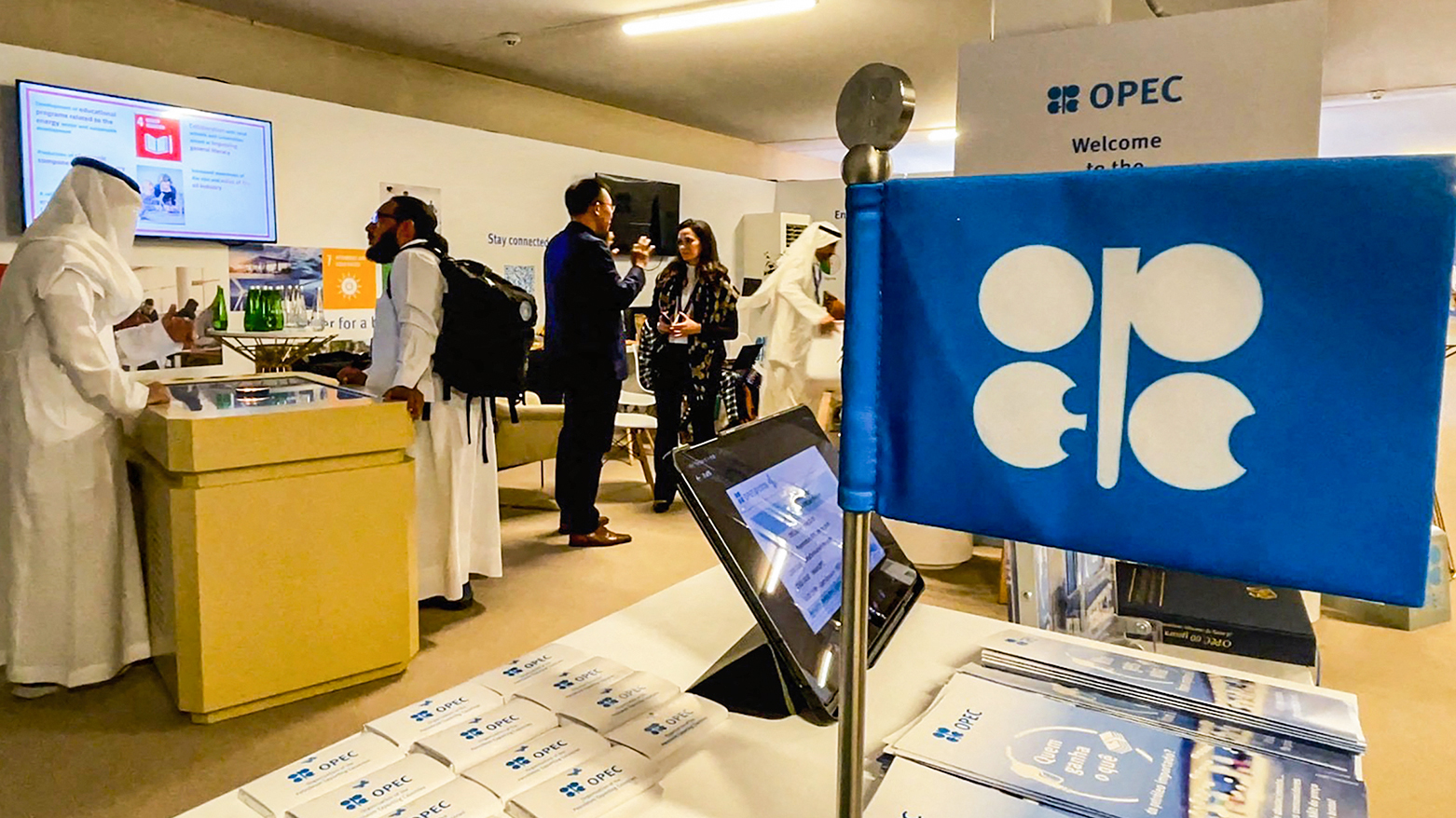
ERBIL (Kurdistan24) — The Organization of the Petroleum Exporting Countries (OPEC) faces a significant setback after the United Arab Emirates announced it will withdraw from both OPEC and the broader OPEC+ alliance, citing a strategic pivot toward national interests amid escalating regional turmoil and surging oil prices.
The decision, set to take effect Friday, marks the most consequential exit from the cartel in years, stripping OPEC of one of its largest producers at a time of acute market instability driven by the ongoing Middle East conflict.
The move was confirmed in a statement carried by the UAE’s official WAM news agency.
“This decision reflects the UAE's long-term strategic and economic vision and evolving energy profile,” the statement said, adding that while Abu Dhabi had made “significant contributions and even greater sacrifices” within the organization, it was now time to prioritize national interests.
The UAE has been a member of OPEC since 1967 through the emirate of Abu Dhabi, predating the country’s formal establishment in 1971. Its departure follows that of Angola in 2024, though analysts emphasize that the UAE represents a far more consequential loss due to its production scale and strategic weight.
Qatar also withdrew from OPEC in 2019, though its departure had a limited impact compared to the UAE’s current move. Qatar was a relatively small oil producer within the group, and its exit was largely driven by a strategic pivot toward expanding its global leadership in liquefied natural gas (LNG).
As a result, the withdrawal had little impact on OPEC’s market influence. In contrast, the UAE’s exit removes one of the cartel’s largest producers, underscoring a far more significant shift that could weaken OPEC’s ability to manage supply and stabilize prices.
Strategic rupture amid regional crisis
The withdrawal comes against the backdrop of a severe oil shock, widely regarded as the most significant since the 1970s, exacerbated by Iran’s blockade of the Strait of Hormuz—a critical maritime artery through which roughly one-fifth of global oil supply typically passes.
The disruption has constrained Gulf exports, including those of the UAE, while exposing underlying tensions within OPEC over production policy.
Sources close to the UAE energy ministry indicated that Abu Dhabi sought to avoid future constraints imposed by quota systems once normal shipping resumes.
Before the crisis, the UAE ranked fourth among OPEC+ producers, behind Saudi Arabia, Russia, and Iraq, accounting for approximately 13 percent of OPEC output. In February alone, it produced around 3.6 million barrels per day.
At the core of the UAE’s decision lies longstanding frustration with OPEC’s quota system, largely shaped by Saudi Arabia, the cartel’s dominant force.
The UAE has sought to expand its production capacity to five million barrels per day by 2027, well beyond the limits imposed under existing agreements.
Analysts say the Hormuz crisis provided an opportune moment for Abu Dhabi to exit without immediately destabilizing prices, while positioning itself to capture greater market share in the future.
Neil Quilliam, an energy and geopolitics expert at Chatham House, told AFP that the decision had likely been planned well in advance, with timing dictated by favorable market conditions.
The UAE’s broader economic diversification strategy also plays a role. Unlike Saudi Arabia, which remains heavily dependent on oil revenues, the UAE is better positioned to withstand price volatility and seeks to channel increased energy income into sectors such as artificial intelligence and advanced technologies.
Strains with Riyadh intensify
The exit is expected to deepen existing rifts between Abu Dhabi and Riyadh, whose relations have deteriorated in recent months over divergent policies on Yemen, oil production, and broader regional dynamics.
While UAE Energy Minister Suhail Al Mazrouei insisted the move was “not political,” analysts argue it underscores growing strategic divergence between the two Gulf powers.
Beyond energy policy, the UAE has signaled dissatisfaction with traditional Arab alliances, including the Arab League and the Gulf Cooperation Council, particularly in relation to the ongoing regional conflict.
Market implications and OPEC’s future
Market analysts warn that the UAE’s departure could erode OPEC’s ability to stabilize global oil prices. According to industry estimates, the cartel may lose roughly 13 percent of its production capacity, significantly weakening its capacity to manage supply shocks.
Jorge Leon of Rystad Energy told AFP that the immediate impact may be limited while Hormuz exports remain constrained. However, once conditions normalize, the UAE will have greater freedom to increase output—potentially undermining coordinated supply management.
“Saudi Arabia is now left doing more of the heavy lifting on price stability,” Leon said, warning of a “more volatile oil market” ahead.
The shift also concentrates spare production capacity within Saudi Arabia, increasing its burden as the cartel’s primary stabilizer.
Founded in 1960, OPEC gained global prominence during the 1973 oil embargo, when coordinated supply cuts triggered a quadrupling of oil prices and reshaped global energy politics.
Over subsequent decades, the group relied on production quotas to maintain influence, navigating challenges from emerging producers and market shocks, including the 2008 financial crisis and the COVID-19 pandemic.
Now, the UAE’s exit raises broader concerns about the cartel’s cohesion. While countries such as Iraq and Kazakhstan have exceeded quotas, they have publicly ruled out leaving. Still, analysts caution that further defections could significantly undermine OPEC’s relevance.
Kremlin spokesman Dmitry Peskov expressed hope that the UAE’s move would not signal a broader unraveling of the alliance.
For now, however, the departure of one of OPEC’s most influential members marks a pivotal moment—one that could reshape both the internal dynamics of the cartel and the trajectory of global energy markets.