China, Russia Monitoring US Capabilities Amid Middle East Tensions, Wall Street Journal Reports
According to reporting by The Wall Street Journal, the methods by which U.S. defense systems engage threats, as well as specific vulnerabilities in regional military installations, have been increasingly exposed during recent attacks.
ERBIL (Kurdistan24) - The recent cycle of military confrontations and heightened tensions involving Iran has provided a strategic window for China, Russia, and North Korea to closely observe the operational capabilities and defense architectures of the United States military.
According to reporting by The Wall Street Journal on Friday by Timothy W. Martin, Thomas Grove, and Chun Han Wong, the methods by which U.S. defense systems engage threats, as well as specific vulnerabilities in regional military installations, have been increasingly exposed during recent attacks.
In its reporting, the Journal stated that these observational opportunities arose directly from the active engagement of U.S. hardware against sophisticated regional threats.
Geopolitical observers noted in the report that the disclosure of U.S. operational signatures, ranging from radar frequencies to interception protocols, offers rival powers a rare real-world assessment of American military readiness in a high-intensity theater.
The reported monitoring by Beijing, Moscow, and Pyongyang occurs as the United States navigates the aftermath of a significant military escalation.
The WSJ coverage indicates that the reveal of U.S. "operating methods" during these confrontations allows for the identification of potential gaps in air defense and base security that were previously shielded by peacetime conditions.
Regional Military Observations
The gathering of strategic intelligence by rival powers has been prioritized as a direct result of the recent conflict dynamics.
The Wall Street Journal reported that the sustained nature of the tensions provided an environment where the operating methods and inherent weaknesses of U.S. defense systems and military bases were revealed through repeated engagement.
As noted in WSJ coverage, this data-gathering effort is not limited to passive observation.
Rival states have reportedly focused on how U.S. forces prioritize targets, the speed of their response, and the limitations of their integrated sensor networks.
The newspaper emphasizes that this level of scrutiny follows a period where U.S. military posture in the Middle East was tested by a variety of asymmetric and conventional threats.
The interest from North Korea and China is particularly focused on the efficacy of high-end U.S. missile defense platforms, which are also deployed in the Indo-Pacific region.
According to The Wall Street Journal, the regional conflict served as a surrogate testing ground for capabilities that are central to global U.S. security commitments.
Reported Effects on Air Defense Systems
One of the most consequential findings in the reported assessment concerns the performance of specific air defense systems.
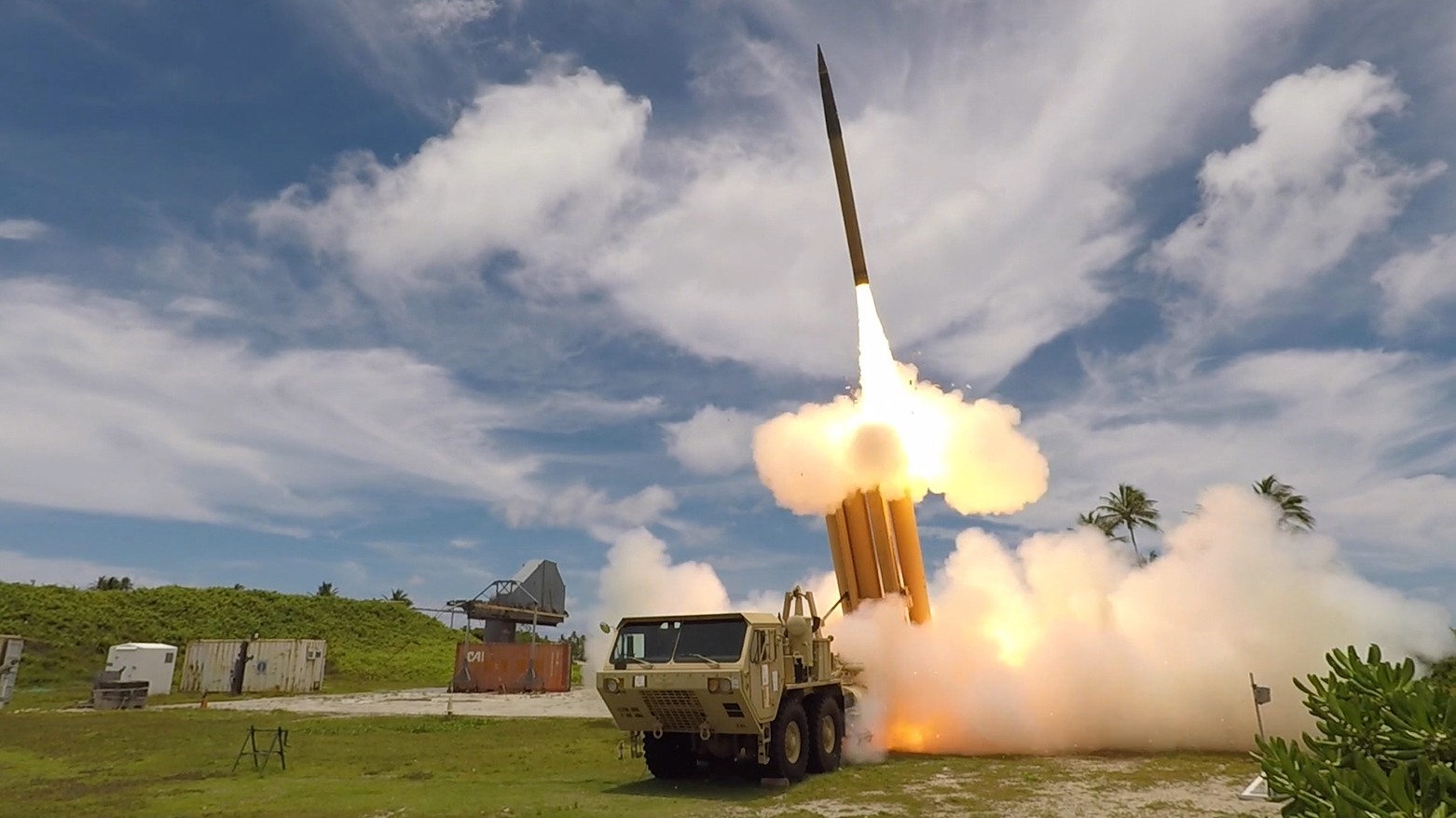
The Wall Street Journal indicated that Iranian drones demonstrated a notable level of effectiveness in countering the Terminal High Altitude Area Defense (THAAD) system.
As detailed by the WSJ, several radars associated with the THAAD network were reportedly disabled or disrupted during various attacks conducted in Jordan and the United Arab Emirates.
This specific technical vulnerability is considered a significant development, as the THAAD system is a cornerstone of the U.S. strategy to defend against ballistic missile threats.
The newspaper further reported that these disruptions to radar functionality have specifically drawn the attention of Moscow.
Russian military observers are reportedly analyzing the technical parameters of the drone-to-radar engagements to understand how relatively low-cost unmanned aerial vehicles managed to challenge one of the world's most sophisticated defense arrays.
According to the WSJ report, this evaluation by Russia signifies a major shift in the perceived invulnerability of U.S. integrated air and missile defense systems in the region.
Assessment of Operational Impact
The breadth of the impact on U.S. regional posture has been further detailed through secondary investigations.
According to a CNN investigation, the period of escalation that began on Feb. 28 has resulted in significant damage to U.S. interests.
The CNN investigation reported that Iran and its regional allies have successfully inflicted damage on at least 16 U.S. military positions.
The scale of this impact spans eight different Middle Eastern countries, highlighting the regional nature of the security challenges.
According to CNN analysis, the damage to these facilities was not merely superficial; the report emphasizes that some U.S. bases have become inactive due to the severity of the structural and technical damage sustained during the attacks.
This assessment by CNN provides a broader context to the WSJ report regarding rival power monitoring.
The transition of facilities from active to inactive status provides rival intelligence agencies with data on the "breaking point" of U.S. logistics and infrastructure resilience under fire.
U.S. Government Communication
Amid these reports of technical challenges and strategic monitoring, the U.S. executive branch has moved to signal an end to the current phase of the conflict.
According to ABC News, U.S. President Donald Trump has submitted formal letters to Congress stating that he will continue directing the U.S. Armed Forces "consistent with my responsibilities and pursuant to my constitutional authority" as Commander-in-Chief and chief executive overseeing U.S. foreign relations.
The correspondence, sent amid the 60-day reporting requirements under the War Powers Act, does not request congressional authorization. Instead, it serves as an update on the status and posture of U.S. forces in the region.
In the letters, Trump referenced a ceasefire he said he ordered on Apr. 7, 2026, which he noted has since been extended. "There has been no exchange of fire between United States Forces and Iran since April 7, 2026. The hostilities that began on Feb. 28, 2026, have terminated," he wrote, according to ABC News.
He also reiterated that the military operation, referred to as "Operation Epic Fury," was launched "consistent with my responsibility to protect Americans and United States interests at home and abroad, and in furtherance of United States national security and foreign policy interests."
Great Power Observation
The strategic dimension of this monitoring behavior represents a critical shift in the geopolitical landscape.
China, Russia, and North Korea are viewing the Middle Eastern operational context as an intelligence-rich environment.
Strictly focusing on the reported observation behavior, these states are seeking to refine their own electronic warfare and drone technologies based on the perceived weaknesses of the American response.
As noted in the primary WSJ report, the strategic intelligence interest is centered on the revelation of operational "weaknesses" that had previously been theoretical.
The reporting suggests that the intelligence gained from monitoring U.S. capabilities in the region will likely inform the military doctrines of these rival powers for several years.
By observing the limits of the THAAD system and the vulnerability of regional bases, these actors are effectively conducting a cost-free evaluation of the U.S. military's primary defensive and offensive protocols.
The WSJ concludes that the strategic cost of the conflict may extend beyond the immediate damage to bases, encompassing a degradation of the U.S.'s technical edge through the disclosure of operational secrets during the fighting.