First Specialized Cancer Hospital Under Construction in Erbil
Major project aims to transform cancer care capacity across the Kurdistan Region and Iraq
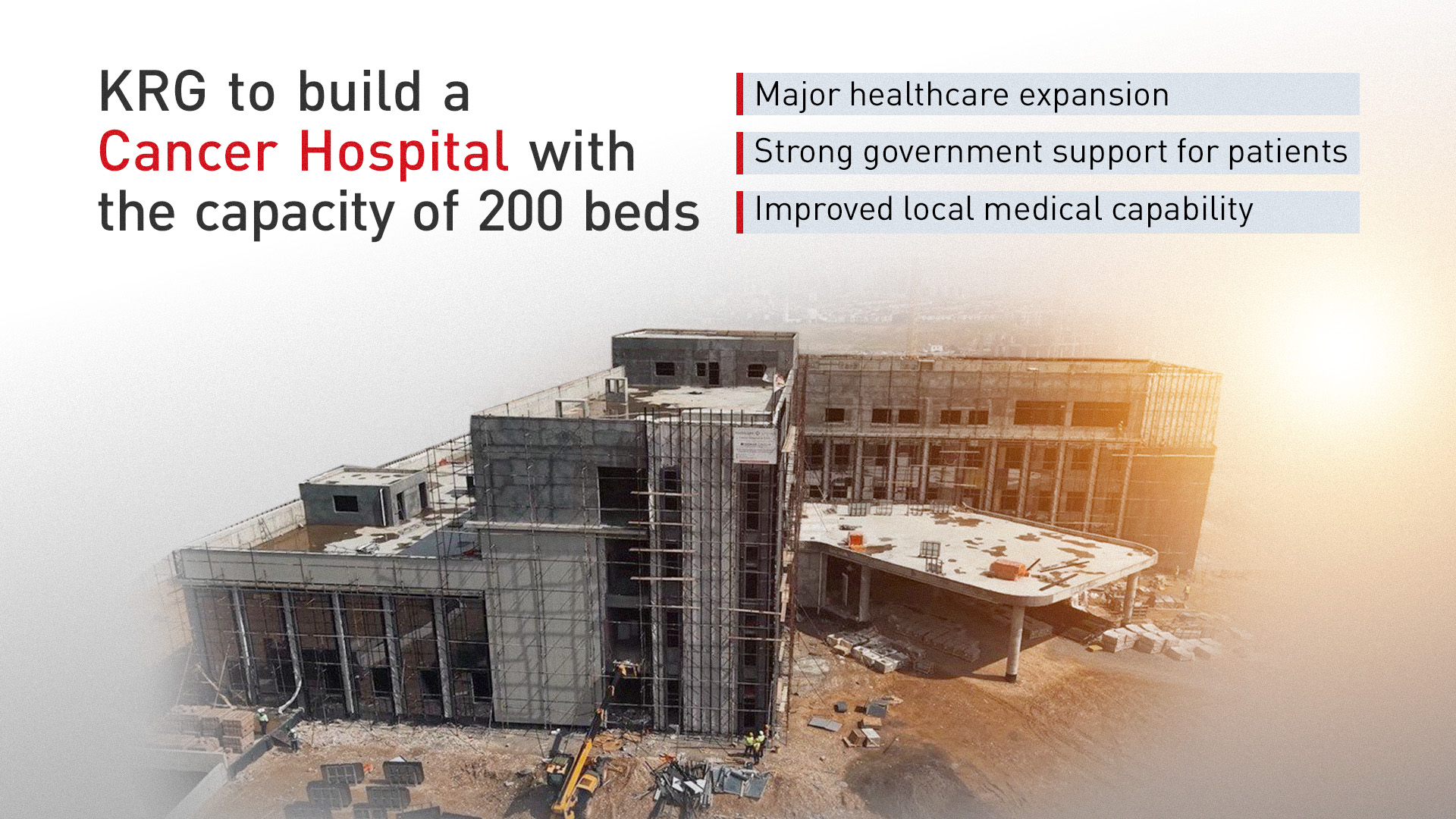
ERBIL (Kurdistan 24) - Construction is underway on what will become the first and largest specialized cancer hospital in the Kurdistan Region and across Iraq, marking a major step in expanding advanced healthcare services in the region.
The project is being built in Erbil on an area of 30,000 square meters and will consist of five floors with a total capacity of 200 beds. Officials say the hospital will be equipped with the latest and most advanced medical technologies, enabling it to provide comprehensive cancer care within a single facility.
The total cost of the project is estimated at approximately 165 billion Iraqi dinars, and construction is being carried out by a local workforce, with around 100 workers and engineers currently active on-site.
The project comes amid a steady increase in cancer cases across the Kurdistan Region. Health officials estimate that thousands of new cancer cases are registered annually, with the number of patients continuing to rise each year due to population growth, improved detection, and environmental and lifestyle factors.
Cancer cases in the Kurdistan Region and across Iraq have increased in recent years, highlighting a growing public health challenge.
In the Kurdistan Region, more than 10,481 new cancer cases were recorded in 2025, with incidence rates estimated at around 141–151 cases per 100,000 people, while Iraq reports approximately 43,000 to 46,000 new cases annually.
Despite this rise, the Kurdistan Regional Government has taken significant steps to support patients by providing free cancer treatment and care, funded through a dedicated cancer support system. According to official data, the KRG allocates over 50–70 billion Iraqi dinars annually to cover medications, diagnostics, and treatment services for patients, according to Kurdistan24, with total spending exceeding 285 billion dinars between 2020 and 2023. This support has helped reduce the financial burden on patients and positioned the region as a major treatment hub, attracting nearly 40% of cancer patients from outside the Kurdistan Region, even as challenges such as environmental factors and late diagnosis continue to drive overall case numbers upward.
According to regional health data, cancer is among the leading causes of death in the Kurdistan Region, with common types including breast cancer, lung cancer, colorectal cancer, and leukemia. Hospitals such as Nanakali in Erbil have experienced increasing patient loads, often operating at or near capacity.
Officials have also indicated that a significant portion of patients seek treatment outside the region due to limited specialized facilities, adding financial and logistical pressure on families.
The new hospital builds on ongoing efforts to improve cancer treatment capacity. On February 4, 2025, during a World Cancer Day press conference, Erbil’s General Director of Health, Dilovan Muhammad, announced that the Cancer Patient Support Fund allocates more than 50 billion dinars annually to support patient treatment.
He also revealed that 28% of cancer patients at Nanakali Hospital come from outside Erbil, highlighting the hospital’s regional role. To address gaps in advanced care, a bone marrow transplant center funded at $6 million is being developed to reduce the need for patients to travel abroad.
Authorities say the new cancer hospital is designed to address these growing demands by significantly expanding treatment capacity and centralizing advanced services. The facility is expected to reduce patient overflow, shorten waiting times, and improve access to specialized care within the Kurdistan Region.
The project reflects a broader KRG strategy to modernize healthcare infrastructure, reduce reliance on external treatment, and strengthen local medical capabilities.
With cancer cases rising and demand for advanced treatment increasing, the construction of this specialized hospital represents a critical step toward improving healthcare outcomes and ensuring long-term medical sustainability in the Kurdistan Region.