U.S. to Host New Round of Israel-Lebanon Peace Talks This Month
Washington pushes for a broader security deal centered on Hezbollah disarmament and Lebanese sovereignty
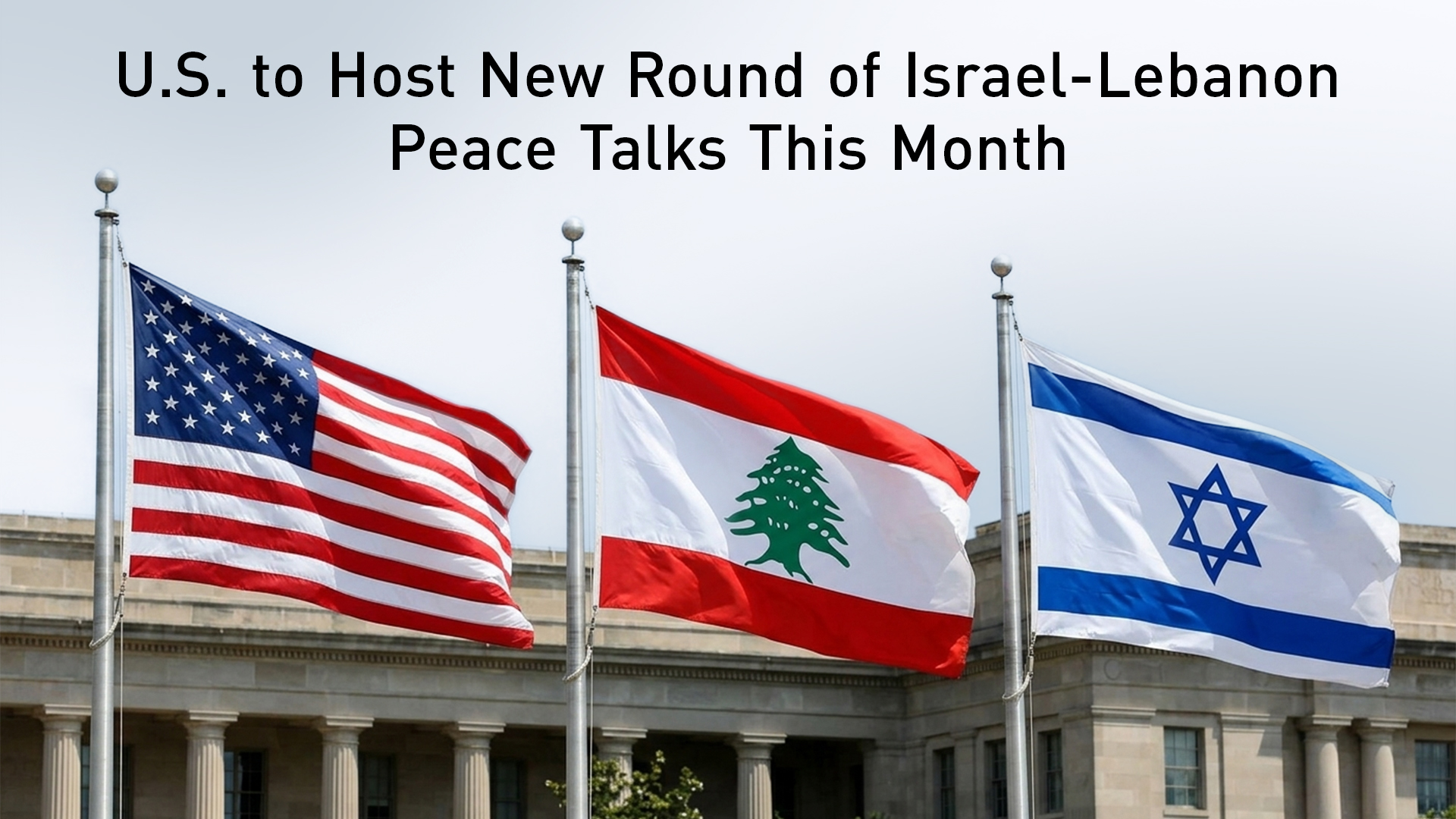
ERBIL (Kurdistan 24) - The United States announced Friday that it will host a new round of intensive negotiations between Israel and Lebanon later this month as part of ongoing efforts to reach a broader security and peace agreement between the two countries.
In a statement issued on Friday, May 8, U.S. State Department spokesperson Tom Pigott said Washington will facilitate two days of high-level talks between Israeli and Lebanese representatives on May 14 and 15.
According to the statement, the upcoming discussions are a continuation of negotiations launched on April 23 under the direct supervision of President Donald Trump. The stated objective is to draft a comprehensive security and peace framework addressing the core concerns of both sides.
Washington made clear that any long-term peace arrangement would depend on what it described as two central conditions: the restoration of full Lebanese state authority across all Lebanese territory and the complete disarmament of Hezbollah, which the United States designates as a terrorist organization.
During a press briefing in Rome on Friday, U.S. Secretary of State Marco Rubio stressed that empowering the Lebanese government is essential to confronting Hezbollah and stabilizing Lebanon. Rubio said the United States shares a common objective with its allies: ensuring Hezbollah does not continue operating as an armed force inside Lebanon or threaten neighboring countries.
Rubio also made clear that Washington refuses to negotiate directly with Hezbollah. According to the Wall Street Journal report, Rubio stated that the United States would only discuss Hezbollah-related matters with Iran if Tehran agreed to stop supporting the group. He emphasized that Washington’s focus remains on strengthening the Lebanese state rather than engaging with Hezbollah itself.
The negotiations are expected to cover several major issues, including precise border demarcation between Israel and Lebanon, humanitarian aid access, and reconstruction planning for Lebanon following years of conflict and instability.
U.S. officials described the talks as a potential “historic turning point” that could end what Washington called the “failed policies of the past two decades,” which it argues allowed armed groups to weaken Lebanese state institutions and threaten security along Israel’s northern border.
The diplomatic push comes amid broader regional tensions linked to the ongoing confrontation between the United States and Iran. Washington has increasingly tied regional security arrangements to efforts aimed at reducing the influence of Iran-backed armed groups across the Middle East, including Hezbollah in Lebanon and militia factions in Iraq.
At the same time, the White House has intensified economic pressure on Tehran. In recent days, White House officials stated that U.S. sanctions and blockade measures are “strangling Iran’s economy,” as Washington continues its broader pressure campaign tied to regional conflicts, maritime security operations, and nuclear negotiations.
The latest negotiations also come after months of renewed fighting between Israel and Hezbollah that reignited in early March 2026. According to regional and international reporting, more than one million people have been displaced in Lebanon during the conflict, while thousands have been killed amid Israeli airstrikes and Hezbollah rocket attacks.
On April 24, President Trump announced on Truth Social that he had hosted a major meeting at the White House involving representatives from both Israel and Lebanon. Participants included Vice President JD Vance, Secretary of State Marco Rubio, U.S. Ambassador to Israel Mike Huckabee, and U.S. Ambassador to Lebanon Michel Issa.
Trump said the meeting had gone “very well” and reaffirmed Washington’s commitment to supporting Lebanon’s sovereignty against Hezbollah. As a result of the discussions, the ceasefire between Israel and Lebanon was extended for an additional three weeks.
Earlier, on April 14, the U.S. State Department hosted what officials described as a “historic trilateral meeting” involving senior Israeli and Lebanese delegations under the supervision of Secretary of State Marco Rubio. Rubio said at the time that the negotiations should be viewed as a long-term process aimed at ending decades of Hezbollah influence and achieving sustainable regional stability.
The talks also coincide with growing internal pressure inside Lebanon against Hezbollah’s military role. Earlier this year, Lebanese authorities took unprecedented legal and political measures restricting Hezbollah’s military activities, while senior Lebanese officials increasingly emphasized that decisions related to war and peace must remain exclusively under state authority.
Analysts say Washington increasingly views diplomatic normalization, border stabilization, and reducing the power of armed non-state actors as interconnected objectives within a broader effort to reshape the regional security order following months of conflict stretching from the Gulf to the Eastern Mediterranean.
Despite the renewed diplomatic momentum, major obstacles remain, particularly regarding Hezbollah’s future role inside Lebanon and the broader influence of Iran across the region.