Qatar PM meets U.S. Vice President to Discuss Regional Escalation
The meeting in Washington comes amid intensifying diplomacy surrounding Gulf tensions and the Iran conflict
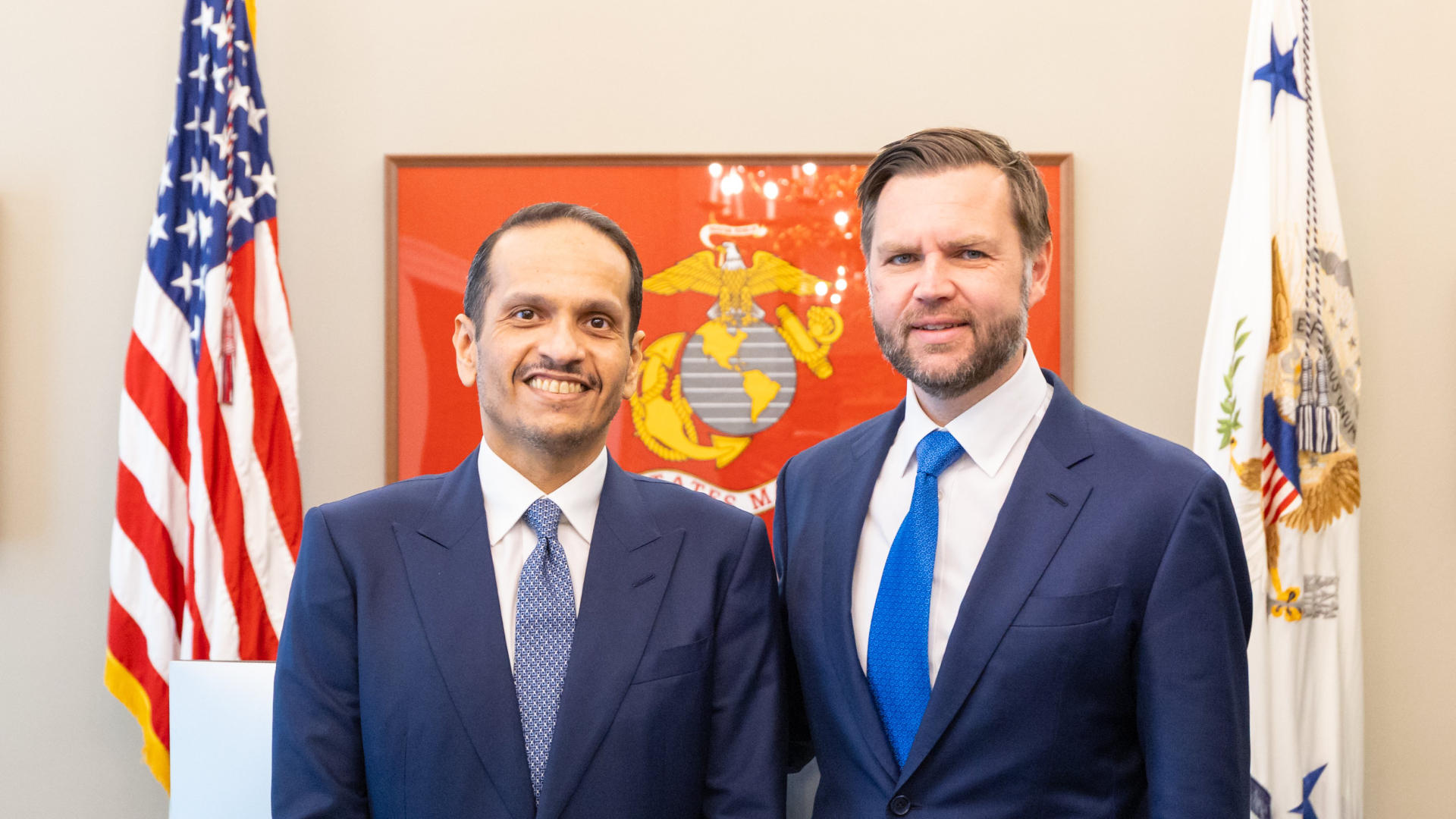
ERBIL (Kurdistan 24) - Qatari Prime Minister and Foreign Minister Mohammed bin Abdulrahman Al Thani met Friday in Washington with U.S. Vice President JD Vance to discuss regional tensions, strategic cooperation, and ongoing mediation efforts aimed at de-escalation in the Middle East.
According to a statement published by Qatar’s Ministry of Foreign Affairs on its official X account on Friday, the two sides reviewed bilateral strategic relations between Qatar and the United States and discussed ways to strengthen cooperation across multiple sectors.
The discussions also focused heavily on the worsening regional security situation and Pakistani-led mediation efforts intended to reduce tensions and prevent further escalation across the region.
During the meeting, Sheikh Mohammed bin Abdulrahman Al Thani stressed: “the necessity for all parties to respond to the ongoing mediation efforts” in a way that would help address “the roots of the crisis through peaceful means and dialogue,” ultimately leading to “a comprehensive agreement that realizes lasting peace in the region.”
The meeting comes during an intense period of regional diplomacy following months of confrontation involving the United States, Iran, Israel, and several Iran-aligned armed groups across the Middle East.
According to both Axios and CNN reported in May 2026, in recent weeks, Pakistan has increasingly emerged as a key mediator between Washington and Tehran amid ongoing negotiations linked to maritime security, sanctions, ceasefire arrangements, and the Strait of Hormuz crisis. U.S. officials recently confirmed that talks involving American and Iranian representatives could potentially continue in Islamabad as part of broader diplomatic efforts.
Also, USDOS on Friday, the diplomatic activity also coincides with renewed U.S.-led negotiations between Israel and Lebanon. On Friday, the U.S. State Department announced that Washington will host another round of intensive talks between Israeli and Lebanese officials on May 14 and 15, with discussions expected to focus on border security, reconstruction efforts, and the disarmament of Hezbollah.
At the same time, tensions remain high in Gulf waters, as both Maritime monitoring reports and CENTCOM updates on May 2026. The United States continues naval operations tied to “Project Freedom” and enforcement measures linked to the blockade on Iranian ports, while Iran has maintained restrictions and military signaling around the Strait of Hormuz. Maritime monitoring data released this week showed that nearly 163 million barrels of Gulf crude oil remain stranded near the strategic waterway due to rising security risks and shipping disruptions.
Meanwhile, the White House has continued to increase economic pressure on Tehran. U.S. officials recently stated that sanctions and naval restrictions are “strangling Iran’s economy,” while Washington simultaneously pursues negotiations aimed at limiting Iran’s nuclear program and reducing regional escalation.
Qatar has repeatedly positioned itself as a facilitator of dialogue in regional crises, maintaining communication channels with multiple parties involved in ongoing conflicts stretching from the Gulf to the Eastern Mediterranean.