WSJ: Israel Operated Covert Base in Iraq During Iran War
WSJ reports Israel operated a covert base in Iraq's western desert to support strikes on Iran, raising renewed concerns over Iraqi sovereignty and regional escalation.
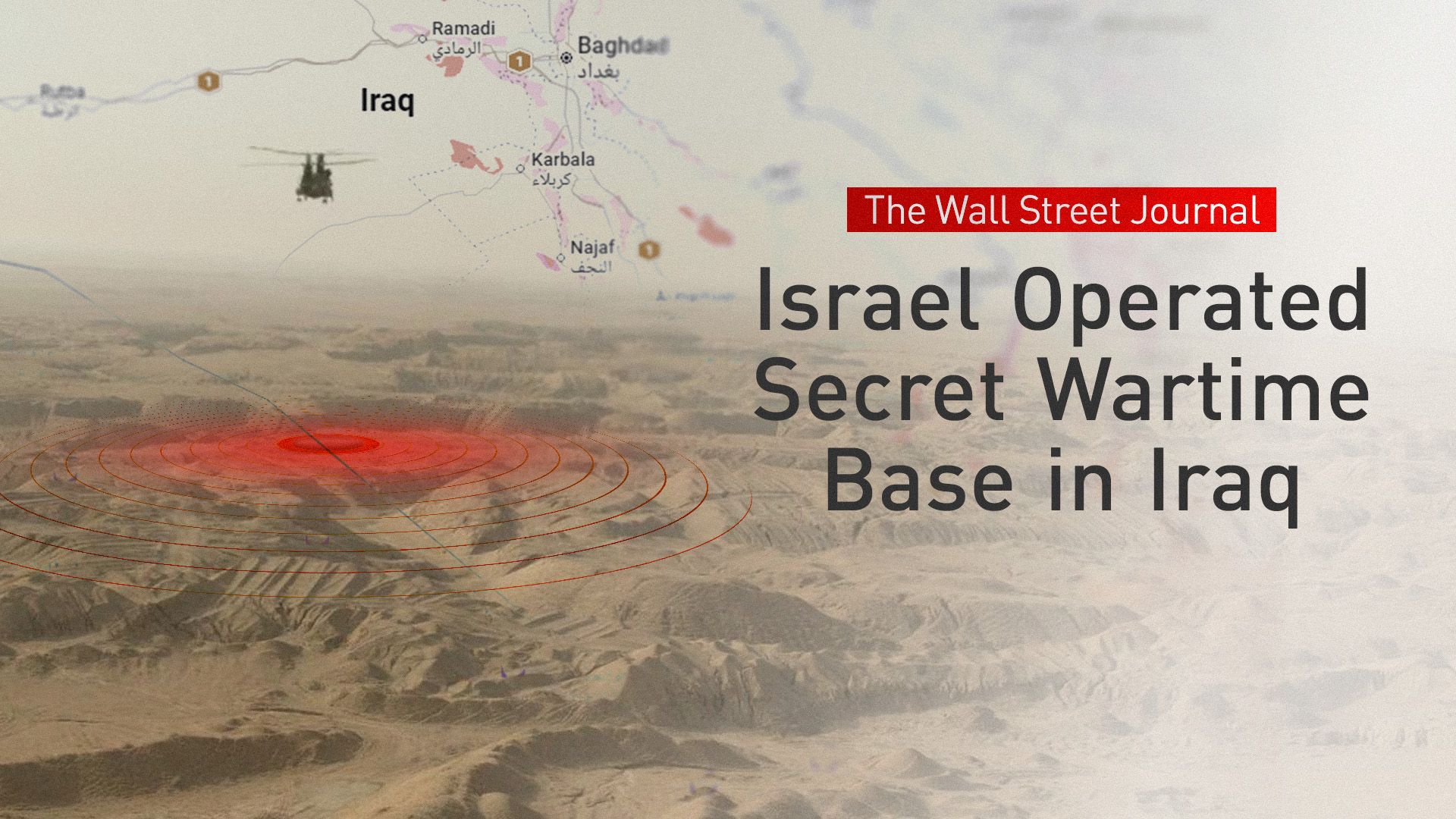
ERBIL (Kurdistan24) - The Wall Street Journal reported that Israel established and maintained a clandestine military installation within the Iraqi desert to provide logistical support for its air campaign against Iran.
According to the report, the covert facility, which accommodated special forces personnel and functioned as a hub for the Israeli Air Force, was constructed shortly before the outbreak of hostilities.
The Wall Street Journal stated that the installation was established with the knowledge of United States officials. The newspaper, in an article by Anat Peled and Jared Malsin, detailed that the base was primarily utilized to station search-and-rescue teams intended for rapid response in the event of downed Israeli pilots, as well as to house specialized commando units trained for operations inside enemy territory.
The strategic significance of the alleged base lies in its proximity to the battlefield, allowing Israeli forces to operate closer to targets approximately 1,000 miles away.
According to the WSJ report, the deployment of special air force units to this forward position was essential for the tactical execution of the aerial campaign conducted throughout the five-week conflict.
The report noted that while Israel's military has declined to comment on the installation, the existence of such forward operating positions provides insight into the logistical risks taken to maintain the tempo of the air war.
WSJ Details Alleged Covert Installation
The clandestine site was positioned within Iraq's expansive and sparsely populated western desert, an area that security experts cited by the newspaper described as ideal for temporary, low-profile military outposts.
According to The Wall Street Journal, U.S. officials acknowledged that forward positioning of search-and-rescue teams was a central component of the broader operational strategy.
The report noted that while no Israeli pilots were downed during the campaign, the presence of these specialized teams allowed for immediate contingency responses.
Anat Peled and Jared Malsin reported that Israeli air force commandos were stationed at the location to perform specialized tasks within enemy territory, further illustrating the integration of ground-based support in the long-range air war.
Iraqi Forces Reported Unusual Activity
The alleged base reportedly faced a critical security breach during the early stages of the conflict.
According to the report, Iraqi state media stated that a local shepherd observed anomalous military activity in the western desert, specifically citing frequent helicopter flights. Acting on this intelligence, the Iraqi military dispatched units to investigate the area.
The Wall Street Journal reported that the clandestine Israeli installation was nearly discovered in early March as Iraqi forces approached the perimeter in armored Humvees.
According to the account provided to the newspaper, the Israeli forces defending the location utilized airstrikes to keep the Iraqi units at a distance.
Iraqi officials were vocal in their condemnation of the event. Lt. Gen. Qais al-Muhammadawi, deputy commander of the Iraqi Joint Operations Command, told state media that the operation was "reckless" and carried out without any coordination or authorization from Baghdad.
According to the report, the clash resulted in the death of one Iraqi soldier and left two others wounded.
The report stated that Iraq subsequently lodged a formal complaint with the United Nations, characterizing the incident as an unauthorized incursion involving foreign aerial strikes.
While the initial UN complaint attributed the attack to the United States, individuals familiar with the matter told the newspaper that the U.S. was not responsible for the specific strike.
Following the initial clash, the Iraqi government deployed additional units from the Counter Terrorism Service, a force previously distinguished in the campaign against the Islamic State, to conduct a secondary sweep of the region.
According to the report, these units discovered physical evidence confirming that foreign military forces had indeed been operating in the area.
Lt. Gen. al-Muhammadawi stated to state media that the presence appeared to involve forces operating beyond the capabilities of local units, utilizing both ground personnel and aerial support.
Sovereignty Concerns Reemerge
The allegations of a covert Israeli military presence have intensified domestic political concerns regarding Iraqi sovereignty.
The report stated that the Iraqi government remains tight-lipped regarding the full scope of the incident, with official spokespeople declining to comment on whether Baghdad had intelligence regarding the base's construction prior to the clash.
The presence of unauthorized foreign military installations inside Iraq's western desert has historically been a sensitive security matter.
The Wall Street Journal noted that local populations in these remote regions have reported strange activity for years, often associated with various militant groups or special operations teams, and have largely learned to avoid such areas.
This history of insecurity, the report stated, initially provided a layer of cover for the clandestine installation before the shepherd's reports drew the attention of the Iraqi military.
Forward Bases and Regional Warfare
The report highlighted that the use of makeshift forward-operating bases is a recognized tactic in modern military strategy.
Michael Knights, a researcher at Horizon Engage, told the newspaper that it is common practice for forces to conduct reconnaissance and establish temporary locations ahead of major military maneuvers. According to the report, U.S. Special Forces previously utilized similar desert locations in Iraq during operations in 1991 and 2003.
The broader operational context of the Iran conflict involved thousands of airstrikes, and the use of forward logistical hubs was essential for overcoming the challenges of long-distance warfare.
The Wall Street Journal noted that the risks associated with building and defending a base within the territory of a nation not formally part of the conflict represent the lengths to which military planners went to maximize operational tempo.
As the regional security architecture remains under pressure, the disclosure of these alleged activities underscores the volatility inherent in Middle Eastern conflicts.
The report stated that Israeli military officials, including former air force chief Tom Bar, had alluded to "special missions" throughout the war that would "ignite the imagination," suggesting a reliance on covert ground presence to augment traditional air power.
The reported discovery of this installation remains a point of contention for Iraqi authorities.
The incident reinforces the complexities of Iraq's position, as it must contend with both the regional ambitions of Iran and the strategic security imperatives of other international and regional actors.
The report concluded that the logistical footprint of the air campaign against Iran involved not only traditional bases but a hidden network of ground-based support, the full details of which are only now emerging as the conflict transitions into its current phase.
The allegations of a clandestine Israeli installation in Iraq highlight the tensions regarding sovereignty and military entanglement in the region. Legal and diplomatic reviews of the incident continue.