Iraq Maintains 'No Comment' Stance on Reported Israeli Desert Installation
Iraqi Officials Say WSJ Claims of Israeli Base Are Unverified
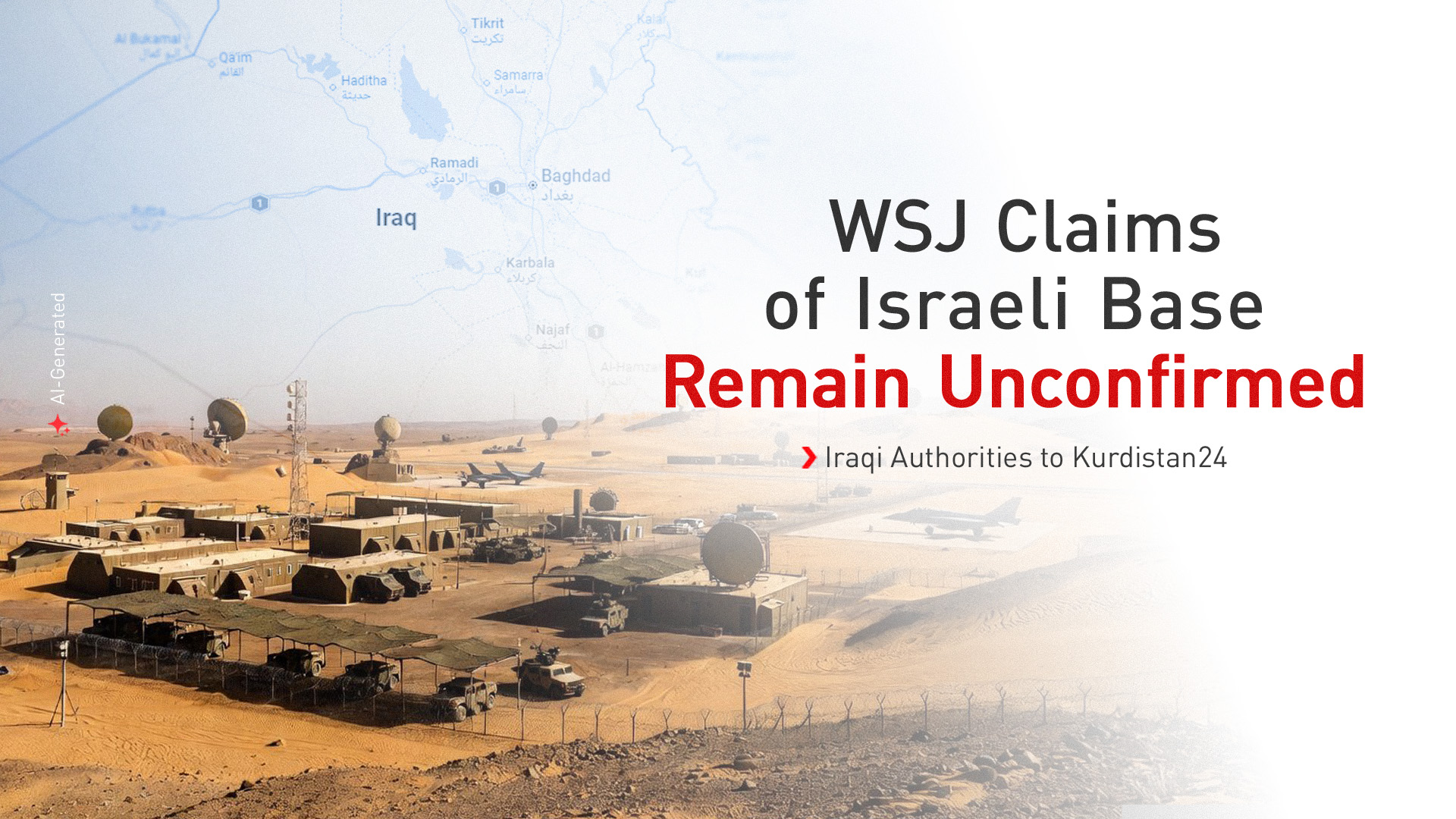
ERBIL (Kurdistan24) - The Iraqi government has adopted a formal "no comment" policy regarding high-profile reports alleging the establishment of a clandestine Israeli military installation within Iraq's western desert. Iraqi officials stated on Sunday that the claims, which suggest a significant breach of national sovereignty, remain unconfirmed by state security agencies.
Sabah al-Numan, the spokesperson for the Iraqi Commander-in-Chief of the Armed Forces, clarified in remarks to Kurdistan24 that the government has not issued any official findings to corroborate recent journalistic revelations.
Numan emphasized that the data currently in the public domain originates from external media reporting rather than domestic intelligence verification.
He noted that the government remains unaware of the underlying sources utilized in these reports and, as such, is maintaining an institutional silence on the matter while investigations continue.
The refusal to confirm or deny the existence of the reported site underscores the extreme geopolitical sensitivity surrounding Iraq's territorial integrity.
This development follows an extensive report by The Wall Street Journal (WSJ), which alleged that Israel operated a covert forward base to facilitate its air campaign against Iran.
The report has triggered intense scrutiny within Baghdad's political and military circles, highlighting the complex intersection of regional intelligence operations and Iraq's fragile security landscape.
Iraq Maintains Silence on Reported Installation
The official response from Baghdad emphasizes a lack of evidentiary confirmation.
Speaking to Kurdistan24, al-Numan stated that the Iraqi government has not previously issued any formal statements regarding the matter because the information has not been verified by national authorities.
"The information published by The Wall Street Journal is specific to them; we do not know what their source is, and it has not been confirmed to us as of yet," Numan told Kurdistan24.
Authorities indicated that the state's "no comment" position is a deliberate strategy rooted in the unverified nature of the claims.
By distancing itself from the report's underlying sources, the Iraqi government is attempting to navigate a situation that involves several high-stakes actors, including the United States, Israel, and Iran.
Institutional caution is currently being prioritized as national security agencies evaluate the implications of the reported incursion.
WSJ Report Raises Questions
The context for Iraq's current silence is a detailed investigation published by The Wall Street Journal under the byline of journalists Anat Peled and Jared Malsin.
According to the WSJ, Israel established and maintained a clandestine military outpost in the Iraqi desert to provide logistical support for long-range strikes during the conflict with Iran.
The report alleged that the facility served as a hub for special forces and search-and-rescue teams, positioned to respond if Israeli pilots were downed during missions.
According to the WSJ report, which cited people familiar with the matter including U.S. officials, the installation was constructed shortly before the outbreak of active hostilities.
The strategic logic behind such a site was to shorten the 1,000-mile gap between Israeli territory and the Iranian battlefield.
The WSJ reported that while no Israeli pilots were ultimately lost during the five-week air campaign, the presence of these specialized units allowed for a high tempo of operations.
Furthermore, the WSJ report detailed a specific security breach that allegedly occurred in early March.
According to the newspaper's account, a local shepherd reported anomalous military activity, including helicopter flights, leading the Iraqi military to dispatch a reconnaissance unit.
The WSJ reported that Israeli forces defending the location utilized airstrikes to keep the approaching Iraqi Humvees at bay, resulting in the death of one Iraqi soldier and the wounding of two others.
Regional Security Sensitivities
The strategic sensitivity of Iraq's western desert is central to the current diplomatic impasse.
This vast and sparsely populated region has historically been utilized by various actors, ranging from insurgent groups like the Islamic State to international special operations teams, due to its difficult terrain and distance from urban centers.
Security experts cited by the WSJ noted that U.S. Special Forces previously used these areas for operations in 1991 and 2003.
Baghdad's reluctance to offer a definitive statement reflects the broader challenge of managing a territory that remains a "gray zone" for regional powers.
If the reports are accurate, the establishment of an unauthorized base by a foreign military would represent a profound challenge to Iraqi sovereignty.
However, the government's spokesperson suggested that without independent verification, the state cannot formally acknowledge the breach.
The incident has already led to previous diplomatic friction.
In late March, Iraq lodged a formal complaint with the United Nations, characterizing the clash in the desert as an unauthorized foreign incursion.
However, at that time, the Iraqi government attributed the strikes to the United States.
The WSJ report, citing individuals familiar with the matter, claimed that the U.S. was not involved in that specific kinetic engagement, further complicating the narrative of who was operating on the ground.
Unverified Claims and Diplomatic Caution
The broader geopolitical environment necessitated by the 2026 Iran war has placed Iraq in an increasingly difficult position.
Iraqi military commanders, such as Lt. Gen. Qais al-Muhammadawi, have previously characterized unauthorized operations as "reckless" and lacking legal approval.
Yet, the transition of these allegations from regional rumors to detailed reporting in the international press has forced a more disciplined form of administrative caution.
The diplomatic implications of confirming such an installation are significant.
An acknowledgment of a secret Israeli presence on Iraqi soil would likely trigger domestic political upheaval and potentially provoke a response from Tehran-aligned factions within Iraq.
By maintaining a "no comment" stance, the central government is buying time to assess the physical evidence discovered by the Counter Terrorism Service, which reportedly found signs of a prior foreign military presence during a secondary sweep of the area.
Military analysts suggest that the use of forward logistical hubs is a hallmark of modern long-range warfare, but their discovery often leads to protracted legal and diplomatic reviews.
As of now, the Israeli military has declined to comment on the WSJ's findings, mirroring the silence from Baghdad.
Information Sensitivity and Verification
The current situation highlights the divide between journalistic reporting and official state confirmation.
While the WSJ report provides a granular account of the alleged base's functions and a specific casualty-producing incident, the Iraqi government's insistence on "unconfirmed" status serves as a reminder of the evidentiary threshold required for state-level responses.
Sabah al-Numan's remarks to Kurdistan24 suggest that the government is unwilling to rely on anonymously sourced information from foreign publications to dictate its official policy.
The government is instead emphasizing the need for its own security agencies to produce uncorroborated data before any formal stance is shifted.
The situation remains under close observation as regional tensions persist.
For now, the reported desert installation remains an unverified claim in the eyes of the Iraqi state, leaving the strategic and political questions it raised largely unanswered.
This article was updated on Sunday, May 10, 2026, at 11:25am.